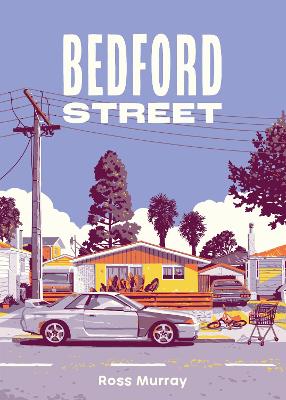
Close proximity: Ross Murray and BEDFORD STREET
.jpg&w=1920&q=75)
Have you ever encountered something that reshapes how you look at the world?
I can’t remember exactly when I saw it. But Short Cuts, the 1993 film by Robert Altman, had a fittingly seismic impact on me (spoiler: there’s an earthquake). Discovering the short stories by Raymond Carver - upon which the film was adapted - provided an even greater revelation. The muted rage of people wrestling with the smallness of their lives. In Short Cuts, those lives converge; in its source material, they do not.
Bedford Street represents a very common type of residential area in Aotearoa. Places that often feature deteriorating and low-quality housing - usually rentals - with a few houses belonging to older owners who bought property when it wasn’t so ridiculously unaffordable. It’s the domain of a largely transient population at the mercy of landlords, a fickle job market, and inequality. Forces that breed disenfranchisement and greatly diminish any sense of community.
.jpg&w=1920&q=75)
It’s that mess of humans living in close proximity but without any meaningful connection to one another that formed the urge to write Bedford Street. People struggling quietly, sometimes loudly but in a way that’s no less futile.
Bedford Street and its inhabitants are fictional but very much inspired by neighbourhoods I’ve lived in, and by people whose lives I’ve come to know. Lives shaped by hardship and recklessness but containing moments of levity and compassion.
Sometimes these seeds of inspiration were quite specific. A neighbour of mine woke up one day with inexplicable crippling back pain. Another one relentlessly lifted weights in his garage to staunch the frustration of unemployment. Yet another neighbour would defiantly sit on his back step, oiling a shotgun. I’ve gotten to know families in the neurodivergent community, a homeless person that fell victim to a simple misunderstanding, and restlessly unhappy parents in the schoolyard that risk it all for some quick thrills. We all face personal challenges in our lives and when writing the book, I certainly drew on my own experiences of what helplessness feels like.
While these all provided a creative gateway to several of the stories, it was as much the fundamental disconnect between these lives that felt poignant to me. There is a commonality to the human struggle, especially in our current cost-of-living crisis, yet isolation has never felt more acute.
There’s a strange, chaotic energy to people packed together yet completely disconnected to one another. Bedford Street is an attempt to explore how we navigate life in this zone and the way we care for one another in an increasingly atomised society.
Find Bedford Street by Ross Murray in bookstores now.
.jpg&w=1920&q=75)