Review: Egg & Spoon: An Illustrated Cookbook
Egg & Spoon arrived on a Wednesday. A new cookbook for children, it is the work of Alexandra Tylee, who owns Havelock North’s cherished Pipi Café, and artist/illustrator Giselle Clarkson. Much of the food is gluten-free or vegan, meaning Egg & Spoon more than earns its place in the kitchens of busy 21st century families.
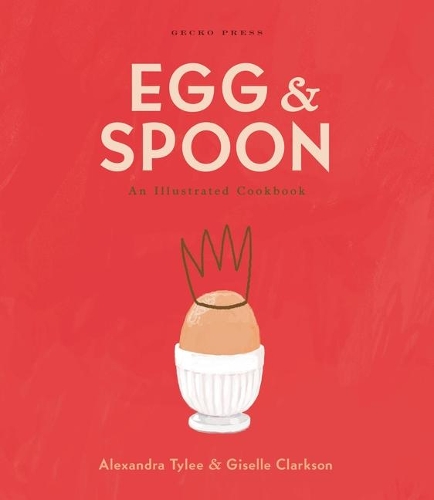
All thought of doing spelling and math homework before dinner evaporated as Miss 11 and I were entranced by the simple cover: candy-red with the title in beige-tinted lettering above an illustration of a perfect looking boiled egg, wearing a crown, in a white eggcup.
The crimson and orange ribbons, the pinky red and orange hues of the inside cover – in keeping with the pinks that Pipi Café is painted and decorated in – and Clarkson’s first illustrated double-page spread made us want to shrink and become like Alice in a more friendly Wonderland, wandering through the pages sampling the Layered Banana Cake, the Avocado and Corn Tacos, the Roast Chicken, the Fairy Cakes and the Jelly Squares.
Oh, to be the bee or the dragonfly or the seagulls stealing morsels of these drawings which make the food look as if it has come from a magical fantasy kitchen. If it wasn’t pouring with rain, we might have pulled on our gumboots and wandered through the paddocks to find some of the leaves, flowers and herbs that Tylee suggests foraging for and Clarkson draws with deftness.
Having picked the dairy and gluten free vegan Blueberry Bliss Balls as the first thing we wanted to make, it took four visits to different supermarkets before I found one with cocoa butter, which I wouldn’t have thought was that tricky to find. Only two of the baking recipes call for sugar and, more often than not, the flour(s) used are gluten free. This makes Egg & Spoon a useful addition to a household which includes those with food allergies or intolerances but it could make it an expensive shop (or two) for those whose pantries aren’t stocked with ingredients like cashew nuts, chia and flax seeds, rice flour, ground almonds and maple syrup.
There’s an anarchic spirit to the book which flows through Tylee’s writing and attitude to food. Take the introduction where she explains what kind of cake Pipi Café would be:
If Pipi was a cake – well, I am not sure she would
want to be a cake – but if she absolutely had to be,
she would be a rather old-fashioned one like a sponge.
But not a normal sponge with cream and strawberries.
She would be very tall with about six layers so
you might worry she’d fall over, but she wouldn’t ever.
The emphasis on discovery and enjoying time spent preparing and cooking food extends to the recipes themselves; I imagine any cookbook that starts with recipes for Strawberry Chocolate Toasted Muesli and Breakfast Popsicles will be popular with younger cooks but they’re healthier than they sound. The recipes tend toward adventurous twists on old favourites with pancakes, ice cream, pasta, noodles, pizza and roast chicken all represented but the emphasis is always on using healthier alternatives to the white sugar and flour you find in many cookbooks.
Tylee recognises that sometimes – often times – young cooks and eaters want more than recipes for chicken nuggets and chips or biscuits that taste (and look) like those everyone else makes. There are also things like the possibly more exotic Teriyaki Salmon on Sticks (in a sub section of Larger Meals titled Good Things to Eat on Sticks) or Lettuce Soup. Some of them sound, quite frankly, bonkers – like the Quick After School Pasta or Noodles with Marmite or the aforementioned Lettuce Soup (with Buttery Garlic Bread).
But these recipes, along with Tylee’s gentle musings and Clarkson’s enchanting illustrations, seem to transform the kitchen into a world of possibilities where it’s okay to try things out and make mistakes. We spend a lot of time telling our children that it’s good to experiment, think creatively and make mistakes because these things teach us; we contradict all that by continually assessing them and rebuking them if they “fail” tests and exams or, in the course of attempting to learn something practical, get it wrong on their first attempts.
Tylee (on page 33) advises us to Throw Out The Rules, counselling that, “Cooking is very individual – there are no rules…” and if there are, don’t take them too seriously. She reassures that sometimes things go wrong and that’s okay because you can … always throw something inedible into the compost. In cash-strapped households – and those without space for a compost bin or worm farm – that might be harder advice to swallow.
However, there are simply-worded and well-illustrated how-to sections popped in throughout and these help to demystify some cooking processes so successful outcomes are more likely. As someone who regularly forgets how to boil an egg – although I do it a lot – I welcomed the explanatory note for boiling one and will, no doubt, refer to it often. Other pages include how to chop an onion, how to fold ingredients, how to tell when a cake is done and how to roast a chook along with tips and hints about Getting Started In The Kitchen where Tylee explains, “Cooking is all about anticipation and hunger…” and sets out the kitchen equipment you might need to satisfy this. The book closes with a double page spread about food allergies and ingredients as well as advice for keeping safe while cooking.
Of course, the proof of the pudding is in the cooking and eating and Egg & Spoon certainly made us want to get cooking and experimenting. Oh, my goodness – nearly everything we tried was easier than we thought and scrumptious: Blueberry Bliss Balls – now made three times in a fortnight – are divine; the Roast Blueberry and Banana Ice Cream was scoffed in the blink of an eye and the Cheese Crackers really are wonderful with honey.
Those slightly dubious sounding recipes like noodles with marmite and lettuce soup? Delicious – lettuce clearly benefits from being made into soup. The Roast Pumpkin and Bacon Pasta is indeed flavoursome and easy to make when you don’t feel much like making dinner; vegetables in teriyaki sauce on sticks are perfect for an after-school snack, too. Tonight, we’re having the Baked Beans, Kind Of … suggested for breakfast with Potato Fritters from the Smaller Meals section (and I’ll read carefully the How to Cook A Fritter Or Pancake note because mine always stick) and in a couple of weeks, I’ll upsize the Sweet Potato and Pea Curry to feed to a troupe of hungry teenagers rehearsing for a school play.
There were a couple that weren’t as good as we hoped. The Apple Chips never went crispy and the Breakfast Berry Flatcake had a lovely texture but not so much taste. Additionally, there are a couple of recipes where you’re instructed to preheat the oven to 180֯ but nothing goes into the oven (Strawberry French Toast, which was still delectable, and Chocolate Rice Bubble Crackles spring to mind).
It’s perhaps best summed up by Clarkson’s drawing of a waiting-to-be-topped pizza base (page 103) where she’s written: “A world of opportunity awaits.” It really does for those ever-so-slightly rebellious souls who like their cooking and eating to be a little more interesting than that which might be found in a more conventional and less gloriously illustrated cookbook for kids.
Reviewed by Dionne Christian