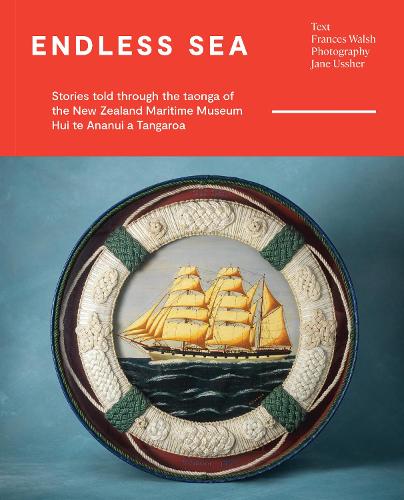
Review: Endless Sea - Stories told through the taonga of the New Zealand Maritime Museum Hui te Ananui a Tangaroa
New Zealand is a maritime nation, the story of its human settlement and development inextricably linked with the sea that surrounds it. It is perhaps surprising that we did not have a museum dedicated to the salty side of this history until the early 1990s, when what is now known as the New Zealand Maritime Museum Hui te Ananui a Tangaroa (the dwelling-place of the sea god Tangaroa) opened on Auckland’s waterfront.
The museum is a repository of all things relating to Aotearoa New Zealand and the Pacific’s relationship to the sea, from traditional waka to high-tech America’s Cup yachts. This fascinating book lifts the lid on its galleries and archives, bringing to light both objects on display and those lurking in the back rooms.
Endless Sea has been assembled by an all-star pairing: former Metro feature writer and now in-house scribe for the museum, Frances Walsh, and one of New Zealand’s best-known photographers, long-time Listener portraitist Jane Ussher. Walsh’s carefully researched words and Ussher’s meticulous images tell the stories behind a nominal 100 objects (actually, slightly more) from the museum’s collections. It is a technique today’s modern museums use in their own galleries, rather than the high Victorian style of collecting and presenting type specimens. Here specific, individual objects stand in for and represent wider stories and themes: Polynesian voyaging, conflict, trade and industry, recreation.
Walsh and Ussher’s talents are well-balanced; depending on your persuasion, you could see this as a book of photographs accompanied by text or a selection of beautifully illustrated anecdotes. Walsh’s writing is clean and informative without being dry and, at times, touches on the lyrical; the waters of Foveaux Strait are described as “treacherous as memory” and elsewhere she labels the souveniring of branded Union Steam Ship Company items such as towels and coat-hangers as “gentle acts of redistribution and practical socialism.” Her text brings alive the characters behind the solid objects and historic facts: Opua schoolgirl Nancy Lane, who “aimed her Brownie box camera” at arriving ships from the 1950s, collecting the images and details of ships visiting the port for 40 years; pigeon-poster Walter Fricker, whose fleet? flock? of feathered mail-carriers flew the route between Auckland and Aotea (Great Barrier) in the 1890s.
Ussher’s photography elevates often mundane objects — a collection of clay pipes, weapons of whaling, a Samoan shark-catching rattle — to the realm of significant relics. Frequently shot against a simple teal-coloured background, materials glow, patinas are revealed and the taonga are able to speak for themselves.
The featured objects range from Māori and Polynesian boats and tools through to artefacts of early European arrival and settlement. There are items which speak to maritime industries such as whaling and coastal shipping, and letters, diaries and other ephemera recording personal experience of the sea. There are also many works of art, from the restored ships themselves to the magnificent folk art of scrimshaw, detailed models and fancy ropework. Among favourite finds are the painted tympanic bulla (ear bones) of a sperm whale, a boat made from the breastbone of an albatross and the gorgeous illustrations of Albert Hooper’s album commemorating an Easter cruise around the Hauraki Gulf in 1913.
Endless Sea is boldly designed with its bright-orange theme colour, partial dust-jacket and modern typography; traditionalists might be a bit confused by some of the text positioning but it certainly lifts the book beyond the realm of museum piece. And like the best of museums, it contains a wealth of treasures to surprise and delight, to be revisited multiple times, and inspire the reader to their own journeys of further exploration.
Reviewed by Sarah Ell