What inspired The Raven’s Eye series, by Claire Mabey
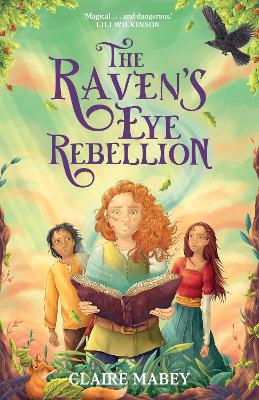
The Raven’s Eye Runaways, Claire Mabey’s debut book, won the 2025 NZSA Best First Book Award at the New Zealand Book Awards for Children and Young Adults. Now the Raven’s Eye crew are back in an unmissable sequel adventure which is ‘rich with wonder and a thirst for justice.’
Kete is delighted to have Claire explain her inspirations for both books. Read on for her thoughts.
.jpg&w=1920&q=75)
I have never been so challenged or so satisfied in work as I have been writing the Raven’s Eye books. The first book, The Raven’s Eye Runways, began with a pair of images: the first, the image of a girl sitting in a big armchair apparently safe and cosy – but her expression and her inner life was stress and turmoil. All I knew was that this child had to leave her home and I needed to know why. The second image was of a monastic-like scene – an old, stone building with stained glass windows and a close-clipped lawn all around – in which a young woman was being forced to write. For a while I wrote the two characters as if they were separate stories. Then I realised they had to meet each other and the world of Wyle grew from there.
The second book, The Raven’s Eye Rebellion, was, in some ways, easier to write because I knew my characters so well and I knew the problems of their world (or at least, some of them). But as I wrote into it I realised that I was drawing upon new-old inspirations to help craft the story of my characters’ troubles and triumphs.
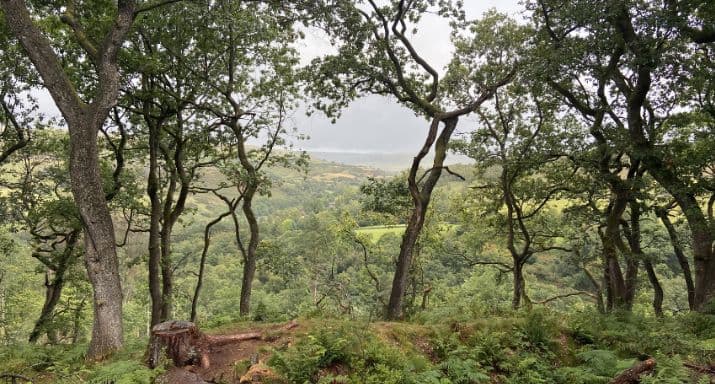
Trees: When I was about nine my parents cut down the silver birch that grew close to our house. I wrote in my diary: “It feels like I’m losing a friend.” Drama! But I have always had a real thing for trees. They make me feel safe and like the land below and the sky around them is better for their company. Trees are alive to me and so, in the world of Wyle, they have personalities and language and they’re connected to the land and the sky and the water and, sometimes, to the people who bother to listen to them.
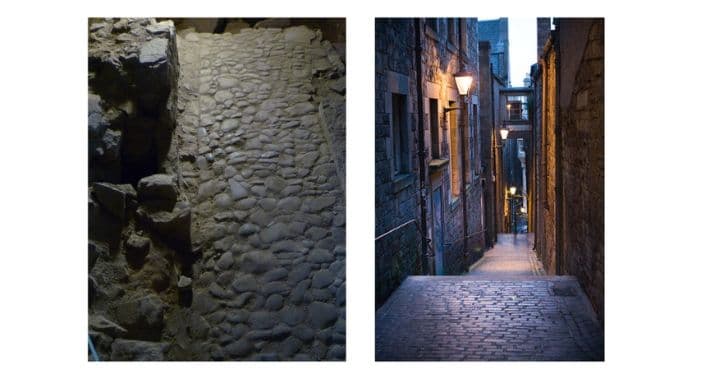
London and Edinburgh: Most of book two takes place in the city of Wyle which, in my mind, is a sprawling collection of neighbourhoods knitted together over time. Wyle features in book one but it’s in book two that we get to know it a lot better. Wyle takes a long time to understand and my characters have to explore and find their way around its many boroughs and pockets; its stony cobbles and its secrets. I couldn’t help but draw on visits to London – a city I’ve been to many times and lived in but still don’t really understand. What I love about London is how history is built and built upon. I love the idea that time is stacked up and sort of living through what people have built and how those constructions change over time. Edinburgh, too, is one of the most potent cities for this with its old and new towns. I took inspiration from Edinburgh’s Wynds and Closes for the Wynds and Closes in Wyle, so dim and mysterious and potentially full of hidden activity.
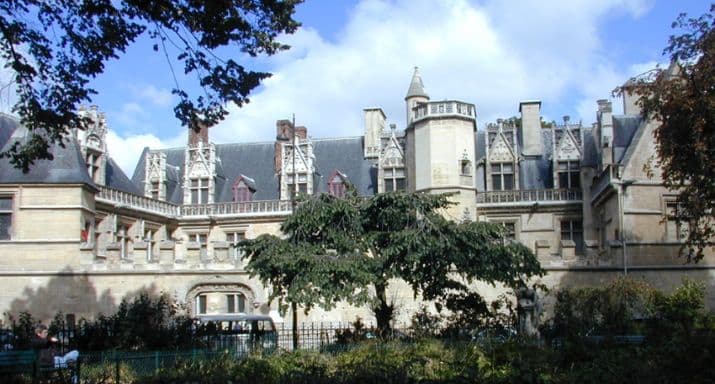
Musée Cluny: My favourite museum of all time is the Musée Cluny in Paris – a museum of medieval art. The building is modern architecture integrated with a medieval mansion (part of Cluny Abbey) built on top of Roman ruins (that stacking of time again). It is the most atmospheric, evocative place that holds astonishing sculpture, jewelry, tapestries, paintings and books. The books! I was blown away by the gem-encrusted bindings and how those medieval tomes hold so much power. I felt that if they were to be set free from their glass cases they might wreak havoc! In The Raven’s Eye Rebellion there’s a book character called The Book of Blacke – a tricky, tricky object that does, in fact, do some mischief. That book, along with six others locked away for safe-keeping, were inspired by the exhibits I saw at Cluny.
Child logic: I think children are very logical people. My poor son is always aghast when he discovers some new and awful damage that adults inflict on each other, on the planet. I remember that really quite terrible introduction to the fact that humans, especially the ones with the power, can operate in entirely illogical, damaging ways. I feel the young me rail and rally against the adult world I’m now a part of and I wanted to give my child characters room to be angry and disappointed (Getwin is quite a spikey character at times) and room to protest and try to right what they know, innately, to be wrong.
Protest: Protest is a big part of The Raven’s Eye Rebellion. I think one of the great human acts is the way we can gather to throw collectivity, and words, up in the face of threats and political wrongdoing. I was hugely moved by the school strikes for climate and by the Toitū te Tiriti hikoi, which was the first time me and my son made protest signs together and marched. I love protest signs and so, in a book that has a lot to do with language and freedom of knowledge, I knew I had to weave signs into the narrative.

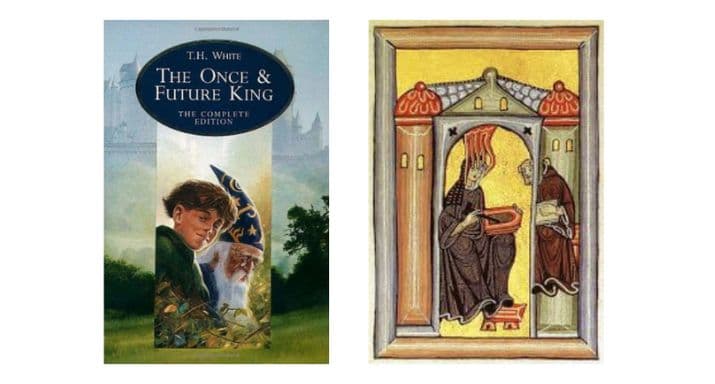
St Hildegard von Bingen: a German Abbess who lived in the 11th Century and composed music and wrote medical texts and had the strangest, most vivid visions. What Hildegard managed to achieve in her lifetime is astonishing and even bordered on dangerous: she had to hedge all the time, being only a woman and all. Her theory of God included that God was in all living things and so nature should be sacred and cared for and understood. This theory informs the magic in my world, and her imaginative gusto informs a lot of the bravery and productivity that flows between the child characters and the helpful adults in their lives.
TH White’s The Once and Future King: one of the themes of The Raven’s Eye Rebellion is what to do when you take in knowledge that is difficult and sad, even when it’s helpful to have. TH White’s Arthurian cycle is all about knowledge and how precarious it can be if not treated carefully. Merlin, in The Once and Future King, sets out to show a young Arthur what the nature of the world really is so that when he comes into power he can do right by it (and not might). It’s not easy and in many ways it doesn’t really work, but what Merlin holds to is the fact that knowledge is power – and I believe him. I think we should always believe in elderly magicians who live life backwards and can turn us into fish.
Claire Mabey will be appearing at the Auckland Writers Festival 12 – 17 May. For more information and tickets visit www.writersfestival.co.nz.