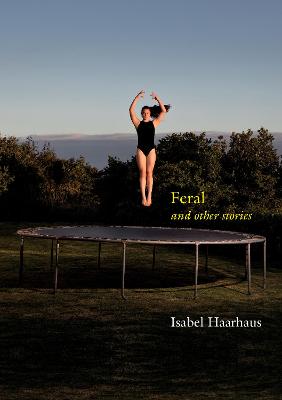
Extract: Feral and Other Stories, by Isabel Haarhaus
Feral and other stories is an electrifying debut from Tāmaki Makaurau Auckland writer Isabel Haarhaus. These vivid and beautifully written stories explore desire, exclusion, loneliness and friendship, often from the viewpoint of girls, women or migrants – outsiders by virtue of circumstance or temperament – who yearn, with passionate and dangerous intensity, to belong.
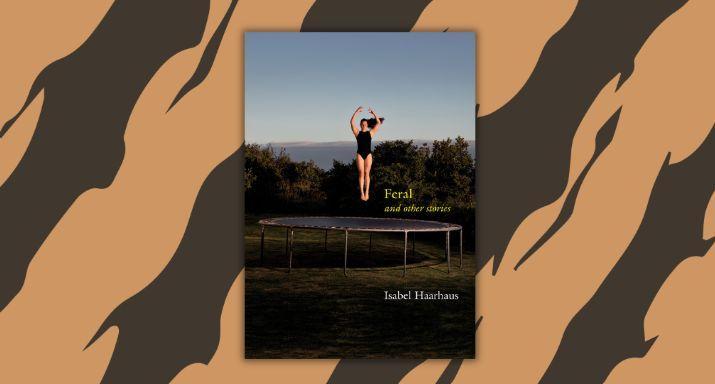
'Gifts' extracted here with kind permission from Feral and Other Stories by Isabel Haarhaus (Otago University Press, $35).
Gifts
Sharon looks at her small pudgy hands and wonders, not for the first time, if they are her mother’s or her father’s. The skin is pale and doughy, the pores barely visible, and the hair on the forearms, higher up from the creased wrists, is furry. Her childish fingers taper into little home-shaped nails. Before she could marry Marko Novak, Sharon had needed to get the rings he’d offered her reduced, but they still slip off too easily. The rest of her is plump. Soft and small. Welsh probably, or from somewhere around the south-west of England. One day she’ll go to the UK and find her people. She’s watched that on TV – New Zealanders going back to Scotland, England, Wales and Ireland, shocked to tears by the stab of recognition, the camera closing in on clumsy, greedy embraces. That is what she longs for: to stand on a bus and recognise those around her, and then to find her own, and fold herself into them. She’d seen that on Facebook: pictures of Meike, her Dutch friend from school, exuberant with not feeling freakishly tall on a bus in Amsterdam; and group photos of her beaming with a bunch of newfound relatives who all look like her.
Sharon looks up at the clock to see how much time she has left. She is still excited at the idea of her husband coming home – his bulky awkward body and shy look – but she treasures even more this quiet pool of anticipation, preparing and waiting for the evening together to begin. She takes pride in being able to tell straight away what mood he is in. To others, Marko is known as a rare constant – the steady, affable guy – but Sharon reads the little signs: a lopsided hunch across his shoulders, the force with which he slams the car door shut, the proximity of his dog Jet to his side. His range is limited but clearly differentiated and she is expert at reading him.
Often, when he makes his way slowly towards the front door, avoiding looking at her in the kitchen window, she feels like she is acting a part in a play, with her pinny on and her hands in the sink, washing, scrubbing, cutting, carefully gouging out the hard black knots from the potatoes or cutting up the raw meat. When and how had she become this woman? This little woman making dinner for her husband every night? She was a long way from the Sharon in muslin in Aro Valley in the late eighties, the out-if-it Sharon studying for her BA in sociology in the nineties. She wonders if she will ever again meet the people from what now seems like someone else’s past, then habitually pushes down the wondering.
Vlada wears her entitlement to him, her first knowledge of Marko, like an exquisite velvet cloak. Her sovereign poise is rehearsed to intimidate the whole family, but especially Sharon. Vlada wants to dissolve the new and only daughter-in-law, like a great warm swill melting and incorporating spiky sugar granules.
She is tall, his mother, and habitually thin and aggressively proud, despite – or because of – their peasant stock. The ancient, dry, warring country may as well still be under her nails. All the spilt blood is there in her gritted, steely stare, as she insists that of course Marko wants his meat like this or that, as he has always had it, as she has made it for him his whole damned charmed life. Her way or the highway: rare, bloody, with woody herbs and a wild berry sauce.
Sharon knows all about white sauce and white onions, but she never knew about thyme, branches of rosemary, sun-blackened fruit or cheeses kept in salted water until she met Marko. And it hadn’t taken her long, either, to figure out that a life’s worth of tears would not be salty enough for these tough peasants. She is the opposite, the balm, to the terrifyingly capable women he’s grown up with, the sorority she’s married into: two fiercely intelligent and competitive sisters – a concert pianist and a paediatrician – and their mother, the most dangerously intelligent of them all.
After the death of the mean old baka, the patriarch who had terrorised the family their entire lives, Vlada returned them all home, clawing back the matriarchal house in Split, Croatia. It took two years, but when the deal was sealed it was as if they’d never lost it, never left, even though the family had lived in New Zealand – almost 19,000 kilometres away – since the end of World War One. Despite nobody getting on (they fought over everything: every death, birth and celebration; all the money and every meal; the first full bucket of water) – they bought it back, the old stone house, so that they could each go ‘home’ again every two or so years.
Rather than go together, the siblings take turns accompanying the old woman, to keep a close eye and steadying hand on Vlada as she makes her way across the uneven ground, the loose dry rocks the colour of old teeth. The long-haul flight leaves Vlada shattered. She is unusually vulnerable on that big cold plane. Her rare fragility is unnerving, especially for Marko, and Sharon, clocking her husband’s concern for his mother, decides to knit her formidable mother-in-law a woollen scarf. She chooses the best cashmere wool, gets help over the internet from Meike, an accomplished knitter, and works towards finishing the scarf in time for Christmas.
Marko is proud of his wife, glances at her approvingly as she sits by the fire he lights each night, even into the spring and early summer, and makes his mother a scarf.
‘Look,’ she says, pleased with herself. ‘Look at how much I’ve done.’ She holds up the scarf and points out the developing pattern. The scarf is beautiful. Sharon is so careful doing the stitches. But sometimes, for no good reason, her carefulness irritates Marko. Sometimes, he is suddenly overcome by how much he can’t stand the care she is taking, and it makes him put his father’s boot in.
‘You’re not very fast at it, are you? Who taught you how to knit?’ he might goad with a sneer, before turning back, embarrassed and self-conscious, to the TV or the farm numbers too important and complicated to share with his little wife.
At a family dinner Sharon tells Anita, the older sister, that she is making Baba – they all call Vlada that, even Sharon – a scarf for her trips home, and Mila, Marko’s younger sister, overhears. Sharon notices that: the quiver in Mila’s back, the tiny but perceptible turn of her proud head. Mila definitely heard her, Sharon will later rail at Marko, who refuses to – will never – believe her or have a word said against his sisters. But Anita notices too and can imagine what will happen next.
Sharon keeps knitting all through spring and early summer. She stops reading her novels, barely watches the shows Marko picks out from Netflix, even when he tries to get her attention with ones he thinks she’ll like, The Crown and Pretty Little Liars, and she just knits. She is trance-like. She is practically purring, like a contented cat.
And then, the growing scarf falls in tandem with, and becomes the marker of, another gestation. It makes perfect sense, with her so settled and satisfied, this long delicious season of waiting: the beginning of their first and only daughter.
Both developments are exquisitely private, and with her quiet head bent, she keeps the baby a secret. Being adopted, Sharon can’t give the child a past or any soil to stand up on. But for those first few months that Zelda is inside her, the girl is hers only. She doesn’t tell anyone, not even Marko, until she must, inevitably, offer the baby up to her husband’s demanding family.
All her husband knows of those early months, to his surprise and pleasure, is that her sexual appetite is large. She is hot for it often, feeling full and generous and glorified with child. When Sharon does finally tell her husband, he says, ‘I never would have guessed,’ and walks out of the room. But she knows, or decides, that Marko is pleased.
The scarf keeps growing, like the baby, and as she knits, Sharon’s confidence in her position in the Novak tribe begins to flourish. Why can’t she claim her rightful place, why not? She will raise the best of them and is a good wife, isn’t she? Moving out to some godforsaken patch of land so that Marko can play at being a Dalmatian, learning to grow grapes, learning about sheds and fences and soil. She is doing it, isn’t she? Frying the fish in oil, cultivating the thyme and rosemary in the pots, and helping to build the stone wall around the courtyard to remember the old country and shelter the fig tree.
On Christmas Eve Sharon lays the finished scarf out on the long wooden table Marko made for their kitchen. She’s cleared away the Advent wreath with its three burnt candles and the wooden nativity scene with its carved figures huddled and hopeful around the tiny baby. She is especially hot and emotional. This work and the pregnancy are connected and Sharon doesn’t want either of them to end. She reads in the scarf the wonderful swell and swirl of her blood multiplying to envelop and feed the tiny girl; she gleans her rare power in the otherwise unassuming purl and stitch of a deep clotted purple. The scarf is a scroll telling the story of the growth of her daughter: here the vertebrae, and there, where the stitches change, the little row of digits, complete with tiny perfect nails, and there, where there is a small surprise, a little complexity, the nose and ears. Even the colours she has chosen, she realises now, are in harmony with the baby, who was conceived in early autumn. The bony black against a silver thread nudges through dark brown moss into spring green, then early summer apricot, and to finish, the sky comes into focus again: Vlada’s own Adriatic blue.
There it lies for the last time in her kitchen before Sharon carefully rolls it and wraps it in lavender-coloured tissue scattered with dried rose petals, as was suggested in the Australian Women’s Weekly Christmas Edition. Around the parcel Sharon ties a gold bow, not recycled but newly bought.
On the way to Mila’s, Sharon keeps the scarf on her lap, the Russian potato salad at her feet and the pavlova boxed on the back seat.
‘You look pretty flushed, Sharon, all good?’ There is usually something like this coming out of Marko’s sidelong looks at his wife on their way to his sisters and mother. He loves and desires her all the time, but he can’t bring himself to rate or fully relax with her, especially when he appraises her, as he habitually does whenever they drive towards the family. He is hassled by feelings of shame. And then he is ashamed of feeling ashamed of her. She is the one he loves to watch undress each night for bed. Her plump little body so simple and perfect, uncomplicated, not trying too hard. A solid Classical Grace. Merely thinking about her makes him hard, but rate her? He’s not so sure. Next to his brave tall mother and two fierce sisters she is a soft fool. It is his father’s mean voice Marko hears in his critique of Sharon every time they go anywhere near his other women.
But today, he notices with some irritation, she is unusually unaffected by him. Her dimpled hands are calm on the flat parcel on her blue linen lap as he steadily mocks her; her right cheek damp and flushed and velvety, a delicious ripe peach to bite into; her pale blue eyes stare at something out there, an inward and un-ironic smile on her small pretty face. So different from the tough bony beauty of the women in his family. They look like they were born with studded leather around their wrists and gravel in their boots made for walking, whereas his wife is something made of felt and flesh and the thick folded inside of a scented flower.
Today he can’t get a rise out of her. He wants her to rush to appease him, to reassure him. But she just gazes, full and quietly rapt, at the passing crumpled land laid bare under the thin ribbed sky.
‘Dobar dan, Marko and Sharon, you look like you’re glowing. Pregnancy suits you! Not like me, I hated being all big and tired, but you are made for it.’ And so it begins, the sharp and steady stings of female banter.
They place their contributions in the kitchen where Mila and Baba preside. The matriarch rules silently, swaying from a steely centre of gravity and moving things about with the absolute conviction that no one will undo her curation. If Sharon were to place something somewhere – a candle on a sideboard, a napkin to the left – one of the Novak women would come and move it and look at her with seeming indulgence but actual pity: poor little abandoned child, what can she know of ritual or culture?
But this year Sharon doesn’t even try to be involved. Unaffected, she delivers her salad and desert to the kitchen and feels regal as she moves straight through to the living room to place the present for Baba under the tree. She is emboldened by her two great achievements that year: the scarf and the baby.
Sharon does not taste the lunch, wanting it to be over so that they can move into the lounge, where, as is family tradition, Anita takes her time to choose one present at a time and the entire family observes and comments on each gift. They drink Baba’s walnut rakija and listen to Christmas songs sung by Oliver Dragojević.
‘Let me go first,’ cries Mila, as expected. ‘As the host, let me go first.’ And because no one ever argues with Mila, Anita hunts around under the tree to find a parcel from Mila and gives it to her sister to gift. It is a long box decorated with hand-stencilled patterns in red and green and it is for Baba.
‘Mamica, I really hope you can use this.’
‘She worked so hard at it, Baba,’ wheedles Mila’s husband, Steven. ‘I barely saw her all winter.’
‘Sharon, you’ve gone very pale.’ And they all look towards Marko’s round little wife in a funny old linen sack – what is that sack? – sitting right near the tree, almost under it, like a child, her damp hand resting on one of the presents: a creased lavender bulge wrapped in an ugly shiny bow – from Paper Plus?
‘Go on, Baba, Sharon’s fine, aren’t you, Sharon? She’s only pregnant. Remember how awful I felt all the time with Maximus? I could hardly bear it. But Baba, come on, open it, I want to see that you like it.’
And, of course, the old woman is already carefully unfolding the hand-stencilled package and then lifts the long lid off the box to reveal a most beautiful brown, maroon and blue woollen scarf. Baba holds it aloft with her long tapered fingers for everyone to admire, and they do. Then she presses the scarf to her neck, makes a sighing show of relaxing with pleasure, adores the soft wool and all those hours of her daughter’s busy demanding life, all that love, worked into every stitch.
‘Ach, Mila! So thoughtful. I can wear it on the long flights home.’
Vlada flings the scarf around her old thinning neck with a camp flourish.
From under the Christmas tree, Sharon is sure she sees Mila flash her a savage look before she heaves her heavily pregnant self off the ground, takes a moment to steady her balance, and proceeds through the lounge, into the kitchen and out of the back door, clutching the parcel to her chest.
Feral is available in all good bookstores now.