Extract: Keep Calm – We Are Coming, by Ron Crosby
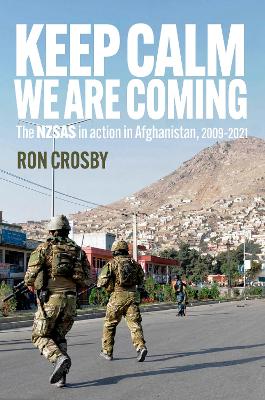
Keep Calm — We Are Coming briefly backgrounds the New Zealand Special Air Service deployment in Afghanistan — then goes into action.
While primarily training Afghan forces, in Kabul the NZSAS had to respond to a series of ‘spectacular attacks’ by heavily armed Taliban fighters wearing suicide vests and determined to inflict major casualties.
In the words of those who were there, Ron Crosby recounts how the NZSAS resolved three terrorist attacks in Kabul between 2009 and 2012, and evacuated New Zealanders from Kabul Airport in 2021.
This fast-paced book reveals how a highly trained group of Kiwis saved hundreds of lives in highly dangerous conditions, with colour photos showing the attacks and their aftermath, and the chaotic airport scenes.
.jpg&w=1920&q=75)
The following extract from Keep Calm — We Are Coming (Oratia Books, $45) is republished here by permission of the author and the publisher.
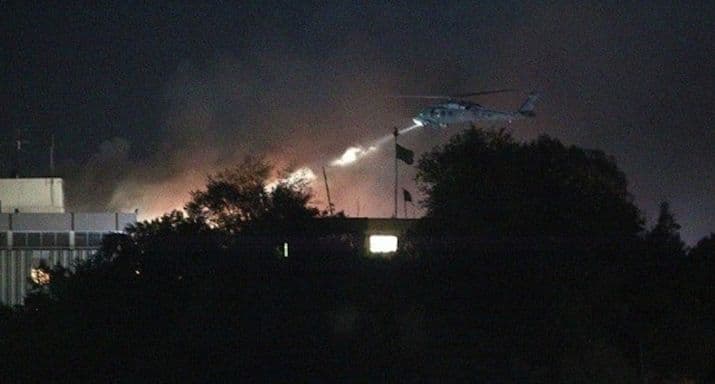
On 28 June, 2011 the Hotel Intercontinental in Kabul, Afghanistan came under a terrorist attack at a time when it was occupied by many international guests. Two of them were British women, politician Lady Fiona Hodgson and her companion, who were in the country to further the rights of women.
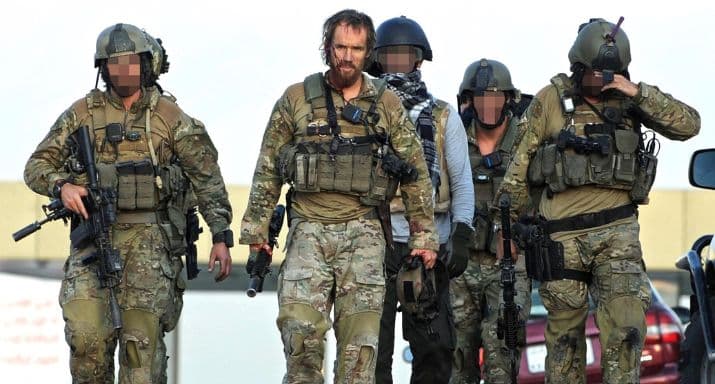
An Afghanistan special police force called the Crisis Response Unit (CRU) was called on to respond. The CRU were mentored by a small group of NZSAS Regiment operators. In the pitch-black conditions encountered within the hotel, which was set ablaze during the fighting involved in the response, the NZSAS men with their night-vision goggle capability ended up at the sharp end of the fighting.
The following passage describes events following the heavy fighting involved in clearance of some of the floors of the hotel and the roof.
SPECTACULAR ATTACK AT THE INTERCONTINENTAL HOTEL
Back at the hotel, though, things were not quite so beautiful. The New Zealanders all dropped down to the fourth floor through the southern stairwell after finding they could not enter the fifth floor corridors because of heavy smoke, despite a number of efforts. Unfortunately the fire alarms would not work on any floor either.
While all these events had been unfolding, Lady Fiona and her companion were still trapped in the darkness of the wardrobe in Room 206 on the second floor.
Still, from at least one earlier text exchange it is plain Lady Fiona had not completely lost her sense of humour or dignity:
…
The sense of helplessness did not ease at all as heavy bursts of firing and explosions continued.
About two hours into the incident I remembered I had registered with the British Foreign Office website before coming to Afghanistan, and on my arrival at Kabul Airport I had received a text giving me a helpline number at the Embassy. After a brief discussion with my companion as to whether they could really help, I decided to text them but on receiving no response I decided to call them. The phone was answered by someone called G who was to become our ‘rock’ during the next few hours.
I rather foolishly started by saying ‘I am sorry to bother you, but we are in a cupboard in Room 206 of the Intercontinental Hotel and there is a lot of gunfire going on.’ I was worried he would write me off as some sort of nutter, but instead he listened attentively and asked various questions particularly focused on where the firing was coming from.
From then on, we were on the phone on and off to G for most of the night, and my companion and I took turns talking with him.
On occasion when the firing got worse he would tell us to leave the line open so he could hear what was happening. (After about 45 minutes, or it seemed like that, in retrospect rather foolishly I told him I was concerned about the phone bill which was about one pound 65 cents per minute!)
The advice from G was to stay in the cupboard and to stay calm.
He was fantastic — he was calm and professional, and we took our cue from him. At one point he said quite sharply to us that we were not to open the door to anyone except the Country Director.
But then suddenly above all the din we could hear the noise of a helicopter. I remember we were on the phone to G at the time, and reported to him that we could hear a helicopter. The next moment there was the most enormous explosion and the whole hotel rocked. We thought that the floors would give way. That was followed by other explosions — below and somewhere else.
This added to our fears — we were fearful that the hotel would be blown to pieces and we would be crushed.
Finally we heard what we hoped was the sound of the Army — as there was shouting and more shots.
Then there was a very long lull in the shooting, and the Country Director phoned to say it was all over. However, the advice from G was still to stay put and wait to be collected.
Then after what seemed to us to be an age the firing started up again — only this time even closer. During these long lulls my companion and I had periods of conversation. At one point she was querying why she had come to Afghanistan when she didn’t have to, and observing that perhaps she should give up work and have a second baby. I responded that I had not had to come either, and that perhaps I should retreat to Kensington and become a ‘desperate housewife’.
We both at times tried to lighten things up with a little similar humour and I remember saying, ‘I was not going down for breakfast — no matter what!’
But mostly we sat silently listening…and as the gunfire was closer we felt more sickening despair, and some limited relief when it seemed further away. The sounds of firing and explosions continued to vacillate — from downstairs, upstairs, along our corridor, below, above. The whole incident just seemed to last an age during which our terror ebbed and flowed. The last hour was the worst, as I really did think we were going to die.
During that hour we could hear people kicking in doors and then shooting. We did not know who was doing that, and could not help worrying it was the insurgents.
With the help of the CRU the NZSAS men then started to clear all the rooms on the fourth floor and below, clearing from south to north. SSgt Jamie went ahead to the lobby with the medic Sgt Bruce M and helped set up a small search and containment area to search and hold the hotel guests as they moved down the northern stairwell.
ANCOP (Afghan National Civil Order Police) came in as the hotel guests were moved into the kitchen, where they then provided them with protection. SSgt Jamie was intrigued to be asked by a civilian if it was safe for him to go back to his room; he responded that while it might have been cleared they could not yet be certain and he was probably wiser not to do so just yet.
At this stage the Kiwi EOD team leader also cut the suicide vest off the insurgent’s body in the lobby. With that done SSgt Jamie moved back into the hotel accommodation area with the EOD and SST (Specialist Search Team) enablers.
Those deployed supporting team members in the Regiment played critical enabler roles, not only vital in a direct sense of what they contributed in their specialty, but also in releasing the badged operators.
(The engineer enablers conducted the highly dangerous disruption of the firing chain of suicide vests on two deceased insurgents, clearance of a potential booby trap, and the critical task of clearance/profiling of shocked, distressed hostages.)
…
As the NZSAS operators moved back up to the roof they passed firemen all armed with AK 47s and noticed that the firemen were already bringing the fire under control. The NZSAS team went up to the roof for the EOD and SST men to do their scene examination involving photos, explosive testing, and cutting the vest from the last insurgent body. The rest of the Kiwis were discussing how the battle had panned out.
By now dawn was starting to break, as it was about 4 a.m. Cpl Steve Askin recounts what then occurred:
Suddenly we started to come under heavy fire, which at first we thought came from higher ground. We all thought that it was a secondary attack, which insurgents had been known to launch after the initial attack had drawn in a collection of security forces.
We all took cover and tried to work out where the fire was coming from.
LCpl Willie K and I pushed out to the southern edge where we managed to gain the attention of an ANP policeman in the cordon below who waved out to us, and fire started to dwindle away and stop. Only then did we realise that the fire had been coming up from the inner cordon.
It then turned out, from some comms we picked up, that the reason for the fire from the cordon was that another insurgent had opened fire from the fifth floor, which led to the inner cordon opening fire on those on the roof.
When the firing had stopped they moved to the northern stairwell where they were told the CRU had left the hotel, once again without informing the Kiwis of their movements. SSgt Jamie realised that this last insurgent on the fifth floor would have to be dealt with by the Strike Troop and the mentors, to whom he resignedly said:
Well, we just have to deal with it.
Keep Calm by Ron Crosby is on sale in bookstores nationwide.