Extract: The Beaulieu Lane Allotments Society
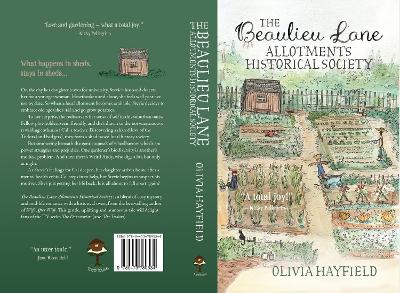
On the day her daughter leaves for university, Stevie’s husband deserts her for a younger woman. Heartbroken and alone, she feels well past her use-by date. So when a local allotment becomes available, Stevie decides she may as well embrace old age (she’s 43) and go grow potatoes. To her surprise, she rediscovers her sense of self in this suburban oasis. Fellow plot-holders seem friendly, and she’s drawn to the not-unattractive rewilding enthusiast Cal, a teacher.
Discovering a shared love of the Tudors (and badgers), they form a shed-based local history society. But simmering beneath the gentle squeak of wheelbarrow wheels are power struggles and prejudice. One gardener’s biodiversity is another’s mollusc problem. And then there’s Weird Andy, who digs a lot, but only at night. As Stevie’s feelings for Cal deepen, her daughter arrives home after a mental health crisis. Cal steps in to help, but Stevie begins to suspect his motives. She’s just getting her life back.
Is it all about to fall apart again? The Beaulieu Lane Allotments Historical Society is a blend of cosy mystery and mid-life romance with a historical twist, from the best-selling author of Wife After Wife.
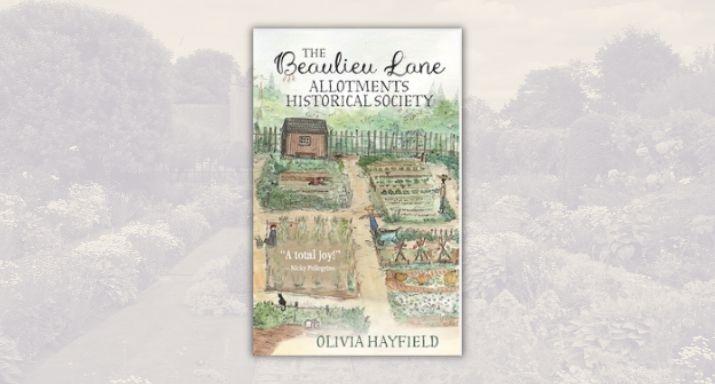
Extracted with kind permission from The Beaulieu Lane Allotments Historical Society, by Olivia Hayfield (Treehouse Books, $28).
Chapter 1
Stevie frowned at the glass of wine in front of her, wondering how it had got there. She had no recollection of pouring it. Her single action since her husband had softly, apologetically, shut the front door behind him – click – had clearly been to pour herself the last of yesterday’s chardonnay, and it had been sitting there offering to help ever since.
She didn’t have the energy to engage with it. The connection between her brain and muscles had dropped; the weight of today was pinning her down. She’d been slumped at the kitchen table staring into space for how long now? Time had glitched. She was paused, here in this quiet, quiet kitchen, where the faint aroma of last night’s dinner hung like a ghost in the air.
The whiff of garlic conjured the memory of them toasting Daisy, about to head off to university. Glasses clinking; Stevie swallowing down the tears, forcing a smile.
Their little girl was leaving home.
She closed her eyes and inhaled a long, shaky breath. It was overloud in the silence. The kitchen was never quiet. Always the radio chatter, the rustle of the bread bag, the opening and shutting of the fridge as the family foraged for food.
There would be no more of that. No more busy kitchen. She should put the radio on to shoo away the silence, but she couldn’t seem to move her limbs. Hadn’t been able to since …
Did that really just happen?
Since Adam had left her.
She was alone. Daughter gone (expected), husband gone (a surprise). Past her use-by date. Discarded. Surplus to requirements. A future she couldn’t begin to imagine lay ahead, like an abyss. Despair was a dark shadow, waiting to push her in.
Hey – enough with the drama. Be stronger. Drink the wine.
Stevie took a sip. It was warm and sour. But it had tasted lovely last night, when Adam had poured her another after their daughter had gone to bed.
‘Stop worrying,’ he’d said. ‘She’ll be fine. And it’ll be a new start for you. Be positive – you’ll be a free woman! All those things you’ve never had time to do, now’s your chance. We should drink to that.’ He’d raised his glass, given her his best crinkly-eyed smile. And for a moment she’d felt a lightening of the load, an easing of the angst of being the mum of a fragile teen.
But now, his words had a whole new meaning. She was a lot freer than she’d expected.
He’d dropped a hand on her shoulder, given it a squeeze. But he hardly ever did that, she realised, viewing the scene through a new lens. He was a hugger, not a shoulder squeezer. And his over-enthusiastic tone, that smile – she’d assumed it was an attempt to mask his own heartache at waving off his little girl. But those words, replayed, were loaded with new meaning.
How do I tell Daisy her dad’s gone? How could Stevie possibly land this news on her daughter during her first week at uni?
Unless Adam had already told her he was intending to leave?
No, he wouldn’t have done that, given Daisy had barely made it through Year 13, had only recently felt strong enough to fly the nest.
But then, what sort of person abandons his wife the day her only child leaves home?
I’m so sorry, I didn’t expect to fall in love … felt I should stay till Daisy left, for her sake.
Finally a stab of pain, so fierce, so intense, it made her gasp. Tears blurred her vision. Then … disbelief. She sat up straighter. A glimmer of anger. Could his words have been any more clichéd?
Emotion was at last seeping along her veins. Her mind was rebooting.
Thank you, wine friend.
Stevie wouldn’t break the news, not yet. And she wouldn’t be telling anyone else, in case that news made its way to Daisy.
And maybe, said a little voice in her head, her husband would come to his senses. Perhaps all this – today’s bombshell – was some sort of mid-life crisis,
sparked by Daisy’s departure. All blokes had them, didn’t they? Just another rite of passage.
Like dropping off your child at their halls of residence (was it only this morning?), lugging a box of Ikea essentials along the corridor. Stevie had buried a
new mug under the bed linen, with the words If you tumble, make it part of the dance! on the side. She’d attached a label: Too cheesy? Love and a million hugs (missing you already!), Mum XXX
Weaving past parents and students, exchanging fleeting smiles with other mums – Isn’t this hard? Wondering how long to stay. Prolong the pain, or dump and run?
Dads checking their watches, diverting sad thoughts to the drive home. Right! Better be off. We’ll leave you to settle in. The awkward, impossible pause …
And Stevie had thought that was why Adam was so quiet on the way home.
There was a clatter as Henry’s ginger head appeared through the cat flap, followed by his round middle and stripy tail. He glanced over.
‘Sorry, puss, there’s only me. Daisy’s gone. So’s the other one. Just me ‘n’ you now.’ She held out her hand and he ignored it, jumping onto a seat and settling in for a wash.
She frowned. ‘You don’t give a damn, do you?’ Cats might enjoy attention, but they needed no one.
I’ll have to be more like him.
But humans need people, and love.
Who will love me now?
Stevie finally let the tears have their moment. As they spilled over she took another gulp of wine and allowed in the image of Daisy looking lost and terrified, in her new room with its generic blue-grey carpet and curtains, its narrow bed and pale MDF furniture. Stevie had poked about, avoiding her daughter’s eye, pointlessly opening and shutting drawers and wardrobe doors; going over to the window, gazing down at the parents and first years making their way along the paths. The rumble of cases, the high-pitched, excited chatter.
This scene’s playing out all over Britain. Thousands of us, trying not to cry.
She needed to believe this would be her daughter’s turning point. That she’d find her tribe, her vibe; that she’d be happy, now she was about to achieve her dream of studying history.
Or at least, okay. Okay would be great.
‘We should leave you to it now,’ she’d said, wanting to go while self-control still held her hand. Seeing Daisy fighting her panic, she’d bit back the words about coming home at weekends whenever she wanted, about phoning any time, day or night. Daisy knew all this.
‘Short and sharp, we agreed?’ Her tone was brisk.
‘Tears aren’t helpful,’ Adam added, as Daisy’s bottom lip wobbled. ‘Three-way hug and then we leg it. Let’s do this.’
Daisy had clamped her arms around Stevie and pressed her cheek into her mother’s tight chest. Adam’s arms encircled them both as Stevie breathed in the
sweet, coconut smell of Daisy’s shampoo, and the hug grew fiercer. Nothing had changed. Daisy was just a taller version of that anxious little girl on her first day at school, at every children’s party. I don’t want to be here, Mummy. Don’t make me stay.
‘You got this, Daze,’ said Adam. ‘I’m counting to three, and then we go.’
Stevie wondered, now – what had he been feeling? She’d thought this was the hardest part of the hardest of days. But for him, it had only been the start.
‘Yep, count it down, Dad,’ Daisy had said, her voice shaky. ‘Then go, parents. I’ll be fine. Just bloody go.’
‘Three … two … one.’
They broke apart, and Adam headed out of the room calling, ‘Bye, Crazy Daisy; see you at Christmas!’ He raised a hand, didn’t look back.
Crazy Daisy? The man had the sensitivity of Gordon Ramsey.
Stevie turned in the doorway, met her daughter’s eye: ‘Love you … if you–’
‘Just go, Mum!’
The Beaulieu Lane Allotments Society is available in bookstores now.