Review: Guiding Lights: The extraordinary lives of lighthouse women
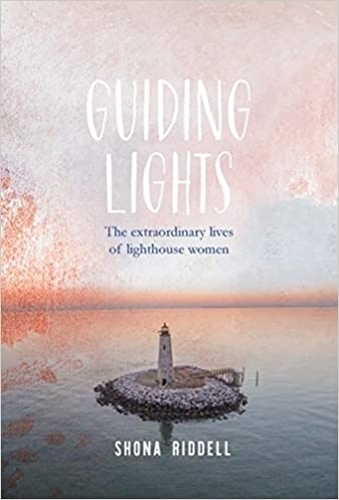
It’s hard to imagine any single structure as romantic as a lighthouse. A heroic beacon, lonely and steadfast against the elements, its sole purpose to save lives and guide countless unknown souls through danger. Shona’s Riddell’s lush, gorgeously illustrated history captures the romance of lighthouses from a captivating new angle: the women who kept them.
Guiding Lights is a curated selection of tantalising historical stories presented with a lightness and deftness that belies the intense underlying research. It takes a lot of digging and sifting through the raw sand of history to find gems like these. Some are in-depth profiles while others are snapshots and anecdotes. The stories are referenced with a full bibliography so you can pursue deeper details of something particularly intriguing; embedded photos of the lighthouses give sometimes horrifying context to these endlessly fascinating and bizarre tales.
The book opens with some background into the often grandiose and always unwieldy attempts to invent lighthouses. Ancient kings challenging the gods of the sea, the unfortunate keeper who swallowed molten lead while trying to put out a fire and workers tied belly-down to rocks to avoid being swept away while they laid foundation stones all feature in this compendium of difficulty. These stories set the scene for the isolation, danger and bleakness of the lighthouse-keeper’s life.
It seems counter to our understanding of the past to see women tolerated at the helm of such a necessary piece of infrastructure as a lighthouse but in many cases, it came down to convenience. When a keeper died, usually from one of the attendant dangers of lighthouse-keeping - his wife or daughter took over. She had probably been doing the work anyway and the women were found to be diligent, reliable and excellent record keepers (paperwork is one of the unexpected perils of keeping a lighthouse and was the downfall of at least one of the veteran keepers featured). Keeping was considered a respectable job for a single woman and, perhaps most surprisingly, paid women the same salary as men.
The job of lighthouse-keeping isn’t just keeping a light lit; Riddell focuses her lens on several heroic women whose sea-rescues were little short of superhuman. Rowing out into dangerous seas, grasped at by desperate victims of shipwreck or foolhardiness, they saved many lives. Some were, as a result, thrust unwillingly into the glare of a different spotlight, that of fame and publicity. This is, of course, on top of the everyday heroism of being a keeper: risking death to clean the glass exteriors, waking at all hours to trim a wick, handling birth and death – or even cooking and laundry - in total isolation, bereft of resources. Mary Jane Bennett, New Zealand’s only female lighthouse keeper, didn’t even have a fireplace. She and her six children would retreat to a nearby cave when the strong wind threatened to blow her shack down.
Guiding Lights is a beautiful, clever book, capturing the stark, wave-lashed ruggedness of lighthouse-keeping. As Riddell says, describing it invites clichés but her own work seeks out the original: a chapter on haunted lighthouse legends, a delve into the medical kits and a glimpse into the almost unwritten history of non-white keepers. This is a book that celebrates women’s capability and determination while maintaining a sense of humour and humanity about its subjects. The lives of the lighthouse women were and are extraordinary and so is this treasury of their stories.
Reviewed by Ruth Spencer