He Whenu Whiria / Woven Threads: Hana Buchanan and Melody Nixon
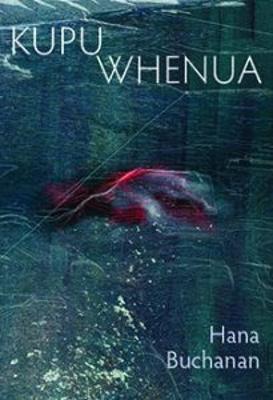
Kete is excited to feature this kōrero between Hana Buchanan from Ngāti Haumia ki Te Aro, Taranaki and Te Atiawa, author of the recent toikupu-poetry collection Kupu Whenua, and Melody Nixon, a writer and healing arts practitioner, with Scottish, Irish, English, French and Italian whakapapa.
.jpg&w=1920&q=75)
Kupu Whenua (Steele Roberts Press, 2026), takes us on a journey through mountains and waterways, layers of history, time, language and perspective, inviting a fresh look at the once familiar. The following excerpt of ‘Full enjoyment’ from Kupu Whenua is one of many celebratory expressions of mana motuhake found in this debut:
Full and undisturbed enjoyment —
of our lands, of papakāinga
of cultivation sites,
wāhi tapu, including our urupā,
waterways and fisheries —
as long as we so may wish
as long as we so may live
as long as our feet connect with this whenua, with this wai
as long as we so choose to have a birthday picnic at Waimapihi reserve
the headwaters of our awa
as long as we enjoy the fish and chips at Taranaki wharf
the mouth of our awa at our tupuna pā
as long as we take the high road and back roads
avoiding all the red light stop zones
all the way around our harbour and up and over the hills
our whole takiwā
full and free enjoyment
Melody: To me, ‘Full enjoyment’ showcases the meeting of mana whenua with a colonial epistemology of domination of the land, as expressed in the green belt of Te Whanganui-a-Tara. I see this as part of your ongoing reframing of what it means to be mana whenua in the urban context of Te Aro, central Wellington, and its surrounds.
Hana, many of your toikupu address this confluence in and around the city. Another toikupu in this debut collection, ‘Maitarangi ka mua ka muri,’ moves between the maunga Maitarangi, also known as Mount Victoria, and your own body. What does this toikupu mean to you?
Ka mua, ka muri
Walking backwards into the future
Have you ever tried it?
Walking backwards I mean
Hana: Writing this toikupu was pleasurable and healing. At the time, I was training for a long walk in honour of a dear friend, and this involved walking backwards, literally. This practice appealed physically and metaphorically— flipping the perspective and orientation point for my experience of each moment. It was also an embodied way to experience a well-known whakataukī, ka mua, ka muri: ‘walking backwards into the future’ or ‘moving forward informed by the past.’
We are constantly looping and engaging with an ao Māori spiral time: past present future, te ao mārama, this physical world of light, and te ao wairua, spiritual dimensions. Distinctions between these dimensions can be very fine and are certainly permeable.
At the edge of our harbour
I turn my back to the wind
I walk backwards into the future
I see the edges of the coast receding
I see the remnants of Ngake’s explosive escape
scattered through the waters
A sharp reminder of possibilities beyond confines
Ngake is a tupua of a time before time. Ngake and their companion Whātaitai created many of the landmarks we see in our harbour today. This includes the channel that now connects the harbour to te Moana o Raukawakawa, and parts of the inner city landscapes of Pōneke (Miramar peninsula and Hātaitai). Ngake swam out into the great oceans, while Whātaitai remained in the landscape and transformed into a spirit bird.
I see Matairangi
he mata-i-te-rangi
I see Whātaitai
ka tangi te ngākau mōna
‘Ka tangi te ngākau mōna.’ The heart cries out for him/her/them: Whātaitai and my friend, Phil (who the poem is dedicated to) and others, including my tūpuna who have passed on, but who still connect to this land.
Melody: The weaving of Te Reo and English in Kupu Whenua keeps the poems rich in feeling, along with the ways you emphasize rhythm and draw on oral traditions.
Hana: Yes, all creative expression comes from, and is located in, a time and place, and reflects a world view and knowledge system or systems. I studied English Literature at university, and have worked as a language and literature teacher. Nowadays, I like bringing a Taranaki indigenous perspective to that western form of literature that came as part of the settler process here. I draw on both New Zealand English and Te Reo Māori because I live in a hybrid world, drawing from both ways of being and the associated traditions.
Melody: It strikes me that the power in your work arises here, in this hybrid space. As you make Pākehā time—and other norms of Pākehā culture—unfamiliar, you help us to see them new. At the same time you refamiliarise Te Ao Māori and the kōrero (narratives) of Ngake and Whāitaitai, the incredible beings who shaped the harbour we live with. The two cultures are visible side by side, like elements in a developing photo. This leaves me with a sense that this current colonial moment is temporary and permeable, and I find that relieving, hopeful.
Hana: Taking the example of ‘Matairangi ka mua ka muri’, and also ‘Full enjoyment’ as touched on above, for me toikupu is a really powerful, and efficient mechanism for layering world views and perspectives, including different conceptions of time, relations between generations, and relations between people and land.
When I use ‘I’, I’m not really meaning a singular ‘I’, part of the vertical gridlines of colonisation and the traditions that underpin it. I’m meaning the ‘I’ that is part of ‘we’ and the land and the rhythms of the land, its fresh waterways and the coastal ocean waters. Tangata whenua, people and land, we’re the same.
Melody: I love the way ‘Matairangi ka mua ka muri’ guides us to look at the woven whole: How harbour sides shape us, our words, and our ways of speaking. Kupu, whenua – how are your toikupu voicing this whenua?
Hana: Toikupu, a word art form, is definitely made to be spoken - especially and ideally on our lands. This is all part of reclamation and building and rebuilding identity. This is why I create works entirely in Te Reo Māori or with reo Māori woven throughout—even when I know that listeners and readers have different levels of understanding of the actual words—but we are all experiencing something, a feeling, and we are seeing our reo on the page. I’m happy for our reo vibrations to be back on our whenua in all sorts of contexts and spaces.
Melody: The sound waves travel to our ears like visual waves; weaving together time and voices.
Shall we close with an excerpt of ‘Nō te whenua’ (‘Of / from / belonging to the earth’)? I am drawn to this toikupu as it links your lyric ‘I’ to her wider context, to Te Taiao, to Papatūānuku —the context that Kupu Whenua helps us to see, sense, and feel that all poetry is embedded within. Your toikupu points us toward Te Taiao and Papatūānuku as the space holders for this mahi; a web in which every ‘I’, and each of your readers, is held.
Hana: Thank you, Melody. Yes this toikupu takes us to another maunga of Te Whanganui-a-Tara, Ahumairangi. Kupu Whenua as a whole collection continues that journey around the lands and waterways of what is now the capital city, and builds on the connections and threads we’ve touched on here.
When I climb
to the viewing platform
on Ahumairangi
our tallest peak – so often
over-looked –
When I climb
to the viewing platform
on Ahumairangi
mid Covid lock-down
and hear a constant murmuring
below
the silenced hum
of the city (non) – operations
Is it you Papa, speaking the truth that is only heard in silence?
Note: This kōrero is part of an ongoing conversation between Hana and Melody about toikupu, language, identity, colonisation in Te Whanganui-a-Tara. Hana’s contributions as a mana whenua writer are in standard text, while Melody’s contributions as a settler academic are in italics, to point toward and invert the colonial logic of ‘always italicizing’ indigenous languages and viewpoints (Te Punga Somerville, 2022).
Kupu Whenua (Steele Roberts Press) is available in bookstores now.