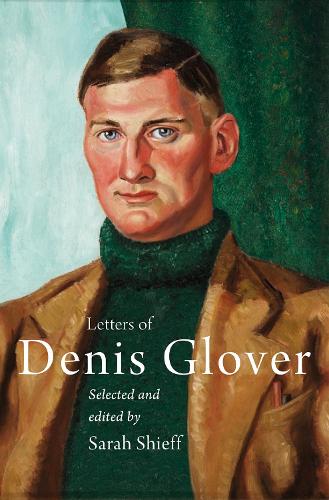
Review: Letters of Denis Glover
Denis James Matthews Glover. Poet, publisher, printer, informal historian, co-founder of Landfall, decorated (DSC) World War Two naval veteran of Arctic convoys and the D-Day landings. Also boxer, swimmer, Boy Scout, classical scholar, mountaineer, cold-water and hot-water sailor, a prodigy who could read fluently when he was six, a man who “made whirlwinds to throw himself into”, a roisterer whose drinking led to a sad, frequently sordid decline. It was a packed life.
We've had his verse, especially the Sings Harry and Arawata Bill sequences, chiming with perfectly-observed details of rock, river, crag. (And that bloody Magpies, which still quardle-ardle-oodles at nearly every New Zealand schoolkid.) We've had the wonderfully subversive memoirs, the works on typography, the excellent biography by Gordon Ogilvie. Now come the letters, in this meticulous selection by Waikato University's Sarah Shieff, who has already made a grand job of Frank Sargeson's correspondence.
There are 500 of them, sourced from archives in three countries, and addressed to some 100 recipients across half a century. It's a big book: 800 pages. Build up your biceps. It's also a magisterial one. Shieff has chosen with authority and sensitivity: her outline of the criteria behind her choices is utterly fascinating. Rather endearingly, they include an acceptance of those which, “appear to have fallen victim to mice and damp,” in Sargeson's iconic Takapuna bach.
The gallant 500 are chronologically arranged, with full bibliography, index, unobtrusive footnotes, helpful notes on the most significant correspondents. They begin with a teenager's complaint to his mother about school exams and the dentist; end 52 years later with a message to Auckland editor John Barnett (“Valiant John”) just a week before Glover died. They're addressed to virtually every New Zealand literary luminary of the time: Curnow, Sargeson, Monte Holcroft, Lauris Edmond, Ursula Bethell, Brasch, Frame, ARD Fairburn, scores more.
You can read them sequentially as a biography or you can dip around in them. Letters are always performances, addressed to the writer as much as the recipient, and son Rupert's Foreword pithily acknowledges how his father's often aimed to put people on their mettle. Here's a few fistfuls. “Dear Fairburn” becomes “Dear Friend”. First wife Mary is “Honeybunch....Dear Old Playmate”. (Yes, well...) Sargeson is told “We (authors) really think we are the Lord's anointed.” Lover – one of several – Janet Paul hears about “the attractive little rockery” at their projected house in Karori.
Elsewhere, Glover tut-tuts about Fairburn's impatience with typographical niceties and thanks English printer Robert Gormack (“Bob, me old beauty”) for his “loving care and attention to detail.” He quotes Auden while training on board ship; talks affectionately to “Valued” Rupert re the Breaker's Bay home where he and admirable second wife Lyn hoped to live. To John Johnson of Oxford, he laments “the overwhelming negation” of war. He slates New Zealand cheddar, “self-puffed poetry”; Peter Fraser – “as Tory as a tortoise”; any editor who rejected him. He sneers at “Anglican spinsters”. For biographer Dennis McEldowney, he complains about, “smelly-drawered schoolgirl,” Katherine Mansfield. Yes, he could be misogynistic and ugly.
He's also exuberant, impetuous, inventive, warmly intimate, self-destructive; can swoop from precise academic analysis to demotic swipe. The letters are flecked with literary references, idiosyncratic abbreviations in Latin and Greek. He's as much concerned with printing as he is with writing. He wanted the best words presented in the best way and helped multiple New Zealand authors in the process.
He was a man, take him for all in all (and he'd have instantly recognised that quotation.) Sarah Shieff's judicious, sympathetic selection shows him splendidly.
Reviewed by David Hill