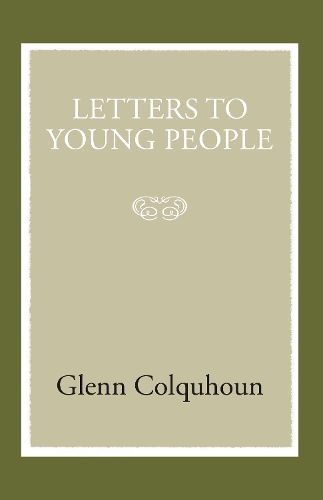
Review: Letters to Young People
Glenn Colquhoun is a Horowhenua-based GP and poet. His terrific debut The art of walking upright won the Jessie Mackay Best First Book of Poetry Award at the 2000 Montana New Zealand Book Awards. Three years later Playing God won both the Poetry Award and Readers’ Choice Award. Reading his new collection Letters to Young People underlines the way poetry and medicine are significant parts of Colquhoun’s life. Poetry feeds his medical practice and the medical practice feeds his poetry.
Letters to Young People speaks to the youth he works with at the Horowhenua Health Service, yet these are also poems to self. The blurb states: “Gathered together [the poems] represent the inventory of one doctor’s consultations taken home, responses to those moments he might have woken in the night and wished he had said things better.” Colquhoun responds to the hopes, fears, doubts, and physical and emotional challenges presented to him. He also listens and speaks back to himself. He offers reassurance and comfort, and he offers his own frailties and strengths.
The connections between personal narratives and medical practice is paramount. In the longer poem Once upon a time, Colquhoun stakes his claim: “Your body is a story” and “Most of the time I am a story doctor.” These lines stand out:
You probably think
when I listen
to your chest
with my stethoscope
I am listening
to your heart.
But I’m not.
I am listening
to your stories.
Diverse classic stories are held as mirrors in which to see ourselves, to recognise the difficulties, lessons, universal dreams that cross time and geographical borders, that go beyond fiction. Colquhoun makes it personal. He replays the Odysseus story in order to say:
I think of it
whenever I need
to find a way
through something
that feels like
a brick wall.
from ‘Once upon a time’
He draws upon the tragedy of Romeo and Juliet and how the story of Wonder Woman resembles a set of dolls, one story inside another, inside another. Perhaps the most haunting poems are those achieving the greatest intimacy, that offer balm to heartbreaking personal circumstances and a scaffold for living. In An attempt to prevent the suicide of a young woman, Colquhoun, and yes we know the speaker is him, tells Anna he doesn’t want her to die. He builds an image of boys leaping from a wharf, shivering beneath towels when back on land and, in that evocative image, so full of life, he hints at a lifetime of selves:
and their
old men sit back
from their
bodies
and smile.
In this tender and consoling poem, that feels as much for me as it does for Anna and Glenn, I am reminded of the way we carry multiple lives within, past and future, the way we cannot take life for granted, any of us. It is so very moving.
The presence of ‘wonder’ also moves as it replays the world we become immune to, underlining our smallness and largeness, our daily routines and our untethered dreams. In Supernova, Colquhoun draws Ethan’s attention to the star Betelgeuse, to its potential burst and collapse, to its luminous beauty.
That while the dog is barking
in the neighbour’s yard,
or the milk is going off in the fridge,
something beautiful
or amazing
might happen just in time for us to see it.
I was awake in the middle of the night recently and heard Glenn Colquhoun’s glorious Going West Curnow session on National Radio, and hoped another book was in the pipeline. How perfect that this nourishing book has arrived in the world.
Reviewed by Paula Green