Review: New Zealand Coastlines
There is no other way to get to New Zealand other than across the sea, whether that’s 10,000 metres above it in a jumbo jet or the slower route, directly across the waves. Being surrounded by a wide and sometimes inhospitable ocean has shaped Aotearoa in both a physical sense and a cultural one. Many New Zealanders feel a deep and abiding connection to the sea, whether we think of it as a place of recreation or work, or a link to our immigrant ancestry.
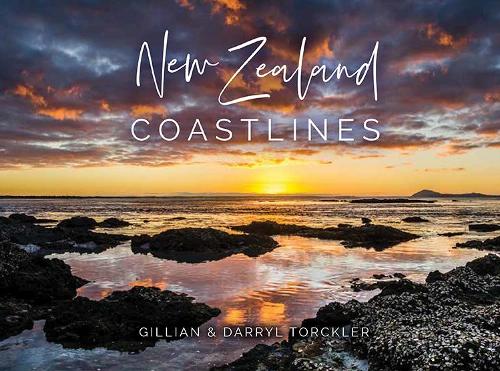
New Zealand Coastlines focuses on the thin ribbon of shoreline which edges our island nation, acting as both boundary and, especially in recent times, security fence. It pairs spectacular images by natural history photographer Darryl Torckler with brief introductory text by his wife Gillian, a medical scientist at Otago University when she isn’t either cruising the seas or writing about them.
The Torcklers are something of a power couple when it comes to producing natural-history books; this is one of three books coming out this Christmas featuring Darryl’s award-winning photography and Gillian’s informative text. Gillian also writes about knitting (yes, seriously), the sea and the liminal zone where it meets the land are their speciality. (Their other 2020 releases are 24 Hours On The Kiwi Seashore and 24 Hours In The Kiwi Bush.)
Darryl’s photographs are the stars, although Gillian’s text does the job of characterising and summarising each region, and there are a few interesting facts to be learned: for instance, the waters of the Hauraki Gulf are so cloudy because over-fishing in the 1960s destroyed most of the mussel beds which once filtered the water clean.
The photography ranges from the picture-postcard — bright summer days, luminous sunsets, reflections and effects — to the realist. One of the biggest impacts the sea has on Aotearoa New Zealand is its constant influence on our weather; Darryl’s images don’t shy away from the moody, the wild and the stormy. Punakaiki’s famous Pancake Rocks brood under an oppressive sky; wind-whipped waves batter both Wellington’s Oriental Bay and St Clair Beach in Dunedin. Some of the most striking pictures are taken from a fish-eye view, with the surface of the water dividing the image into above and below the waves, where sea creatures and marine plants live out their largely unseen lives. There is both detail and grandeur; the salty occupants of rock pools and inshore waters; rocky bluffs and vast sweeps of sand.
Among the book’s standouts are the less-familiar parts of the coast: the west and deep south of the South Island. Yes, these shores are wild and forbidding — you’re probably not going to whip out a towel and lie on the beach being sand-blasted at Haast — but Westland and Fiordland have an extreme, raw beauty that give the groomed white sand of the north a run for its money.
New Zealand Coastlines would be an ideal souvenir purchase for visitors and was probably conceived as such, way back in a time before Covid. However, its relatively small size means it would still make a great gift popped in a bubble-pack and posted off to friends and family elsewhere in the world — a reminder of how lucky we are to live here amid such astonishing natural beauty. For locals, too, it is a celebration of what we have. It’s a snapshot both of the coastal areas we live in and are familiar with, and those more remote parts of the country we might not have visited recently — or yet.
Reviewed by Sarah Ell