'Not simply to translate words': Leon Blake on translation into te reo Māori
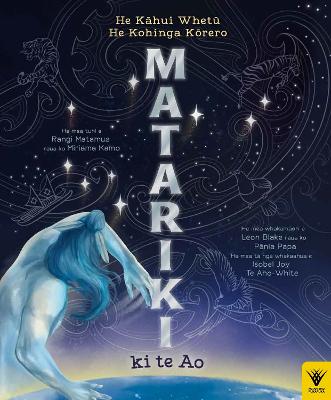
Matariki ki te Ao, co-authored by well-known broadcaster Miriama Kamo and Aotearoa's expert on all things Matariki Professor Rangi Matamua, and translated by Pānia Papa and Leon Blake, has been shortlisted for the Wright Family Foundation Te Kura Pounamu Award for Te Reo Māori at the 2026 New Zealand Book Awards for Children and Young Adults.
It's a beautifully illustrated book that features 21 stories, nine of which highlight the Māori Matariki stars, while the others reference the stories about this cluster from different cultures, from the Pacific Islands to Australia, Asia, the Americas, Europe and Africa.
Kete spoke to Leon Blake about translating into te reo Māori, how it felt to see the book on the awards list, and how it's an honour to write about Matariki.
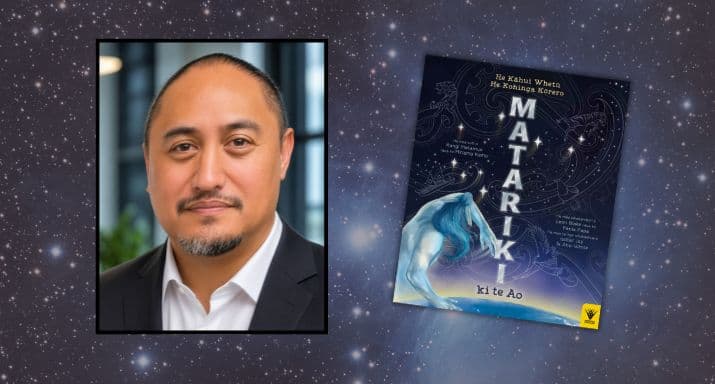
Kia ora Leon! Very excited to see Matariki ki te Ao on the shortlists for the Children’s Awards! How did it feel when you heard?
I was genuinely pleased, particularly for Miriama and Rangi. As the visionaries and authors, they poured so much thought, creativity, and passion into this project, so it was wonderful to see their work recognised in this way. Being part of that journey as the translator is a privilege in itself.
Can you tell us about the processes involved in translating a book like this one?
I believe my role as a translator is to carry the author's voice and intent through another language and cultural perspective. My aim is not simply to translate words, but to recreate the same experience for Māori readers while remaining faithful to the original story. At times, bringing those two worlds together can be challenging, but that's also one of the most rewarding aspects of translation. Every phrase requires careful thought, and where there's a will, there's always a way.
It must be an honour to write about Matariki, to bring that knowledge to young readers?
I agree. It is an honour to contribute, however modestly, to the renaissance, revitalisation, and wider dissemination of this knowledge. Books like these help ensure that mātauranga Māori continues to be shared with future generations in ways that are engaging, accessible, and meaningful.
Translation isn’t a process of taking each word and translating it alone. Do you feel a responsibility to maintain the feel of the original story?
Absolutely. Finding the right balance between preserving the feel of the original story and viewing it through an authentically Māori lens is incredibly important. I constantly ask myself, "How can I express this phrase or idea in a way that feels natural and authentic in te reo Māori?" Sometimes that means stepping away from a literal translation in order to preserve the author's intent and the emotional impact of the story.
What sort of questions go back and forth between author-publisher-translator? Do you talk much during the process?
Fortunately, the authors place a great deal of trust in our judgement and experience, giving us the freedom to produce the translations we believe are most appropriate. That said, if something is ambiguous or could be interpreted in different ways, we'll always seek clarification. Ultimately, everyone is working towards the same goal: producing the best possible book for the reader.
Matariki ki to Ao is in bookstores now.