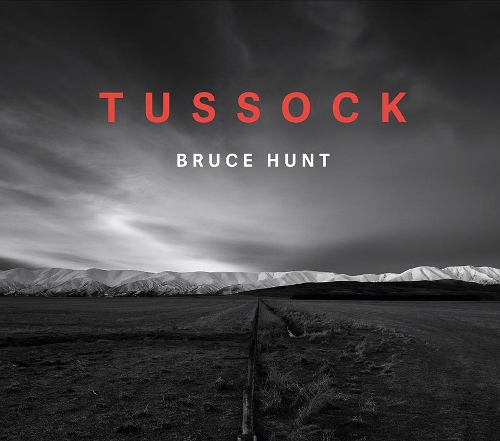
Review: Tussock
Many of the magnificent landscapes the first humans to reach New Zealand must have marveled at have, sadly, long gone. But sufficient still remain to stir the hearts of those who live here today and to attract others from around the world.
Probably because I have lived most of my life in the north of the country, I find myself particularly drawn to our coasts and kauri forests. My favour seascape is the unspoiled view from the South Head of the Hokianga Harbour. To the north, beyond the harbour entrance with its protective taniwha, massive sandhills run up the coast all the way to Cape Reinga. To the east, endless ranks of huge waves thunder from the Tasman. It is a place filled with wild, revitalising energy.
Alas, my attraction to the kauri forests is more of an exercise in mourning what has been lost. The most appropriate pilgrimage here is to visit the remaining pockets of kauri, like the Waipoua or Puketi Forests, where standing before a 2000-year-old giant like Tāne Mahuta you feel in the presence of immortals that treat the changes they have seen with a benign indifference. Then go to the wonderful Kauri Museum in Matakohe to take in Tudor Collins’ photographic chronicling of how those magnificent, seemingly endless, forests of ancient kauri were felled and milled, leaving only a wasteland behind.
The landscape that rejuvenates Bruce Hunt’s soul, the tussock of Otago and the Mackenzie Basin, falls between those two extremes. Tussock actually thrived as a result of the destruction of bush cover by the fires of the early Polynesians, and thereafter was partially protected by its inaccessibility. But in recent years the forces of development have reached the great valley-bottom plains of tussock, transforming them into dairy farms and tourist playgrounds.
Fortunately, as Hunt rejoices in his preface, the surrounding hills and mountains remain relatively untouched, and it is there he now turns for solace: “There is something wholesome and humbling, exhilarating and frightening in being in such vast and remote landscapes where you cannot but get a sense of your own insignificance.”
This book is his homage to what he calls ‘the Backlands’, and – apart from his one-page preface, a fascinating two-page foreword on tussock by Sir Alan Mark and minimal captions – it is a homage in images.
While there are some colour photos, mostly Hunt makes use of the greater atmospheric qualities of black and white to convey the brooding loneliness of tussock country. The frontispiece is an extraordinary picture showing what seems like a limitless ocean of tussock, its waves stretching all the way to the horizon.
Then there are the valleys, bordered by snow-capped peaks from which the tussock slopes run down to multi-braided rivers; wetlands, a tarn, huge lakes – some of them man-made – fringed by snowy peaks; winter landscapes covered in snow and summer scenes with tussock fronds waving in the wind.
There are some signs of human intrusion - a lonely cross, an old bath, weather-beaten sheds, a tramping hut with sofas waiting on the deck, a settler’s house, a split wood fence, a vintage caravan, the occasional lone sheep or cow – but this is an empty landscape.
When I initially looked through the pages of Tussock I was disappointed there weren’t more explanations of the stories behind the photos – and I do still feel that way really – but after spending more time with the book I realise that would conflict with the way Bruce Hunt wants us to share his special place. Hunt is an artist, a painter and photographer, who expresses himself in images, not words. Tussock country is best explored in solitude, silence and on foot, without the distraction of commentary and he wants his photos to be explored the same way.
Reviewed by Jim Eagles