Review: Clare Reilly - eye of the calm
I dare say that if Clare Reilly was a male establishment artist, her name would be as well-known as her best-selling cards, calendars and prints which, along with private commissions, have seen her work recognised all over the world and collected by art-lovers in countries as diverse as Argentina and Israel and many places in between.
Chances are you have received one of those cards or bought one of her annual calendars; indeed, as I was reading - sinking into - her beautiful book eye of the calm, a reminder from a local giftshop appeared on Facebook stating that the Clare Reilly 2022 calendars were now in stock and to “get in quick” because they always sell-out.
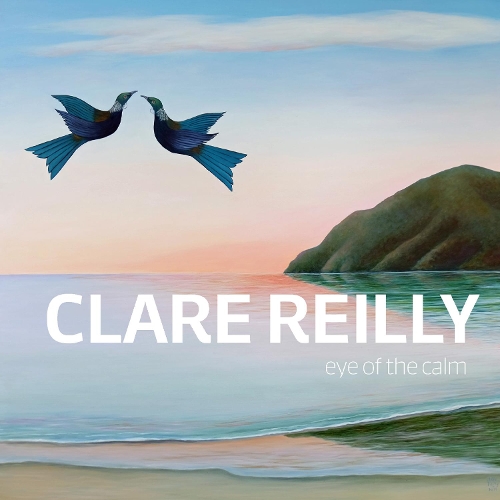
It’s not difficult to see why. Reilly’s work, featuring mainly native birds flying in resplendent New Zealand native landscapes, is stunning and gets space to soar in this attractively produced Exisle Publishing book which shows off to maximum affect her art as well as telling her story.
Reilly starts by recalling her earliest memory - an old leaking garden tap which had steadily dripped down a smooth grey wall to create a bright rusty orange stain complementing a “tiny colony of spongy iridescent-green moss” beneath it. She remembers being parked in her pram, as her mother did the morning chores, and being mesmerised by the seemingly unprepossessing collage in front of her: “I feel I was drawn to art by a fascination for colour and pattern, permanently imprinted on me at such an early age.”
She’s not deterred when one of her earliest artistic endeavours - drawing on “creamy” mortar between bricks on a hearth - ends with her being told off and witnessing her crayons thrown into said fireplace.
But when Reilly heads to Victoria University, it is to study law because her parents feel an artistic career is too uncertain and that she can always paint later in her spare time. It turns out, though, that she can’t be a ‘Sunday painter’ because she is constantly drawn to art and imagery, enthralled by nature and sights like birds in flight.
Meeting life partner Max Podstolski, Reilly begins “an intense dive into a passionate, sometimes volatile, existence of love and painting that was to sustain us over the next four decades.” She first exhibits her art in 1976; Max and she pack up lives in Wellington - the law career is forgotten - and head to the South Island dreaming of being full-time artists.
Naturally, it’s tougher than their youthful imaginings so it’s a frugal existence where they take other jobs to make ends meet but leave enough time - energy - for art. Reilly explains how she thought about going to Ilam at Canterbury University but decided against this, forging her own path and creating with steadfast determination a distinctive style.
The couple have two sons, Max becomes a librarian and Reilly works part-time as a Montessori teacher but painting remains a focal point for them: “For me, birds in flight signified a soaring of spirit, an uplift and a sense of joy.” They form the Primitive Bird Group and continue to embrace their “outsider artist” status.
Always at peace in nature, Reilly developed a passion for conservation and supporting conservation projects which, in turn, continue to fuel her work and highlight connections with the natural environment.
It’s heart-breaking to read of Max’s relatively sudden death in 2017 aged just 64 from an aggressive brain tumour but Reilly forges onwards, moving into a new chapter of her life. Eye of the Calm was an exhibition title she used back in 2009 as an expression of her life’s work and it neatly encapsulates her belief that we all need moments to rest “within a place of calm and meditation.” For Reilly, painting provides that space.
She shares her life story succinctly but there’s depth to her writing which inspires and encourages reflection. Apart from a longer opening chapter, it’s shared in shorter vignettes and poetry neatly spaced throughout eye of the calm which maintains a focus on the art itself neatly interweaving it with Reilly’s entire life.
Her paintings, far from naturalistic, have an almost ethereal quality in that the colours are luminous and there’s a meditative serenity to them but there’s also a vivid intensity where landscapes are hard-edged, rich yet also paired back.
Tui and kererū are most frequent subjects, but Reilly’s 2016 Arrival of the Shining Cuckoos and 2014’s Kākāriki Are Calling are among the images I found myself returning to along with 2004’s Paradise Dreams where the only visitors to a derelict house on a hillside are paradise ducks.
All in all, eye of the calm captures a vision of a life lived with commitment and dedication where a sense of joy, hope, renewal and powerful elements of secular spirituality shine through in art which is striking and eye-catching yet also tranquil and calming.
Reviewed by Dionne Christian