'There was no one walking ahead of me': Selina Tusitala Marsh speaks to Kete
Dr Selina Tusitala Marsh was the first Pacific Islander to graduate with a PhD in English from the University of Auckland and is now a Professor of English specialising in Pasifika literature. She won the Best First Book of Poetry award at the 2010 Ockham New Zealand Book Awards for Fast Talking PI, and her first book for children, Mophead: How your Difference makes a Difference, was awarded the Margaret Mahy Book of the Year at the 2020 New Zealand Book Awards for Children and Young Adults. She was the New Zealand Poet Laureate from 2017 to 2019, and performed for the Queen at Westminster Abbey in 2016 as Commonwealth Poet.
Today she is the inaugural Commonwealth Poet Laureate, and in between her time as Katherine Mansfield Fellow in Menton, teaching, and performing for the King at Westminster Abbey, she spoke to Kete! We’re very excited to share this interview.
.jpg&w=1920&q=75)
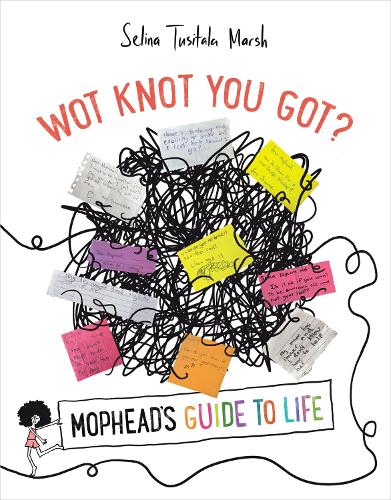
Talofa lava Selina, fabulous to be able to talk to you — we know how busy you are! Commonwealth Poet Laureate, current Katherine Mansfield Menton Fellow, What Knot You Got? Mophead's Guide to Life in 2024, and your FETŪ.STARS project. How do you find time to draw a breath?
Talofa lava! Ha — honestly, the breath is built in. I walk. I journal. Every morning at Menton I'd make a flask of coffee and walk the kilometre to Italy at Pont Saint-Ludovic, down to those extraordinary rust-and-ochre archaeological cliffs at the Rochers Rouges, the Mediterranean crashing dramatically below. That's where the breath happens. That's where I put things back in order. I think movement is inseparable from my writing practice — it's how I process, how I listen. After the Camino de Santiago in September 2025 (my next collection is made up of poems I picked up along The Way), I arrived at Menton with 800 kilometres of walking already in my body. In a funny way, I'd walked myself ready.
But also — and I say this genuinely — I am sustained by the work itself. When what you do is also your whakapapa, your genealogy, it doesn't feel like a burden. FETŪ, the Commonwealth Laureate work, the Mophead universe — they're all expressions of the same deep commitment to making Pacific voices visible, vibrant, unmissable. When the work feels that meaningful, you find the time.
Many of these things are 'firsts' — your appointment as first Commonwealth Poet Laureate ever, and as the first Pasifika woman to take up the Katherine Mansfield Menton Fellowship Award. Do you feel the pressure to be a trailblazer, especially when you sit down to write?
I actually feel the answer to this one in my body! When I first started out, I absolutely felt that pressure — and I think that's natural. I was the first person of Pacific descent to gain a PhD in English from a New Zealand university. There was no one walking ahead of me to show me the path. My mentor Albert Wendt once fixed me with that unforgettable gaze and said: 'Look behind you.' I turned and there was nothing there. 'Well then,' he said, 'if not you, then who?' That moment has never left me.
But something shifts over thirty years of doing this work. The pressure transforms into something more like responsibility — and responsibility, held gently, can be energising rather than crushing. When I sit down to write now, I'm not thinking 'I represent all Pacific people.' I'm thinking about the twenty women in FETŪ, about Grace Mera Molisa's fierce black volcanic stones, about Teresia Teaiwa's electric mind. Their voices call me forward. The trailblazing happens through the work, not before it.
There's also a liberating truth I've come to: you can't write anything worthwhile from a place of performance. You have to write from exactly where you are, and in order to do that, I practice appreciating my life.
You've said that 'Being the first Pasifika woman to receive this fellowship is profoundly meaningful to me and, I hope, to the communities I serve. It's a testament to the growing recognition of Pacific voices in our literary landscape.' Progress is being made, but there's more work to be done. In a utopian world, what would the literary landscape for Pacific voices look like?
In my utopian literary landscape — and I hold this vision with real hope, not just longing — Pacific voices are not 'included.' Inclusion still implies there's a centre doing the including. In my utopia, Pacific literature is a centre of gravity in its own right. Publishers, prize committees, school curricula, university syllabi all begin from the assumption that Pacific writing is essential, not supplementary.
It means Konai Helu Thaman and Haunani-Kay Trask and Kathy Jetñil-Kijiner are taught in schools alongside the canonical poets. It means young people in Tuvalu and Palau and the Marshall Islands grow up seeing their own islands reflected back in the books they read — not just as 'settings' for someone else's adventure, but as the full, complex, philosophically rich worlds they are.
It means Pacific writers aren't writing into a void and then having to also build the critical apparatus, teach the courses, advocate for funding, mentor the next generation, and perform their culture for curious strangers — all at the same time. That structural loneliness I know well. In my utopia, there is genuine collective infrastructure.
And honestly? It means FETŪ doesn't need to exist as a corrective. It means the book that took me thirty years to write because nothing like it existed — a book charting twenty pioneering Pacific women poets, each one the first from her island to publish a solo collection in English — would have been written twenty years ago by someone else. That's my utopia. A world where the catching-up is already done.
Can you tell us a bit more about your time at Menton? Did it feel a world away from home?
Oh, Menton. Where do I even begin? I came in the off-season — winter on the Côte d'Azur — specifically to stretch the euros thin, but I ended up stumbling into paradise anyway. The light there, a quality Mansfield wrote about, is absolutely extraordinary. Slant and amber, pooling through the balcony glass onto my writing table like warm honey in the mornings. Even the dramatic days, when Mediterranean waves reared up over the Promenade du Soleil and the sea showed its teeth — I loved those too. Beauty there keeps a backbone.
I visited Villa Isola Bella, and the same small ground-floor room with its modest garden window where Katherine Mansfield herself had written. Fifty-two fellows before me. I found that lineage deeply moving — and also clarifying. She wrote her most celebrated stories while her lungs were failing. The room asked for your full commitment. As did my sabbatical.
My daily rhythm was variations on: yoga, journal, walk, write, coffee, walk, write. Sometimes having coffee and journal time after walking the kilometre from France over to Italy at Pont Saint-Ludovic — another country, to buy bread and pastries half the price of those in Menton! Then down to those ancient rust-coloured cliffs and the salt-smoothed stones on the beach below. Walking after writing; writing after walking. I also got to travel — Paris for a UNESCO event with Witi Ihimaera, London to host a Commonwealth poetry evening with High Commissioners as the inaugural Commonwealth Poet Laureate. And the utterly joyful surprise of launching La Tignasse — the French edition of Mophead — at the Menton library, a bookshop in Nice, and the Angoulême International Comics Festival. Mophead speaking French! To Francophone Pacific communities! I didn't see that coming.
Did it feel a world away from home? Yes and no. Yes, geographically — Waiheke Island to the French Riviera is about as far as you can get. But I had my partner join me for 3 months as he worked on his books, my son Davey and his partner climbed the same cliffside path in Èze that Nietzsche walked while drafting Thus Spoke Zarathustra. I had twenty Pacific women poets living in my laptop, keeping me company every day. My people were everywhere I looked.
FETŪ.STARS has its roots in your PhD research and the first five 'foremothers of Pacific poetry,' which sounds epic, especially as the number of poets has grown?
It is epic — though I say that with full awareness of how long 'epic' took! I began my doctoral research in 1996 under the great Albert Wendt, focusing on the first five Pacific women to publish a sole poetry collection in English. That thesis became the seed of what is now FETŪ. Thirty years later, the constellation has grown to twenty poets across twenty island nations, from Oodgeroo Noonuccal's We Are Going in 1964 all the way to Lee Perez's work from Guam in 2024. Sixty years of first light.
The number grew because the literature grew — and because I kept looking, kept discovering, kept being astonished. Each poet is what I call a 'Star' — Konai Helu Thaman from Tonga is The Choosing Star; Grace Mera Molisa from Vanuatu is The Volcano Star; Kathy Jetñil-Kijiner from the Marshall Islands is The Basket Star. Each name is earned through the poet's central metaphor, the deep image that runs through their work like a current.
The organising metaphor of the whole book is star navigation — and it chose me as much as I chose it. Stars hold our stories, stories guided our ancestors across the Pacific. That knowledge is in my blood. And it struck me: everyone on earth, wherever they are, can look up and see stars. This book is my constellation — a literary navigational chart that any reader, Pacific or not, can use to find their way.
And you've also said it will be 'another genre-bending exploration of Indigenous Oceanic women's creativity — including my own.' Love that you're unafraid to merge and break apart genres, types, and spaces. It is a really important thing to acknowledge, that typecasting is unhelpful.
Yes, and I think this comes directly from the poets themselves. These women were not genre-obedient. Oodgeroo Noonuccal broke into print at a time when she was not supposed to exist as a literary figure. Grace Mera Molisa wrote poetry that was also political philosophy, that was also protest, that was also love. Teresia Teaiwa wrote theory that sang. When you spend thirty years in the company of writers who refused the boxes they were handed, you start to see all boundaries as invitations.
For me personally — I'm a poet, scholar, illustrator, performer, professor, mum, partner. I've always moved between academic registers and creative ones, between the page and the stage. My 'Led by Line' methodology is built on exactly this: following the bloodline, the written line, the spoken line, and the drawn line as a single integrated practice. There's no 'real me' trapped in one form waiting to get out.
And you're right that typecasting is unhelpful — particularly for Pacific women, who are still so often expected to be either 'the community voice' or 'the scholar,' either 'accessible' or 'rigorous,' either 'creative' or 'critical.' My answer to all of that is: yes. Both. All of it. At once. FETŪ is written in that spirit — it's scholarship with a poet's ear and an artist’s eye, accessible to anyone who has ever looked up at the night sky. If you’re interested in poetry? Or the Pacific? Or women? Or firsts? Then this is the book for you.
What's up next on your Commonwealth Poet Laureate schedule?
I’ve just landed (as I answer this interview) from London and Westminster Abbey! I performed a new work 'How to Make a Commonwealth Quilt' for King Charles III at the Commonwealth Observance Day service — making me the first poet to perform for two consecutive reigning British monarchs. I performed for Queen Elizabeth II at the same Abbey exactly a decade ago in 2016, so there's a beautiful full-circle quality to that.
The Commonwealth Quilt poem is close to my heart — it weaves together the voices and images of all 56 Commonwealth nations into a single piece of cloth, a new kind of flag. After Westminster Abbey, I'll be heading to the Commonwealth People's Forum and Heads of Government Meeting in Antigua & Barbuda at the end of the year, and continuing my work of commissioning and creating poetry for Commonwealth events globally. The mandate I was given is 'unity' — and my own guiding principle is 'love lifts.' Poetry is how I hold those two things together.
Oh, and back in Auckland, I'm convening a poets' talanoa workshop as the Mercator Fellow for Potsdam University for the 'Oceanian Poetic Collaborations' project — nine poets, two days, asking the big question: what gives a poem mana? Then we do it all again but in Tahiti. In August I’m performing and running writing workshops for Tuvalu’s Cultural Festival – very exciting and it’ll be the first time I will have stepped foot on my grandad’s island. There's always something coming! But Waiheke Island is waiting (and I’m performing at Waiheke’s first ever Pasifika Festival at the end of the month), and so is the next poem. Fa'afetai lava, Kete — this has been a real pleasure.
We think the pleasure is ours! Fa'afetai lava, Selina. You can see Selina perform in Westminster Abbey here.
.jpg&w=1920&q=75)