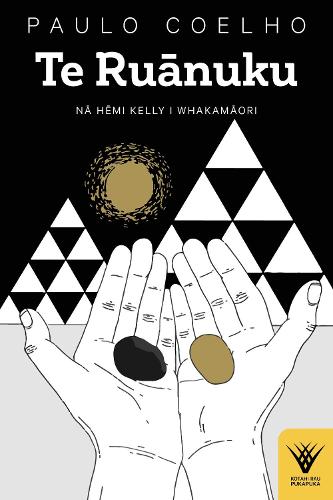
No te tau 1947 i whanau mai ai te kaituhi no Parihi, a Paulo Coelho, i Rio de Janeiro. He kaiwhakaari, he kaiwhakatangitangi hoki ia i mua, a, no te ekenga ona ki te toru tekau ma iwa ka arahina ia ki tana mahi hei kaituhi i tetahi haerenga tapu i te ara o Camino de Santiago. Na te iti o te hokona o tana pukapuka tuatahi, o The Alchemist, i whakatau ai tana kaiwhakaputa ki te whakarere i te pakimaero nei. Engari i nui ake te paingia o ta Coelho mahi e nga kaipanui i roto i te wa, a, nawai ra ka puta mai hei pukapuka kaha nei te hokona i te ao katoa. Nuku atu i te 230 miriona nga pukapuka a Paulo Coelho kua hokona puta noa i te ao, a, nuku atu i te 427 wiki e kitea ana ia i ta te New York Times rarangi o nga pukapuka e kaha nei te hokona. Huri i te ao, kua whakawhitihia ana pukapuka ki nga reo e 82, a, kua whakaputahia i nga whenua 170. Hei ta Kenzaburo Oe, hei ta te toa i te Nobel Prize in Literature, 'Kei te mohio a Paulo Coelho ki te kura huna o te toiwhitiiho a-tuhituhi.' Born in Rio de Janeiro in 1947, the Brazilian author Paulo Coelho was an actor and rock musician until, at thirty-nine, a pilgrimage on the Camino de Santiago led him to begin his life as a writer. Slow initial sales of his second book, The Alchemist, convinced his publisher to drop the novel, but Coelho's masterpiece grew with readers over time to become a huge global bestseller. Paulo Coelho's books have now sold more than 230 million copies worldwide and have been on the New York Times bestseller list for more than 427 consecutive weeks. Around the world, they have been translated into 82 languages and published in 170 countries. As Kenzaburo Oe, winner of the Nobel Prize in Literature commented, 'Paulo Coelho knows the secret of literary Alchemy.' Te Kaiwhakamāori / Translator He uri a Hēmi Kelly nō Ngāti Maniapoto me Ngāti Tāhu-Ngāti Whāoa. I tīmata tana whai i te reo Māori nōna e taiohi tonu ana, ināianei kua tū ia hei kaiako reo Māori. Kei Te Wānanga Aronui o Tāmaki Makaurau ia e mahi ana. E pā ana te nuinga o āna mahi ki te whakarauoratanga o te reo Māori me te kaupapa o te whakamāori kōrero. He ika a Whiro a Hēmi nō Te Panekiretanga o Te Reo, kua whakawhiwhia hoki ia ki te Toi Reo Māori, arā ki te tohu kaiwhakamāori. I te tau 2017, i whakamāoritia e Hēmi tā Witi Ihimaera pukapuka ko Sleeps Standing. Ka whakaputaina tāna ake pukapuka tuatahi ko A Māori Word a Day i te tau 2018, ā, i muri iho i tērā ka puta ko A Māori Phrase a Day. Ko tāna tuhinga auaha tuatahi i tuhia ai ki te reo Pākehā kei roto i te pukapuka o Pūrākau – he kohinga pūrākau Māori nā ētahi kaituhi Māori.Ka waiho mai ko Te Ruānuku hei pukapuka tuarua kua whakamāoritia nei e Hēmi. ________ Hēmi Kelly is of Ngāti Maniapoto and Ngāti Tāhu-Ngāti Whāoa descent. He started learning te reo Māori as a young teenager and naturally progressed into teaching roles after study. Hēmi is a full-time lecturer in te reo Māori at the Auckland University of Technology. His academic research and writing focus largely on the revitalisation of the Māori language and translation studies. Hēmi is a licensed translator and graduate of Te Panekiretanga o Te Reo (The Institute of Excellence in the Māori Language). In 2017, Hēmi translated Witi Ihimaera’s novella Sleeps Standing. Recently, Hēmi has published two books of his own, A Māori Word a Day in 2018 and A Māori Phof rase a Day in 2020. Hēmi published his first creative writing piece in English in Pūrākau, a collection of Māori myths retold by Māori writers. Te Ruānuku is the second book translated by Hēmi.