Flash fiction centre stage: Jack Remiel Cottrell and Frankie McMillan
Philippa Tucker enjoys the mastery on display in THE EMOTION DEALER AND OTHER STORIES and EDDIE SPARKLE'S BRIDAL TAXI.
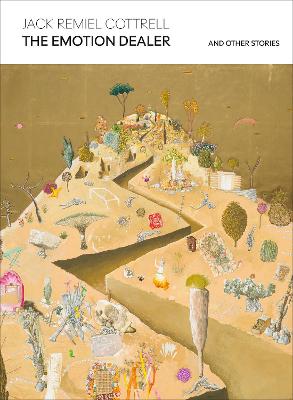
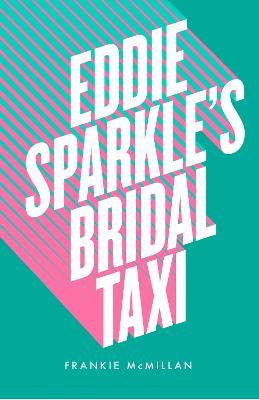
Flash fiction is a loosely defined genre. Perhaps this explains why neither Jack Remiel Cottrell’s The Emotion Dealer and Other Stories nor Frankie McMillan’s Eddie Sparkle’s Bridal Taxi invokes it on the cover. The former opts simply for the label ‘short fiction,’ while the latter advertises ‘prose poems and small stories.’ Most of these certainly fit within the ambit of flash fiction, although I like to think of the genre as the music video of the literary world—evoking a feeling or a mood as much as telling a story. In such short pieces, much must be hinted at, with the reader left to fill in the gaps. Both Cottrell and McMillan are masters at what to leave unsaid—and their latest collections do not disappoint.
The stories in The Emotion Dealer, a follow-up to Cottrell’s 2020 debut Ten Acceptable Acts of Arson and Other Short Stories, range from a few short paragraphs to more conventionally sized short stories. They also play with form, including things like numbered lists, a corporate email template, and a series of posts in an online chat group.
‘Voting Day’ is comprised of snippets of different voters’ experiences in Aotearoa New Zealand’s 2023 general election. Redacted words highlight the universality of the experience, hint at a lurking officialdom, and also provide a wry comic effect. Cottrell’s stories are clever and heavily laced with irony, often ending with a twist or a gut-punch. One of the more chilling stories adopts the form and language of a Duolingo-style lesson, in which the app employs a sadistic teaching method that reaches into the physical world (‘Learn Phrases You’ll Really Need to Use’).
Thematically, Cottrell’s stories explore technology, capitalism, disinformation, memory and knowledge. They lean towards sci-fi and speculative genres, with a large dollop of dystopia. They probe our dialogue with AI—the possibilities of technology to either strip away or affirm our humanity. ‘Honeymoon Child,’ for instance, deals with a man’s ‘rollback’ of his AI child once the ‘sweet kid’ has morphed into angry adolescent. Here is cynicism about the use of AI to avoid the messy parts of what it is to be human and to maintain fundamental relationships, while also a kind of hopefulness in these attempts to perfect the human experience. Cottrell’s stories also exhibit a certain skepticism towards politics and the machinery of government.
They explore a fundamental aloneness or disconnect—from one another, from our planet, from the ways in which society labels our identities, even from our own thoughts and memory. Often, they are stories of breaking away—a mother’s swimming to Antarctica recounted by her left-behind child (‘Go Gentle’), unrequited love (‘Friends with Detriments’), the emptiness of flowers as a proxy for human presence in the face of grief (‘In Lieu of’).
Frankie McMillan’s stories in Eddie Sparkle’s Bridal Taxi, her seventh book, also play with form, ranging from very short fiction to poetry. In pieces this short, every word has to earn its place on the page—and they all do. She is a master of the opening sentence—for instance, ‘There was a man I loved who didn’t love me, but that wasn’t why I set myself on fire.’ (‘Even Aetna, Ruler of the Lava, had her bad days’).
All the stories are strongly poetic in their use of language, whether McMillan is adopting elements of a pantoum to tell a story (‘Past Jack Koo’s shop: a faux pantoum’) or more broadly using the repetition of sentences, phrases and words. They are kaleidoscopic in their shifts of perspective, shimmering with subtle twists. Yet there is still linear movement—a narrative—amongst the looping and repetition of elements.
Wonderful imagery runs throughout, like an earthquake experienced as riding a horse (‘When the house is a horse’). Some stories are a single, run-on sentence containing an entire world. And they end up in unexpected places—for instance, a story that appears to be about how a fallen angel has ended up in a prison ICU transforms into grief for a sister’s murder (‘The probation officer and the fallen angel’). McMillan embraces surrealist elements—the angel, a couple in the belly of a whale, a mother who makes herself a cardboard suit. These are deftly used in such a matter-of-fact way that the reader looks beyond them to a deeper truth.
The stories that Cottrell and McMillan weave are greater than the sum of their parts. While you may be able to devour each of these slim volumes in one go, they are best dipped into and savoured.