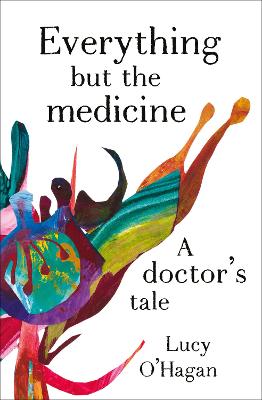
Review: Everything But the Medicine, by Lucy O'Hagan
Lucy O'Hagan's memoir EVERYTHING BUT THE MEDICINE impresses reviewer Bernadette Cassidy with its honesty and empathy.
This review is from our series of reviews by LIANZA members.
Everything But the Medicine, by Lucy O’Hagan, published by Massey University Press, is a powerful, empathetic, honest and revealing memoir.
The author has been a Rata Hauora GP for over 30 years and has mentored trainee GPs for more than 20. Currently she is working in east Porirua in a predominately Māori/Pasifika practice and writes a column for New Zealand Doctor Rata Aotearoa among other activities.
She has worked in a huge range of environments including rural, shearing gang clinics, urban iwi-run services and clinics for homeless people. It is these varied backgrounds, and the patients and stories that come with them that inform both O’Hagan’s practice and her writing.
She describes how western medicine separates mind and body when the two are intertwined, how the biomedical model is one size fits all and how colonisation changes the story for Māori people.
O’Hagan dedicates time in this book to analysing the doctor-patient relationship and its power imbalance. Along the way, she comes across as caring, supportive and thoughtful in her approach. Describing her clinic set up, she details how she attempts to rewrite the rules for this relationship.
This she has achieved through long consultations despite the large waiting list, creating a warm, welcoming reception area so that patients immediately feel comfortable. In her surgery, she has a red velvet chair for her patients to sit in – like a warm embrace ensuring they are at the centre. How I would love to sit in that red chair!
While most GPs tend to not share their personal life/problems with their colleagues, Lucy stresses how important it is for doctors to show that they are only human, make mistakes and are vulnerable. In her book, she writes candidly about her brother’s death by drowning, her sister’s mental illness and her son’s epilepsy. She describes her burnout, the end of her marriage, and then, falling in love with her best friend. Throughout it all, it was difficult to ask for help even when the practice nurses and receptionists would ask how she was.
“Doctors are seldom good at supporting other doctors who are struggling, as if the struggle might be infectious.”
She eventually recovered, left the practice and moved to work in one of the most poverty-stricken and under-funded clinics in Porirua, New Zealand to continue ‘her story’ - where she finds the human pathway much more interesting than the health pathway. She doesn’t rush her consultations, because there is always a clue that the patient may have come about something else besides their diabetes or blood pressure. She will listen even if 30 minutes has gone by and other patients are waiting. These are the patients who can’t afford to eat a healthy diet or exercise, their lives have far more pressing things to deal with.
‘Consultations are seldom linear, they are juggling acts with multiple balls, bouncing around between certainty and uncertainty.’
She stresses the importance of patients' stories and their values despite harrowing and difficult upbringings. Listening and being non-judgemental are the most important values. It seems fitting to end this review with her words:
‘I have been a manuhiri on the fringes of te ao Māori and I have returned to te ao Pākehā changed. And grateful. My world opened. I came as other and experienced manaakitanga.
In the end the patients taught me most. But I had to listen, not just to their words but to their stories… Stories that get told in whispers, in baffling behaviours and in bodies.’