Critics on the Ockhams longlist 2026: Fiction and Poetry
Dive into our 'cheat sheet' for the 2026 Ockhams Fiction and Poetry longlist.
Two weeks ago, 44 titles hit the 2026 Ockham New Zealand Book Awards longlist, across four categories: Fiction, Poetry, Illustrated Non-Fiction and General Non-Fiction. For the authors, it’s an anxious wait until March 4 to see who lands on the shortlists.
So what do Kete reviewers, critics and the book industry have to say about each book? Read on for our cheat sheet list on the Fiction and Poetry longlisted books, and keep an eye out for the Non-Fiction list next week.
.jpg&w=1920&q=75)
Jann Medlicott Acorn Prize for Fiction
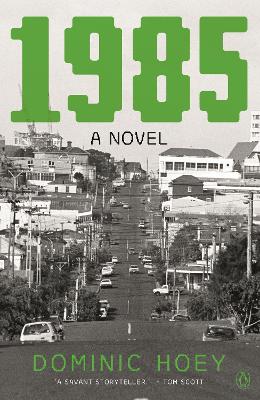
1985 by Dominic Hoey (Penguin, Penguin Random House)
This coming-of-age novel, centred around 13-year-old Obi, was considered a shoo-in for this year’s longlist. Set in an electric, multicultural part of Auckland, the story is about the underdogs and the disenfranchised. Reviewer Greg Fleming calls it ‘A magnificent achievement,’ and goes on to point out that it was ‘based on hard-won experience, and – a trait little seen in local literature – often very funny’.
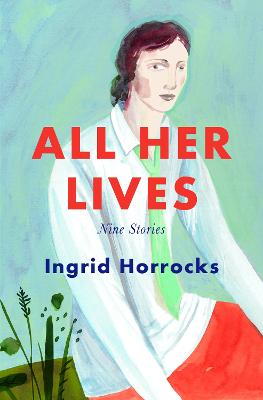
All Her Lives by Ingrid Horrocks (Te Herenga Waka University Press)
Seasoned author Ingrid Horrocks’ first foray into fiction is a sophisticated collection of nine short stories. Women’s lives, across generations and time, are given full focus, and the pressures that shape them to their diverse forms are considered from many directions. Claire Williamson writes that the stories ‘give women the space to be messy, ambitious, hopeful, afraid – to want for the things already in their grasp, and for things beyond what society expects of them.’
In Kete’s interview with Ingrid and Michelle Duff, they discuss the politics of writing short stories.
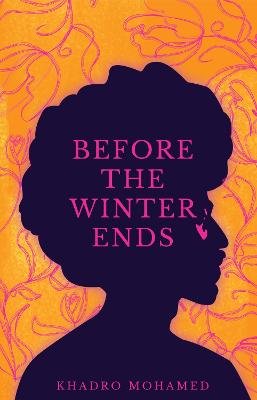
Before the Winter Ends by Khadro Mohamed (Tender Press)
Khadro Mohamed’s debut poetry collection, We’re All Made of Lightning, won the Best First Book prize at the Ockhams in 2023. Before the Winter Ends, also published by the small-but-mighty Tender Press, is a story of displacement, mother and son relationships, and of a family torn apart by war. Mohamed confronts grief, and its lasting impact across generations. Reviewer Tsitsi Mapepa points to the book as ‘an urgent plea for acceptance and healing, not just for its characters, but for humanity itself.’
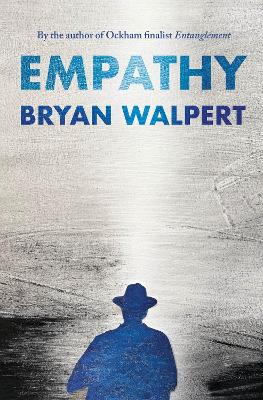
Empathy by Bryan Walpert (Mākaro Press)
How would the world work if one could bottle empathy? Bryan Walpert’s latest novel includes a kidnapped chemist, a grieving solo parent with two teenage children, a marketing executive at a perfume company, and a newly fledged game designer who tangle together in this tightly plotted thriller. Walpert has a sturdy body of work and teaches creative writing, and Empathy is as accomplished and multifaceted as you’d expect. Anna Scaife calls it a ‘highly entertaining and perceptive deep dive into the nature of love and human connection’.
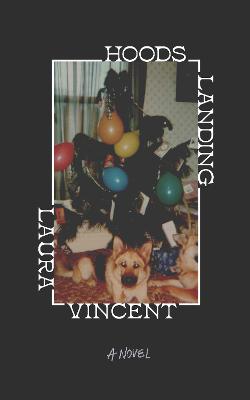
Hoods Landing by Laura Vincent (Ngāti Māhanga, Ngāpuhi) (Āporo Press)
Rita has been diagnosed with cancer, and she has to tell her sisters. The Gordon clan come together at Christmas on the rural edge of Auckland, ready to discuss everything and anything over tea. This is a story of women and their lives, a small community and its past and present, and what family bonds mean – and how they endure. This is indie publisher Āporo Press’s first fiction offering, and Laura Vincent’s debut novel. Mairātea Mohi writes that the reading experience is ‘like sliding into the middle seat of a packed van bound for a funeral.’
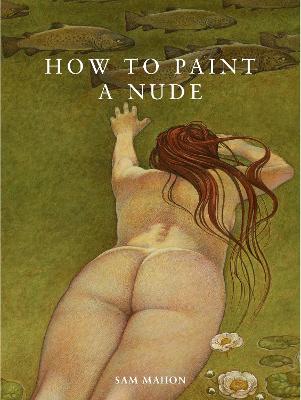
How to Paint a Nude by Sam Mahon (Ugly Hill Press)
Sam Mahon’s new novel, published by Ugly Hill Press, is the work of a contrarian – or so the author is described in many places. The publisher’s blurb describes them as ‘the subversive who, using cow dung, sculpted Hon Nick Smith nude and squatting over a glass of water.’ Perhaps unsurprisingly, the novel includes portraits also by its author, and is centred around a back-and-forth discussion between an artist and a Belarussian refugee who muse on the purpose of art. Check out this interview with the author to learn more about the book.
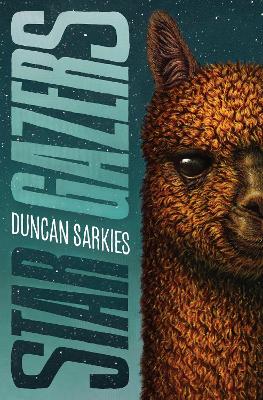
Star Gazers by Duncan Sarkies (Te Herenga Waka University Press)
Duncan Sarkies’ alpaca novel was highly anticipated and didn’t disappoint: alpaca breeding, a straight-up vet, a rigged election, and the Breeding Showcase is being threatened. Satire, through and through. Politics amongst alpaca societies appears as vitriolic and bizarre as in the rest of the world. Angelique Kasmara reflects that the main thrust of Star Gazers is ‘the bleak reminder of humanity’s distorted priorities and the immense difficulty of changing the system’.
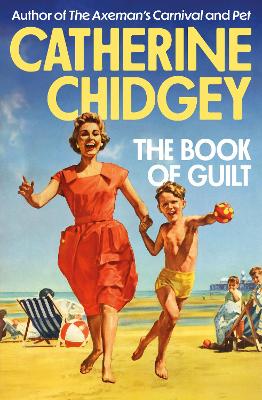
The Book of Guilt by Catherine Chidgey (Te Herenga Waka University Press)
Catherine Chidgey’s ninth novel, her third in the last four years, is set in a dystopian United Kingdom. Triplets Laurence, William and Vincent are the last remaining residents in a Boys’ Home. Every day they must take medicine to ensure their wellbeing and abide by a regimented set of rules. As fractures and inconsistencies and dreams begin to intrude on what the triplets have been told, their whole existence starts to unravel.
The Book of Guilt’s position on the bestseller list has been constant since it was released. Reviewer Josie Shapiro names it ‘a cautious and curious look at how we might integrate technological advances into our lives and asks us to reconsider ideas around the value of individual life versus the value of humanity as a whole.’
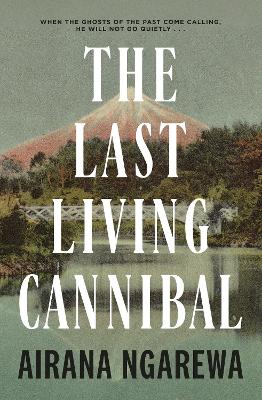
The Last Living Cannibal by Airana Ngarewa (Ngāti Ruanui, Ngā Rauru, Ngāruahine) (Moa Press)
Airana Ngarewa set a goal to write and publish three books in three years. The Last Living Cannibal is the third, and his second novel. It’s the story of Koko, the oldest man in the village, in the 1940s when the Māori men of Taranaki refuse to join the Māori Battalion. He’s seen a lot – the Land Wars, Parihaka, imprisonment in Dunedin – and his past, the ghosts and the demands of muru, are on the way to catch up with him.
Ngarewa had a korero with Hēmi Kelly for Kete, which you can read here. The past is his writing territory, as he says, ‘I don’t know what else I would be writing about if I weren’t writing about history.’
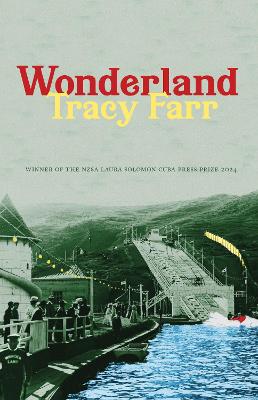
Wonderland by Tracy Farr (The Cuba Press)
Wonderland won the NZSA Laura Solomon Cuba Press Prize in 2024, with the judges wowed by its ‘sheer originality and the lyricism of its writing’. Another story of triplets, who grow up in the thrills of a theme park owned by their father named, of course, Wonderland. The historical reimagining begins when Marie Curie arrives in Wellington, unwell and grieving, to be nursed by the triplets’ mother. Lauren Donald writes that Wonderland is ‘a novel that honours the resilience of women, the intricacies of sisterhood and the bittersweet beauty of change.’
You can read the first chapter of Wonderland on Kete.
.jpg&w=1920&q=75)
Mary and Peter Biggs Award for Poetry
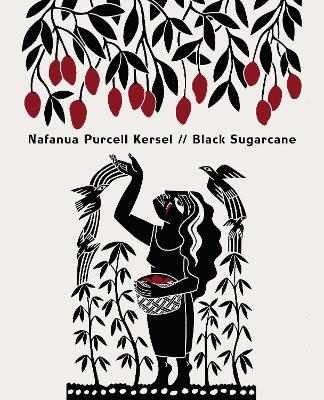
Black Sugarcane by Nafanua Purcell Kersel (Satupa‘itea, Faleālupo, Aleipata, Tuaefu) (Te Herenga Waka University Press)*
A restless, artful debut collection from Nafanua Purcell Kersel, including a sequence of erasure poems responding to a seminal essay, and a sequence that reacts to the devastating tsunami that struck two Samoan islands in 2009. ‘[The] poems are deeply rooted in Pacific family and culture,’ writes Gina Cole. ‘The collection invites us to marvel… at the vast creativity of a gifted poet.’
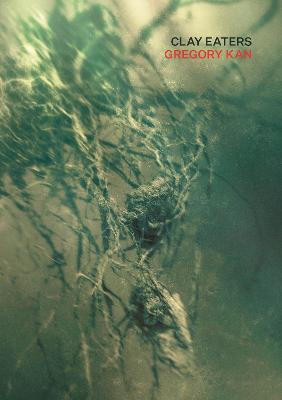
Clay Eaters by Gregory Kan (Auckland University Press)
Gregory Kan’s first collection, The Paper Boat, was shortlisted for the Ockhams in 2017. His second, Under Glass, was longlisted in 2020, and so it’s fitting to see Clay Eaters on this longlist. The book brings together ‘shards of history and memoir’ and eyes how they intersect – military service on a jungle island, family homes, Wellington, elderly parents and more. Reviewer Erik Kennedy names it ‘lissom, precise, and memorable poetry from a writer whose practice keeps getting more refined.’
E kō, nō hea koe by Matariki Bennett (Ngāti Pikiao, Ngāti Whakaue, Ngāti Hinerangi) (Dead Bird Books)*
This is slam poet and founder of Ngā Hinepūkōrero Matariki Bennett’s debut collection. In seven sections, the book interleaves explorations of grief and mana motuhaketanga, conversations with Grandmama about stars, city lights and cemeteries, and the constant birth of whakapapa. Reviewer Isla Huia is impressed with how Bennett ‘retells the stories of her whānau and hāpori as a young wahine paving her way through today’s political landscape…’
Read a kōrero with Bennett on how she explores identity through poetry.
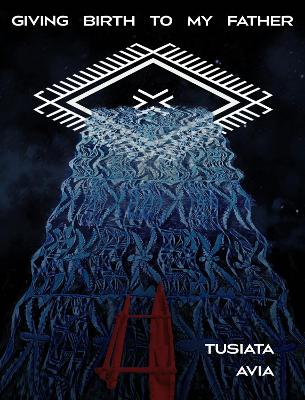
Giving Birth to my Father by Tusiata Avia (Te Herenga Waka University Press)
Literary legend Tusiata Avia returns with a collection that Gina Cole calls ‘a glorious celebration of Avia’s father’s life, a salute to his teachings.’ Avia has previously won the Mary and Peter Biggs Award for Poetry at the Ockhams, and been awarded both the Prime Minister’s Award for Poetry and as a Member of the New Zealand Order of Merit. This rich examination of family dynamics – the admirable, the not-so-admirable but real, and the darkly hilarious – should be high on everyone’s must-read list.
If We Knew How to We Would by Emma Barnes (Auckland University Press)
This is Emma Barnes’ second collection, a full-throttle compression of many thoughts into prose poetry. It covers breakups, the pandemic, health issues, death and grief, overflowing with the ordinary and not-so ordinary. Marcus Hobson, writing at NZ Booklovers, calls it ‘raw emotion, beautifully voiced and expressed, but hard to linger in.’
Joss: A History by Grace Yee (Giramondo Publishing)
‘Grace Yee once again dips her pen into the marvellous well of antipodean history,’ says Cybonn Ang, writing for takahē, ‘[and] the result is a stunning collection.’ Yee’s debut, Chinese Fish, won the Mary and Peter Biggs Award for Poetry at the Ockhams in 2024, so it’s no surprise to see her second longlisted here. Joss is inspired by the experiences of Chinese settlers across Victoria, New South Wales, and Aotearoa New Zealand; in Bendigo over a thousand are buried in unmarked graves. The poetry pays tribute through a 21st century lens.
No Good by Sophie van Waardenberg (Auckland University Press)*
After Sophie van Waardenberg’s chapbook in AUP New Poets 5, many readers have been waiting for her debut full-length collection. No Good is a consideration of love, loss, growing up, potatoes, and home, but always seeking what is ‘good’, and what is love, all accompanied by a gentle and evocative humour. Melanie Kwang, reviewing for Kete, comments on the small details that sit quietly in every poem: ‘She’s noticing something you don’t and is inviting you to share, beckoning your attention as if to say, this is beautiful, it is quiet, it is everywhere, it is me.’
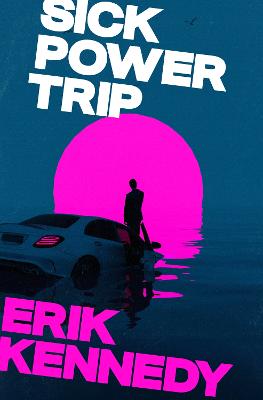
Sick Power Trip by Erik Kennedy (Te Herenga Waka University Press)
Erik Kennedy’s debut collection was shortlisted for the Ockhams in 2018. His third and most personal collection, Sick Power Trip, peers at health – both in the world and in the individual – and touches on the importance of self-care, empathy, and solidarity. David Hill notices his preciseness with language, how eclectic and erudite the collection is, and approves of the subversiveness that also surfaces, finishing by commenting that Kennedy is ‘a rewarding, agreeably wry word-wrangler.’
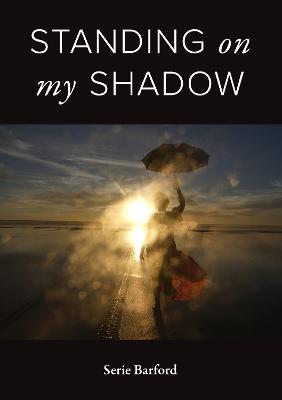
Standing on my Shadow by Serie Barford (Anahera Press)
‘Resistance, in a multitude of forms, could very well be the collection’s central theme,’ writes Hebe Kearney. Serie Barford’s Standing on my Shadow explores mortality, cancer, nuclear waste and a journey to Chornobyl. The body and its parts are considered, important in a chemotherapy journey dominated by medical protocol, procedures, and infiltration. Barford was also shortlisted for the Ockham Book Awards in 2022 with Sleeping with Stones.
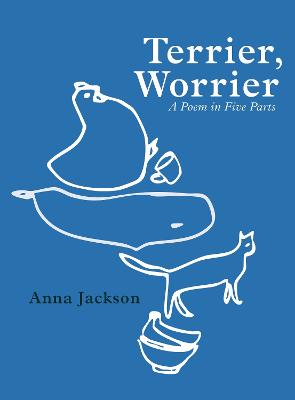
Terrier, Worrier: A Poem in Five Parts by Anna Jackson (Auckland University Press)
Renowned poet Anna Jackson’s seventh collection comprises five extended prose poems, meditating and exploring on luminant thought. It can be relished as language and appreciated as the work of a fine mind. David Hill comments that ‘Jackson's darting, soaring lines finally elude the gumboot plod of any prose interpretation,’ and then sums the collection up as ‘a book that's rewarding to hold in the hand and the mind.’
* represents a debut author who is eligible for the Best First Book Award in their category