2026 New Voices of Aotearoa Giveaway
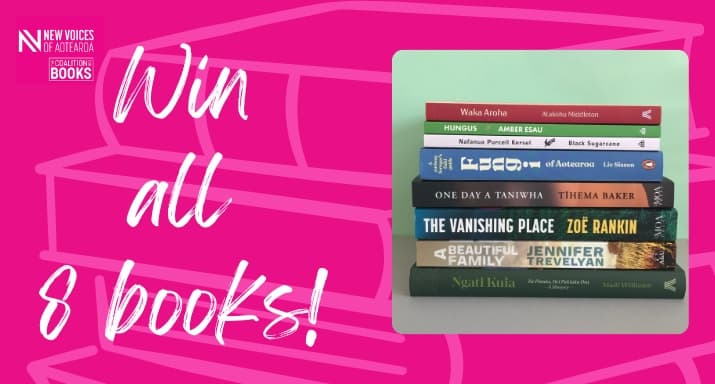
Kete gave readers the chance to win all eight books from the 2026 New Voices of Aotearoa authors.
This competition closed on 10 October. The winner will be announced in the Kete Books Newsletter on 16 October.
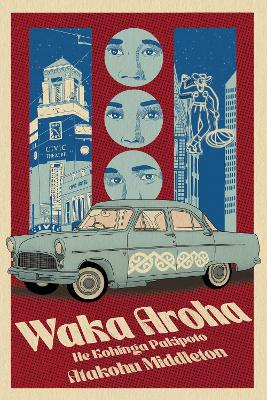
Waka Aroha: He Kohinga Pakipoto, by Dr Atakohu Middleton
He rangatahi ngākau whiwhita ki ngā waka tetere. He kairapuhara wahine Māori e mahitahi ana ki roto i te ao kikokiko me te ao atua. He kaihoahoa hūmārie ka tukirae atu ki tētehi manuwhiri i te rārangi harirū.
Nā te kairīpoata rongonui a Atakohu Middleton tēnei kohikohinga tuatahitanga o ngā pakipoto ka tuhia katoatia ki te reo Māori. He rerekē ngā wā. He matatini ngā momo pakipoto. He tini ngā reo. Ka kite ngā kaipānui i ngā kōrero pirihimana, ngā paki ā-whānau, ngā kōrero pohewa me ngā pakipoto e pā ana hoki ki te huringa taiohi hei pakeke. He mea tuhi ki te reo ngāwari kia pai ai mā ngā tauira wharekura me ngā tauira kua eke ki te taumata waenga. He pakipoto whakaihiihi, he mea titi ki te ngākau hoki mō Aotearoa o nāianei.
Mā te tuhinga a Atakohu Middleton ka ngahau ngā tāngata matatau ki te reo tae atu ki ērā anō tāngata i runga i tō rātou ara reo Māori.
—
A car-crazy rangatahi with a need for speed. A tenacious wahine Māori detective whose work straddles the worlds of humans and gods. A mild-mannered architect who headbutts a manuwhiri in the harirū line.
From well-known journalist Atakohu Middleton comes Aotearoa’s first collection of short stories written entirely in te reo Māori. The stories span time, genres and voices – readers will find police procedurals and family dramas, fantasy stories and coming-of-age yarns. Written in accessible reo Māori aimed at wharekura students and language learners from intermediate level up, this is gripping and exciting writing for contemporary Aotearoa.
Hungus, by Amber Esau
In the belly of Hungus is the Mantis: an amorphous, many-faced being, as fluid and full of history as the moana. It is a thing holding a machete in one hand and a mic in another. On one day we see it carrying a schoolbag full of ice creams, on another, making shadow puppets on a grave.
Through this elusive entity, Hungus tells stories of addiction. Addictions that settle like a film on tea, that crawl into the home, that devour us from the inside out, that reach for something to fill the vā. These are stories that shape us, taunt us, flex on us and keep us spinning in circles.
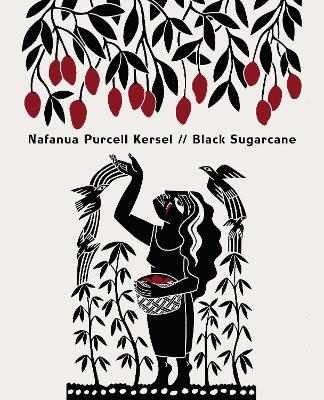
Black Sugarcane, by Nafanua Purcell Kersel
Black Sugarcane is a landmark debut collection by Nafanua Purcell Kersel. Restless in form and address, these engaging and generous poems ricochet from light to dark, quiet to loud, calm to violence. We meet a loved twin sister as she dives towards the Sacred Centre, a grandmother who knows everything by heart, a shrugging office clerk, and Nafanua herself, an enigmatic shapeshifter.At the heart of Black Sugarcane is a sequence of erasure poems arising from the seminal essay 'In Search of Tagaloa' by Tui Atua Tamasese Ta'isi Efi. From the worlds contained in the text, these poems rise as if inevitable. Another sequence responds to the devastating tsunami that stuck between the Samoan islands of Upolu and Tutuila in September 2009. Within the line, within the word and even the letter, these poems speak to creation and translation, destruction and regeneration.
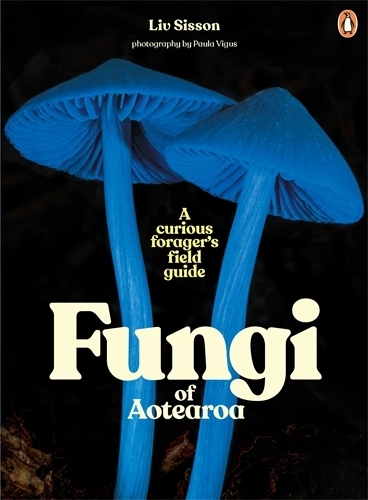
Fungi of Aotearoa: A Curious Forager's Field Guide, by Liv Sisson
The complete introduction to finding, identifying and using mushrooms and other fungi in New Zealand Enter and explore the fascinating world of fungi. In this practical and up-to-date guide, forager and fungus enthusiast Liv Sisson shares her top tips and takes the reader on a journey to discover the unique and diverse fungi Aotearoa has to offer. Discover how to identify the best edible varieties, and how to cook with them, how these incredible organisms have shaped the world as we know it, and the role they are playing in modern medical and environmental research. Featuring stunning full-colour photographs, fun facts and current descriptions of over 130 species (including our brilliant blue national fungus, werewere kokako), Fungi of Aotearoa is packed full of information and advice that will delight armchair enthusiasts, backcountry explorers and budding experts alike.
One Day A Taniwha, by Tīhema Baker
From the bestselling author of Turncoat comes a powerful new novel. As the pressure of fatherhood tightens its grip, sleepless nights and rising tensions begin to erode Hepa's sense of control. When the line between fear and reality begins to blur, can he be trusted with his own son?
Hepa hasn't slept properly in four months. His newborn son, Wī, cries through the night. The bills keep coming. The pressure to hold everything together is closing in. Hepa tells himself to harden up. Be the pillar his family needs. The only place he feels in control is in his dreams. Since childhood he's been able to shape them, to bend the dream world to his will. Until something begins watching back. A presence with pāua-shell eyes starts appearing in his dreams, and then in waking life. In the shadows. In strangers' faces. Whispering to Hepa while he rocks Wī to sleep. It feels like living with a taniwha on his shoulder. Hepa can't tell where the nightmares end and the real world begins - and he's terrified of what he might do...
The Vanishing Place, by Zoe Rankin
Jane Harper's FORCE OF NATURE meets the wild and atmospheric setting of THE GREAT ALONE by Kristin Hannah in this twisty stay-up-all-night thriller about family, love and loyalty, and the fight for survival in the most beautiful but dangerous New Zealand wilderness.
On the remote West Coast of the South Island, vast forests stretch out between mountain ranges and rugged beaches. There, in the small town of Koraha, not a lot happens - until a young girl with blood on her hands walks out of the bush and into the local store, collapsing to the floor.
She can't - or won't - speak to anyone. It's the town's sole policeman who recognises her face. She looks exactly like a local girl who disappeared twenty years ago. She has the same red hair. The same green eyes.
What horrors has she left behind in the bush? Who will come looking for her? And what secrets are about to come to light?
A twisty and daring thriller about how those close to you can be even more dangerous than the deadliest wilderness.
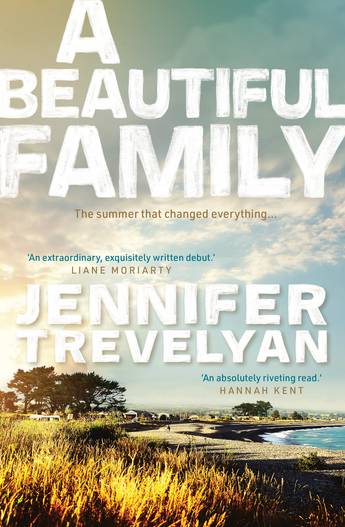
A Beautiful Family, by Jennifer Trevelyan
In the past we had always spent our summer holidays in remote places. That had always been my mother's preference. This year was different ...
As the summer holiday stretches ahead, with her older sister more interested in boys, her mother disappearing on long walks and her father, beer in hand, watching the cricket, the youngest in the family often finds herself alone.
At the beach, she meets Kahu, a boy who tells her a tragic story about a little girl who disappeared a couple of years ago, presumed drowned. Suddenly, the summer has purpose—they will find the missing girl and become local heroes.
Between dips in the ocean, afternoon barbecues and lazy sunbaking, their detective work brings to the surface shocking discoveries and dark secrets, even about her own beautiful family ...
Jennifer Trevelyan magnificently captures the confusion and frustration of childhood, the fraught but unshakeable bond between sisters, and the dangers that lurk in the white lies we tell—especially about the people we love most.
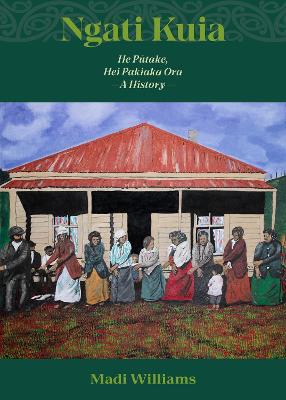
Ngāti Kuia: He Pūtake, Hei Pakiaka Ora | A History, by Dr Madi Williams
Ngāti Kuia are tangata whenua of Te Tauihu-o-Te-Waka-a-Māui (the northern South Island). Descended from the ancestress Kuia, their whakapapa sits within a rich and complex Māori lineage, connecting with the stories held by neighbouring iwi – particularly the other Kurahaupō waka groups. Their networks also stretch towards the head of the country, linking to iwi originating from the East Coast of Te Ika-a-Māui (the North Island), such as Ngāi Tahu, Ngāti Kahungunu, Muaūpoko, and ultimately back to the Polynesian homelands, Hawaiki.
Drawing on hundreds of whakapapa, pūrākau, waiata and karakia recorded in nineteenth-century tribal manuscripts and court records, Madi Williams presents Ngāti Kuia history in Ngāti Kuia voices. From the stories of such tīpuna as Kaikaiāwaro and Hinepopo, through early encounters with neighbouring iwi and European settlers, to recent events such as the Treaty settlement process, this expansive account places Ngāti Kuia at the heart of the region’s living, layered history.
As Te Kenehi Teira observed during the Ngāti Kuia Treaty claim, the history of the iwi resembles ‘one huge jigsaw puzzle – you have to find all the pieces and put them together’. In this book, the pieces finally sit alongside one another.