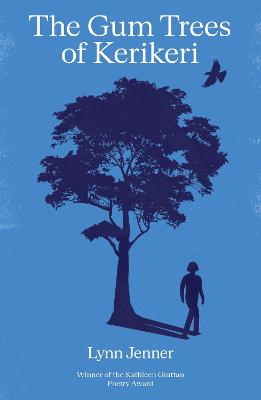
Capsule review: The Gum Trees of Kerikeri, by Lynn Jenner
'This book contemplates the unsettling remains and current state of Pakeha colonisation through the region, pausing often on the fast-growing gum trees...'
The Gum Trees of Kerikeri, Lynn Jenner’s fourth book, won the 2025 Kathleen Grattan Poetry Award. The 56 numbered prose poems that make up the collection are infused with gentleness and understanding. Ordinariness and beauty flow, providing consolation and solace beyond the world’s ills: ‘A second kotare flew fast and low through the trees, its wings bright blue’ (‘18’) and ‘The leaf I picked up today is sand coloured where it has dried, has dark red edges…’ (‘19’)
Set in rural Kerikeri, on ground that ‘was a kauri forest for centuries,’ (‘1’) this book contemplates the unsettling remains and current state of Pakeha colonisation through the region, pausing often on the fast-growing gum trees that have replaced native forest. Also across the whole collection runs a strand of disquiet about the overwhelming marching on of climate change and what it shall bring with it: ‘we are not optimistic for the earth and its people, but we think the best idea is to be as optimistic as possible in our personal lives…’ (‘41’)
But in amongst the poet’s grounded daily life and that of the community around them, the collection engages with literary voices, philosophers, television shows and more; the ideas drawn up and studied thoughtfully through a contemplative lens. In poem 27, for example, the poet speaks of Henning Mankell’s detective, Kurt Wallander, whose confidence is tempered by a fear of becoming kitschy. The poet concludes that:
‘I would like to pour Inspector Wallander / a cup of coffee, cut him a piece of cake and tell him that kitsch now has a certain high-brow appeal and offers its own form of comfort.’
In ‘38’, the poem muses on familiarity as consolation in stopping fear: ‘Brian Dillon says that affinities can remain unthought until two things are placed together and you are forced to see…’ This thread winds throughout the collection: one can give mutual kindnesses and take small joys from life, but also carry the weight of unease. The last lines of the last poem typify this: ‘It sometimes crosses my / mind that I have done nothing to deserve these gifts, but / mostly I just think how sweet the fruit tastes.’ (‘56’)
Poem extract:
51.
After 10 days of rain the sun is out; light and warmth feel
like a great power for good. I see six doves pecking in the
grass. I think of Noah and the dove with the twig in its
beak. And now, with the sun on my face, I think these
six doves on the lawn in Kerikeri might be an omen of
peace somewhere peace is needed. Sun and doves against
monsters and tanks.