Review: Joy Cowley: Kiwi Storyteller
Joy Cowley is one of New Zealand’s most beloved writers. She’s written books for all ages and won lots of awards. But you wouldn’t have thought that could happen if you’d known her at primary school. That’s because she struggled with literacy as a child and couldn’t even read back then. A challenging family situation made life even harder for this future Kiwi legend. What helped Joy overcome these obstacles and become the icon she is today? Stories did.
Who doesn’t love a book which starts off with this: “Can you name this Kiwi author? She enjoyed fighting in the school playground, her favourite movie is The Matrix, and she once crash-landed a hot-air balloon in Africa.”
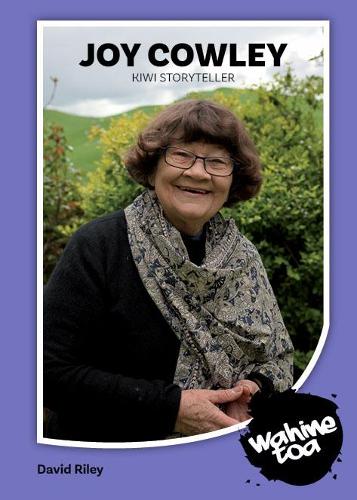
My 11-year-old was already captivated, eager to find out more – even though there wasn’t a prize for guessing the author is Joy Cowley because she’s pictured on the opposite page. How does one end up crash-landing a hot-air balloon in Africa? Not to mention, wondered Miss 11, not getting stood down from school for being a “schoolyard scrapper.” Note to those reading Joy Cowley: Kiwi Storyteller to young people – you might want to think about how you discuss that part of Cowley’s colourful story because things are different now compared to when she was battling at school.
Or are they? Covid-19 has highlighted the inequities in New Zealand society. While those who can’t holiday overseas spend on new cars and household renovations, others are seeing their high school aged children quit their studies and go to work to help support their families.
Which is what happened to Cowley when, aged 16, she left school to help her mother and father who had long struggled financially due to their own poor health. Cowley, the oldest of five, was already doing much of the heavy lifting caring for her sisters and brother, including making up stories to entertain them. As she has written, “In these stories, powerless children found a way to remake their lives.”
This is surely a time for stories to help young people who feel powerless find a way to feel more optimistic, to remake their lives. While Cowley has written Navigation: A Memoir, Joy Cowley: Kiwi Storyteller is for young people but, like all the best books for children, will reach adults who read it with or to them.
It’s a straightforward, relevant and relatively no-holds barred account told in 21 chapters, each of two pages (or thereabouts) with lots of pictures and illustrations and, at the end of the book, a comprehensive chronology of Cowley’s life and times as well as a list of some of the numerous awards, honours and accolades she has received.
Despite experiencing difficulties at school with reading and writing and being bullied because of it (hence those playground fights), Cowley was obviously a preternaturally gifted storyteller. Luckily, this was recognised by teachers who kept her at school from ages 14 – 16 by arranging a job for her at the local newspaper and then, when hardship meant she couldn’t stay or go onto university, made her promise never to give up writing.
This demonstrates the importance of teachers in a child’s life – something recognised by author David Riley, aka the Reading Warrior, in writing and publishing books for young people who often don’t see their lives, their culture and their heroes in mainstream publishing.
Having grown up and now working in South Auckland, Riley strikes me as being like those teachers of Cowley’s who recognised the importance of stories and the joy and fun to be had in reading. A good teacher or two went above and beyond for Cowley, making a huge difference to her life. There are many out there, including Riley, who are doing the same for young people today. They’re needed more than ever, I suspect.
A teen pregnancy and subsequent marriage, the birth of four children in quick succession and the constant balancing act between family and farm responsibilities (later, when her marriage broke up, working in a dispensary) left little time for writing but somehow Cowley kept at it. There was rejection after rejection; that she preserved says a lot about her own grit so there are conversations to be had about motivation and what we believe might be possible.
While Cowley had the talent and the attitude to succeed, others played a part, sometimes in small and seemingly insignificant ways. Like famed crime writer Dame Ngaio Marsh who noticed Cowley looking uncomfortable at her first-ever NZ Society of Authors Christmas party. Cowley, feeling like a fraud in a room full of the great and the good of the literary world, was about to leave when Marsh walked over and introduced Cowley to the others there.
Without this Cowley may not have gone onto write more than 1100 books for children and six novels for adults, selling more than 40 million books around the world. Not to mention helping numerous children learn to read and write. So, if you can, help another out.
Reviewed by Dionne Christian
RRP: $28.74 NZD
Author: David Riley