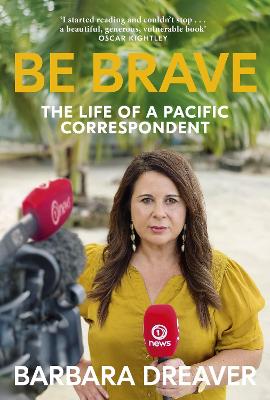
Review: Be Brave, by Barbara Dreaver
'The tension is palpable as she practices removing her clothes in case she is strip-searched or prepares to wield a phone charger plug as a makeshift weapon. It’s the stuff of spy dramas...'
Barbara Dreaver has been a constant presence on our screens for decades, bringing us the best and the worst of what unfolds across the Pacific—the largest definable region on the planet when viewed from space. From ongoing political turmoil, cyclones, and volcanic eruptions to intimate stories within Aotearoa New Zealand’s communities, the long-serving TVNZ correspondent has delivered the first drafts of Pacific history with assurance, dedication, and insight.
Yet what we don’t see in Dreaver’s seamless, beautifully scripted One News packages—or in the live crosses from remote islands, or celebratory gatherings closer to home—is the relentless thinking that drives her: the decisions about what needs to land next, the labour of building trust, and the personal experience that underpins such informed, evidence-based, sometimes shocking and sometimes joy-filled reporting.
BE BRAVE: The Life of a Pacific Correspondent, published by Awa Press, reveals the who, what, where, when, why, and how of Dreaver’s craft. It demonstrates why specialist reporting matters—why news organisations must invest in journalists who can move beyond press releases to tell the deeper, harder, and more human stories of a region too often misunderstood.
This book will fascinate anyone curious about what it takes to bring a story to screen and how those stories shape public understanding. Through vivid fragments and sharply rendered moments, Dreaver not only shows how she executes her work but also offers a deeply personal insight into her own positionality—how she navigates the world and how the world, in turn, impresses itself upon her.
She opens with a gripping first sentence: ‘I heard screaming first, then I saw her, a blur of legs racing up the hibiscus-lined path to the hotel.’ It is masterful scene-setting. Dreaver draws the reader down that hibiscus-lined path into a moment of high stakes as she and her cameraman attempt to resuscitate a drowning Japanese tourist. On the surface it may seem a small episode, but Dreaver transforms it into a meditation on the bystander’s role, responsibility, and emotional aftermath. Her placement of herself within the moment—charting her reactions and uncertainties before leading us to resolution—shows a skilled storyteller at work.
Her account of being detained in Fiji is equally compelling. The drama lies not only in the event but in her resourcefulness as she reads the atmosphere at the airport, slips her phone into her waistband to avoid confiscation, and uses whatever tools she has to get word out about her situation. The tension is palpable as she practices removing her clothes in case she is strip-searched or prepares to wield a phone charger plug as a makeshift weapon. It’s the stuff of spy dramas, except this is the precarious reality of reporting under authoritarian watch.
Contrast this with her chapter on climate change, where Dreaver’s voice becomes urgent and unambiguous. ‘When I hear climate change deniers, my blood boils, she writes, taking us to Tuvalu, ‘at the coalface of climate change.’ She describes parts of the nation that are mere metres across and a runway that stops traffic when planes land. Most haunting is her account of a cemetery submerged at high tide, graves damaged and crusted with shells and barnacles—an image that lingers long after the page is turned.
The book’s structure is deft: each chapter opens with an italicised quote or moment that signals where the narrative is heading. Every page is dense with information, but never heavy; Dreaver sustains momentum while offering nuance, complexity, and the interconnected realities of the region. She draws figures into sharp relief—political leaders, community members, activists, climate scientists—revealing the personalities behind the headlines.
This is a book every New Zealander who thinks about the region we live in should read. It reminds us not only of Dreaver’s immense contribution but of the importance of Pacific journalism itself: grounded, persistent, deeply human, and essential.