Review: Childish Palate, by Shariff Burke
'Burke’s stories read like recipes for life—a guide to the many ways that the making, sharing, and expelling of food can shape how we see the world...'
Shariff Burke is a writer and artist based in Te Whanganui-a-Tara. Childish Palate, his debut from Tender Press, is a collection of eleven short stories that began as part of the author's MA thesis at the International Institute of Modern Letters.
Burke’s stories read like recipes for life—a guide to the many ways that the making, sharing, and expelling of food can shape how we see the world and what we’re willing to fight for. Food is an expression of whakapapa, new and emerging identities. It is a means of connection, whether keeping in touch with history or finding ways to a new or different life. The cuisine and characters of mostly South-East Asian origin contrast with the likes of Marmite-Chicken and the public-service-worker coffee shop virus that is the proliferation of Mojo in Wellington’s CBD. Someone had to raise this; Burke has.
The collected stories fall into two camps—realist and speculative—with the latter distributed thoughtfully throughout. Each style is satisfying, and confidently executed, but Burke’s writing is at its funniest and most engaging when he leans into the bizarre and absurdist.
The yogic-rat at the centre of The Falling Sky is inventive, reminiscent of Airini Beautrais' climate-change-harbinger in The Great Te Arora.
'You’re not talking to a rat for no reason. So humble down for once and listen. This is the best advice you’ll ever receive: this rain out there is a warning for us all; it’s the agency of non-living things.'
The story Feast of Life—presented as a 2071 journal entry from the now-older daughter of the protagonist in The Falling Sky—delivers on this warning:
'This city always stays the same, perfect for hunkering down. But the sun no longer shines on tiny stretches of sand along the coast; the old homes below the sea wall are long past recovery. The beach in Seatoun where we released Dad twenty years ago is deep moana. All those things we loved, we’ve had to let go of.'
While Burke’s stories centre on food, it is merely an entry into much deeper questions, as above, needling at our relationship to the environment, but also identity and politics. Burke explores what it means to be a migrant in Wellington—to navigate a 'migrant experience' in a city shaped by one’s 'insider' or 'outsider' status, with each presenting unique opportunities for disconnection and connection alike.
Overall, my read is that Burke presents both a critical, yet hopeful case. On the one hand, Wellington is a place of misunderstanding and dislocation as in Pipes, and for the forging and dashing of dreams as in Wave After Wave; on the other, there is opportunity in what Burke describes with often tactile intimacy—of Wellington as a city small enough to retain a village vibe yet large enough to hold a multitude of contradictions as in the somewhat far-fetched but nonetheless charming, A New World.
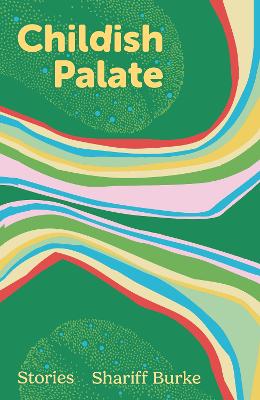
Of all the stories, my favourite is A Piece of Sweet Cake, the dazzling green cover design an echo of the gorgeous Pandan-flavoured Kuih Lapis and its beautiful rainbow layers:
'Nabilah sliced the cake…explained how the kids could eat it in one bite with mouthfuls of colours, or peel off the layers and relish each colour on its own.'
Burke’s collection functions much like this, each story peeling away the layers of the characters and their lives within. While food is the entry point and the means, Burke’s stories ultimately point to who we really are underneath: people trying to find our way, pursue our dreams.