Review: Hush, by Anna Scaife
Lena Fransham admires the quiet economy of the stories in HUSH.
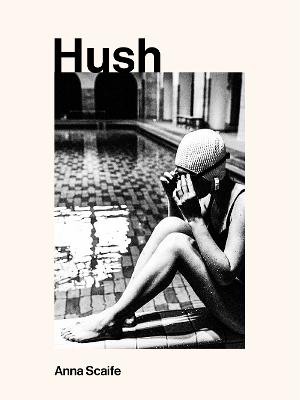
My first impression of Anna Scaife’s debut collection of stories was the beauty of the physical object. Slim, minimalist design, inner flaps for page marking, elegant layout. A pleasure to hold in the hands. Inside, each story is accompanied by an illustration by the author’s son, Elliott Collins. The eleven stories, as acknowledged in the book’s blurb, share a preoccupation with ‘the unspoken, the implicit, and the hushed up’.
The stories embody this principle in form as well as in content. Deceptively lean prose renders sharp images, and meaning is conveyed obliquely, minor details gaining significance over the course of the narrative through suggestion, repetition and allusion. Characters harbour secrets, delude themselves, withhold communication or deal in half-truths and obfuscations.
In the titular story, Ruth’s outwardly conventional marriage seems underlaid with concealments and subversive omissions in lieu of direct confrontation, such as when her husband requests that she tell the children not to walk on the lawn:
'Ruth searched his face for irony. Finding none, she nodded and told the children later to make sure they kept off the lawn when their father was home.'
Ruth and her fellow knitters take to secret night-time yarn bombing as a medium of expression and resistance. There’s an emphatic wryness to the voice that gives Ruth and her world a likeable solidity.
In the strongest stories, every word is load-bearing, the barest allusions dense with implications. In the short opening piece, ‘A Cigarette at Taurua Stream’ (which placed second in the 2025 Katherine Mansfield Sparkling Prose competition) little explicit background is offered on the dynamic between the story’s two characters, other than that they have been friends through their school years and have been fishing together over the summer. But the long-established ease between them emerges in a few deftly drawn moments—the narrator looking in the friend’s bag pocket ‘for the insect repellent that I knew would be there’; the two sharing a cigarette while sheltering from the rain together under a puffer jacket—and these brief depictions are so natural and closely observed that the quality of the characters’ relationship becomes palpable.
With this understated precision, a few words deliver an outsized punch, and correspondingly several of the stories are very short. One of these, ‘Saturday Mornings’, evokes a tyranny of control and denial behind a family’s careful veneer of normality. Much of what matters in this story is implied through context and echo, as the narrator sits in a counsellor’s office:
'She raised both eyebrows, poised her ballpoint over the notepad. I thought that meant I should keep talking. I hoped so—I didn’t want her to think I was one of those women that go on.'
So much inference required on the reader’s part results in an uneasy sense of ambiguity, which only heightens the story’s undercurrent of psychological violence.
Not every piece is as finely tuned. Final Notice, while executed with the same skilful economy, is less convincing. Virginia, a small-time entrepreneur, has misappropriated her son David’s money and hopes to make amends. The plot is idea-driven; clever, but lacking in credible character development. The mother-son relationship is sketched sparsely through flashback, with a remembered declaration—‘That money was left to me, Mother’— as background to Virginia’s behaviour. But without the context of finely observed detail and evocative dialogue as seen in the stronger stories, the characters here feel more contrived to fit the idea, adrift from any real meaning the reader can invest in.
The power of the standout stories, such as ‘A Cigarette at Taurua Stream’ and ‘Calf Creek’, is in the close-up, subtle revelation of relationship and character. ‘Calf Creek’ tells of a pair of young cousins on holiday and their encounter with some menacing neighbours. Their dialogue confirms earlier intimations about the narrator’s father:
'The Mitchell boy raised his voice. ‘Your dad won’t mind us taking his boat out, eh? Now that he’s fucked off.’
I caught my breath. How did they know Dad had gone? Did everyone know?'
Woven through the drama are intimations of the narrator’s emotional turmoil:
'We raced the bikes home ... I gulped and held my breath. I thought, if I could hold it as far as the cattle stop, maybe Dad would be at the house when I got back.'
The layering of dialogue with pithy allusion thus builds a complex world resonant with the painful discoveries of growing up.
Scaife’s sure-footed prose and shrewd economy make Hush a compelling read that confirms her gift for nuanced, powerful storytelling.