Review: Night, Ma: a memoir
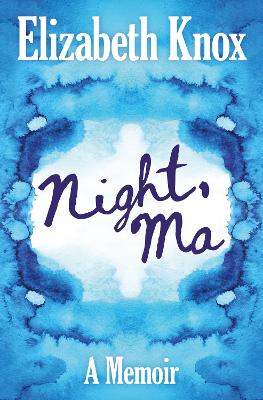
'A dance through all manner of styles,' David Hill reviews Elizabeth Knox's memoir 'Night, Ma'.
The versatility of Wellington's Elizabeth Knox! She's a novelist for multiple age groups and in multiple genres. She's an essayist, editor, tutor, short(er) fiction writer. And now a memoirist, via this searching, hugely humane new book.
It's a substantial read – Knox isn't a small book author. It focuses on a time in her life almost two decades back, a period of three-plus years when she must have felt like Shakespeare's Claudius: 'When sorrows come, they come not single spies, but in battalions.' During those years, her mother died slowly from motor neurone disease, her elder sister Jo disintegrated into psychosis, and a brother-in-law Duncan was killed by an enraged driver in Rarotonga.
So what does she do as those wrenching events start to recede into the past? She writes about them, of course. She gives them shape and significance and symbolism. It's what top authors do.
The three tragedies build through the book, in a steady shuttle of scenes. Knox's indomitable, five-feet-tall, 60 kg, 'conversationally adventurous' Mum is the main focus, doughty yet vulnerable – after all, 'far too many men find it terribly difficult to listen to older women'. Knox narrates her stoic decline, right up to the final vigil on an early summer evening, the last breaths, and the astonishing images that follow. More on those later.
Duncan's senseless killing while on an oldies rugby tour is covered in a taut series of episodes, where the quiet, attentive narrative makes the smashing of a life and the almost domestic scenes which follow seem even more concussive.
Sister Jo's collapse is perhaps the most jolting of the traumas that Knox endured. Irrational suspicions of neighbours, family and authorities (she tells an emergency health team 'you're fakes… you're bogus') plus conspiracy fantasies, hallucinations, domestic squalor and confusion, refusal of medication: a nimble, noble mind is overthrown, and it seems that all Elizabeth and ever-supportive husband Fergus can do is endure and hope. It's simultaneously distressing and grotesque, right through to the glimpses of wretchedness and delusion at a hospital where Jo is committed.
Night, Ma takes its narratives well beyond those three years. There's Duncan's wrestle with addiction; Knox's years at University and train trips home to Paremata with her 'little, brisk, pretty, stylish Mum'; the dreadful reviews of the.....well, dreadful film of The Vintner's Luck; her childhood as 'a semi-aquatic creature always dipping in and out of a waterway of dreams'. One particularly harrowing sequence comes when Elizabeth is just seven, Jo is ten, they're 'again out of bounds' by the Hutt River, and the younger sister is helpless while Jo suffers what is undeniably a rape.
A comprehensive cast builds, including a memorable family feline. People are fallible, resourceful, often stressed, nearly always vital. Knox tests them; respects them. That second verb is another characteristic of an accomplished author.
That word 'author' is often seen as synonymous with 'writer'. But I want to laud the stylistic skills of Elizabeth Knox. She can be a virtuoso with language. She also knows when to write sparely, to let the material make its own impact.
Her memoir is a dance through all manner of styles: reportage, soliloquy, sister Sara's journal, dialogues medical / internal / electronic. The mood swoops from elegiac to confrontational to grittily immediate to almost visionary, without any lapse of control. There's even room for comedy: the Knox v Barrowman Boxing Day water fights; small son Jack's 'sweet, babyish voice' from the car's back seat, assessing an errant driver in his Mum's terms.
If I've quoted so much, it's because the author's – writer's, sorry – linguistic skills are one of the book's rewards. Try her imagery: 'the slow vortex of my adult working life....dry bits of last summer hissed against the window.... fantastical fears around the corner from reality.'
A massive defence lawyer at the trial of Duncan's killer is 'folded into his suit. Or rather, his suit was folded into him.' And memorably, in the moments after her mother dies, '….then the green outside pushed up to the window and caught fire.'
Rather neatly, her Mum could do it, too; as her body is inexorably eroded, she tells Elizabeth how drinking a glass of water sounds 'like potatoes rolling down stairs'.
'(S)ome readers are going to say I didn't need to go into any of this detail,' Knox suggests. Oh yes, she did. Her remarkable interrogation of internal and external worlds would be emotionally and structurally incomplete, even untrue if she hadn't done so. So will this review be, if I don't say that as a would-be fellow tradie, I wish I could do things half as well.