Review: Ringside, by Mike Munro
Libby Kirkby-McLeod hunts for juicy story in political memoir RINGSIDE.
Local political stories are as popular as the latest All Black coach’s tale. People want to know what it was like inside the events that shape the country and are discussed as watercooler discourse.
Enter Mike Munro, a 22-year veteran of Aotearoa’s political centre, parliament, with his memoir Ringside (Upstart Press) released this week.
Munro spent 10 years as a journalist in the parliament press gallery. After a short break from that, he returned to spend another decade as chief press secretary to Helen Clark, pre-and-post her election as Prime Minister. After a slightly longer break he returned again, this time as chief of staff to Jacinda Ardern, as leader of the opposition and then when she became Prime Minister.
Munro’s story is one where interesting things happen to him by proximity to interesting people and events. His first day as a journalist in the gallery Muldoon resigns. His first day in Clark’s office a bullet arrives in the mail. The day he flies back into New Zealand from an overseas trip, Ardern takes over the Labour leadership and Grant Robertson rings him to say, in effect, ‘come help us.’
Munro tells readers he never sought out any of these roles. If he has political convictions they aren’t to be found on the page, other than his obvious dedication of years working for Labour. He doesn’t even seem that interested in politics, sitting ringside to big political personalities and events but preferring to stay behind the scenes.
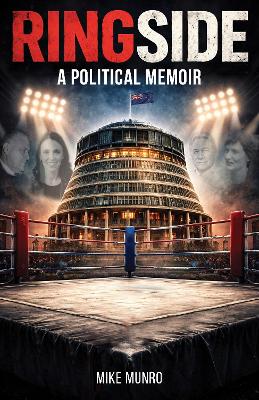
Unfortunately the cover takes the ringside metaphor and turns it concrete, to adverse effect. My son saw me reading it and asked why I was reading a disturbing book. In reality, it isn’t a combative story, other than an act of violence from Bob Jones, nor is it a highly ideological one.
The reforms of the 1980s and 90s have been well covered by books and podcasts. This era seems endlessly fascinating to us as we try and understand the Aotearoa New Zealand we live in today, and Munro retreads them for readers who are interested.
But where Munro’s book really shines is in the smaller details only someone close to the action would know. When Muldoon resigns and catches the governor-general unaware late evening, there are no clerical staff around and it’s the editor of The New Zealand Listener, David Beatson, who has to sit at a typewriter and thump out a statement for David Beattie. Winston Peters sends Munro-the-journalist flowers when his son is born; the biggest bouquet Munro and his wife receive. In America, travelling with Clark, Munro – the male press secretary - is assumed to be the Prime Minister.
My favourite of these anecdotes is when Paul Holmes wanted to interview Clark at Anzac Cove. Ministry of Foreign Affairs staff, worried about timing (given the Prime Minister was due at other events), asked if the Holmes show might just be able to air 30 minutes early that evening to make it all work. What self-important audacity!
Munro’s style is that of a trained reporter and even though it is a memoir he almost keeps himself out of the story. Even if readers are familiar with the era Munro covers, the little details he shares from being privy to all that history are worth the read.