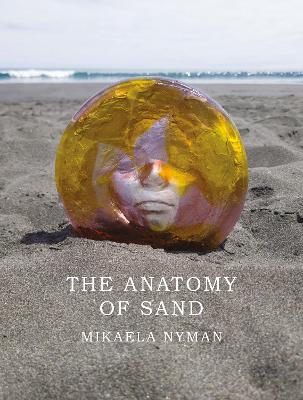
Review: The Anatomy of Sand, by Mikaela Nyman
A short capsule review and poem excerpt from Mikaela Nyman's THE ANATOMY OF SAND.
Finnish-Kiwi poet Mikaela Nyman’s first poetry collection in English, The Anatomy of Sand, is filled with mythology, science, politics, remembrance and more, but most of all it speaks to the environment. With over sixty pieces in three sections, ‘Sifting’, ‘Liquefaction’, and ‘The Markov Charm’, it poses often unanswerable questions, seeking solid ground.
‘Of course good intentions count— but do they suffice?’ (‘Beach Scrabble’)
As you’d expect, given the book’s title, the sea, sand and creatures of the sea dominate, concerns and darknesses wrapped around them, as in ‘Lonely sailors’:
‘man o’ war purple but not as lethal, innocent yet beached on these shores. Up to our ankles’
The collection seeks lasting solidity in times that are turbulent: politically turbulent, but also acknowledging violence against the oceans, rivers, glaciers, and how recovery can cycle and erode:
‘Declared technically and biologically dead in the 1950s this body of water now boasts 125 species of fish, oysters, lobster and salmon. A small miracle right there.’ (‘Date with Sisyphus’)
While deep personal aches are a part of the book, they’re mingled and surrounded by the fascination with the natural world that shows up on nearly every page. This was displayed beautifully in ‘pear lizard plumage’, below. In this book, Nyman has done what the best poets do: taken unsettling truths and embedded them deep within the text, amongst an accurate and vivid picture of our imperfect and broken world. pear lizard plumage Beyond the waves of hydrangeas breaking this monotony of hedge crossed by gravel lines, beyond the paddocks’ obscene show of viridian followed by tea mint pear lizard lawn shamrock parakeet lime basil slime forest fern hunter pickle and crocodile not to mention olive moss sage artichoke seaweed pine before we hit the Pouakai ranges and it’s all lapis indigo sapphire clematis dusk steel and always navy. It's the degree of brightness expected of us that gets me. The weirdness of being forced to smile ad infinitum so as not to be misread. Smiling until my head hurts as much as my heart aches with the whole mess of this world. Both booming like the mating call of the kākāpo, equally flightless nocturnal short-legged and blotched in plumage, equally owlish in encountering each day—still booming despite the slim chance of ever receiving the response hoped for.