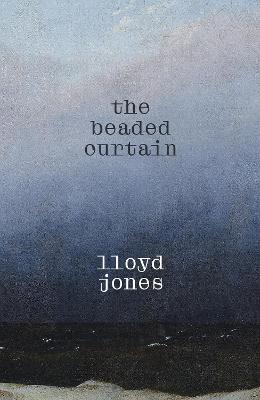
Review: The Beaded Curtain, by Lloyd Jones
'Does anyone ever look at anything from a position of neutrality?' Jones asks...
Those who teach English for academic purposes sooner or later find out that the linear discourse taught in Western institutions does not always gel with an Asian mode of discourse which tends to be circular, discursive, rather than pursuing a straight line of argument.
Lloyd Jones’ new book, The Beaded Curtain, is unusual in Aotearoa New Zealand literary work. It sets up a number of nodes, returning to them again and again seeking new angles, new ways of seeing. This method coupled with Jones’ often striking poetic take is highly original and most effective - sui generis, you might say.
The book is described in its blurb as 'part autobiography, part reportage, part quest' and it is all of these things but, more importantly, the book is a sombre, often dark, meditation on a number of the dreadful enormities of recent history: the Holocaust, the bombings of Hiroshima and Nagasaki particularly. Lloyd Jones was clearly too young to have been present when these things took place, but the book’s repeated insistence is that we must bear witness to what happened. Jones sees his role as our proxy witness to these horrors.
The genesis of the book and a node often returned to is a visit Jones made to an exhibition he saw in Vancouver, coinciding with a literary festival. The exhibition was of artefacts, especially clothing, retrieved after the bombing of Hiroshima. The exhibition was actually closed but Jones was able to persuade a manager to let him in so that for a long time he was able to witness the exhibits completely alone. Jones describes the experience as 'extraordinary' and on the evidence of The Beaded Curtain it was clearly life changing. The clothes – dresses, shirts, trousers – still retained the shapes and signs of wear of the people who had once inhabited them; they were the remains of individuals, of humanity expunged. This knowledge was the seed that grew into a need on Jones’ part over the years that followed to find out as much as he could about the events that led to the decision to drop the nuclear bombs, the people directly involved in the missions and the various reactions and subsequent rationales.
It is in the section describing the Vancouver exhibition that the rationale for the title is revealed: 'In the world of the beaded curtain the view is consistently incomplete. Fast on the heels of what we think we have seen arrives the question – have we seen correctly?'
In order to see 'correctly' Jones visits and revisits his nodes. Especially in the first sections of the book paragraphs become sequences of memories and observations - beads if you will - and even occasionally within paragraphs information is scattershot so that the effect is that of a pointillist painting. Jones uses lists from time to time like the hanging beads of the curtain.
Another major node is the Monument to the Murdered Jews, the Fields of Stelae, in Berlin, the slabs of concrete that Jones visits and revisits over a number of years. The actual Holocaust is witnessed as it is represented by these inert stelae and its modern visitors, and again only implicitly by his visit to the Anne Frank house in Amsterdam.
'Does anyone ever look at anything from a position of neutrality?' Jones asks and this question resonates throughout the work. These larger events are not unrelated to the casual brutality of everyday existence in Aotearoa. For eleven years Jones lived in a rural setting where the bare hills represented the slaughter of trees, of habitat, of birds; the same hills echoed for days each year by the bellowing of cattle grieving for the calves trucked away to the 'works'. He mentions the violence in our streets and in our homes, the treatment of Archibald Baxter and the behaviour of his son James.
In the later sections in more conventional narrative style, Jones struggles to understand the circumstances of the expatriate Chinese poet Gu Cheng who murdered his wife Xie before hanging himself on Waiheke Island.
The Beaded Curtain is often confronting, graphic, and provoking. It is also virtuosic in its language and striking in its originality. It is easy in this case to agree with the blurb when it says Jones '(has woven) a dazzling curtain of connections that snap together and then bounce away.'