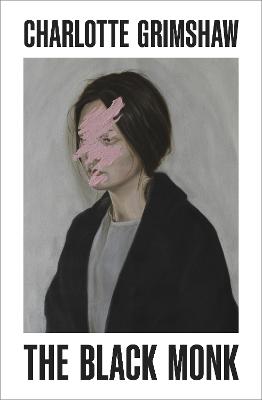
Review: The Black Monk, by Charlotte Grimshaw
'THE BLACK MONK is both highly perceptive and unreservedly ambiguous...'
The boundaries between fiction and non-fiction have long preoccupied Charlotte Grimshaw. Her 2021 memoir The Mirror Book was published to acclaim and controversy, with Grimshaw’s account of her childhood casting shadows on the sunny public version of her upbringing given by her parents, writer CK Stead and the late Kay Stead. Her latest work, The Black Monk, continues this thread in a complex, layered novel that examines how different versions of ‘truth’ can coexist.
The Black Monk takes its title from the short story by Anton Chekhov, in which a man sees a mysterious dark figure that begins to reappear across the world. The man interprets the vision as proof of his genius, and the belief fuels his creativity, even as his sanity unravels.
In Grimshaw’s novel, the black monk first appears to children’s author Alice Lidell in the Karori Cemetery. He is ‘the key, the missing shape, the man cut out of the air’. The man’s identity is uncertain; his existence itself seems unsubstantiated. This uncertainty destabilises Alice’s sense of the world, and ripples out to other characters—the reader cannot be sure who is real, or whether Alice knows who is real.
Alice is writing her first adult novel, and is ‘walking in a wilderness of mirrors’, with reflections all around her. The black monk has ‘thin blond hair and blue eyes.’ Alice’s friend Javine has ‘glossy fair hair, blue-grey eyes’, a hotelier ‘had fair hair and exotic pale-blue eyes’, and her lecturer, ‘big, clear, blue eyes’ and ‘glossy fair hair’. Alice sees ‘connections everywhere’ and comes to believe that by emailing her writing drafts to herself, the universe will provide more connections, more material for her story.
The struggle of Alice’s alcoholic brother, Ceddy, is central to the novel. Alice implores him to go to rehab, but he continually refuses. Their parents, the cold and distant Rula and domineering stepfather Thom, are dismissive of Alice’s views. Rula ‘wouldn’t hear there was anything wrong with [Ceddy].’ She tells Alice, ‘“You are so critical of him, it’s really unpleasant.”’ Dysfunctional relationships, generational trauma, and family secrets are woven through the narrative. Chekhov asks whether it is better to be happy and deluded or sane and miserable. Alice’s character is evidence of this struggle, but so too is Ceddy, who chooses not to get treatment. Rula and Thom also choose delusion.
Meanwhile, Alice grows infatuated with her confidant, Javine—pulled into her ‘psychological honey trap’. ‘In the car full of sunlight, she made Alice think of a lioness: so broad, so golden and plush’. But after the two argue, Javine disappears, all traces of her presence vanishing. Ceddy is so drunk when he and Alice speak on the phone that he cannot remember their deep and rambling conversations. Even Ceddy’s existence feels inconstant.
Grimshaw extends this fluidity of reality, pressing against the fourth wall. Echoes of people and events in her life appear in Alice’s, blurring fiction and reality not only in Alice’s world, but in ours. In 2019, Grimshaw published a short story called The Black Monk; Alice has written a story of the same name, which she is expanding into a novel. She draws on ‘vivid memories of Ceddy and her childhood, including getting lost in the Waitākeres’—familiar ground from The Mirror Book and Grimshaw’s earlier story, Parahara. Alice wrote a story called Singularities; Grimshaw has a collection titled Singularity. As Alice notes, ‘There was something meta in all this’.
The writing is spare and matter-of-fact, rather than lyrical. At times, things are overtly explained and summarised. But as the book goes on, there are moments of exquisiteness, such as in Ōwhiro Bay where ‘the sea lashed and gnawed at the rocks, and the wind traced patterns on the winter swell’, and ‘metallic curtains of rain’ swept across the water.
The Black Monk is both highly perceptive and unreservedly ambiguous, and the reader must be willing to navigate the mirror maze in all its uncertainty. The novel asks what truth means for the writer, for the family, and for the political world.