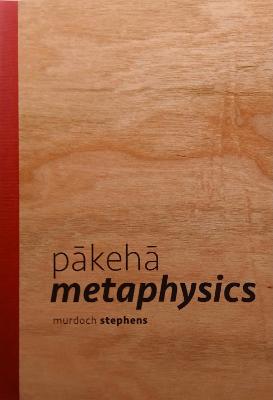
Extract: Pākehā Metaphysics, by Murdoch Stephens
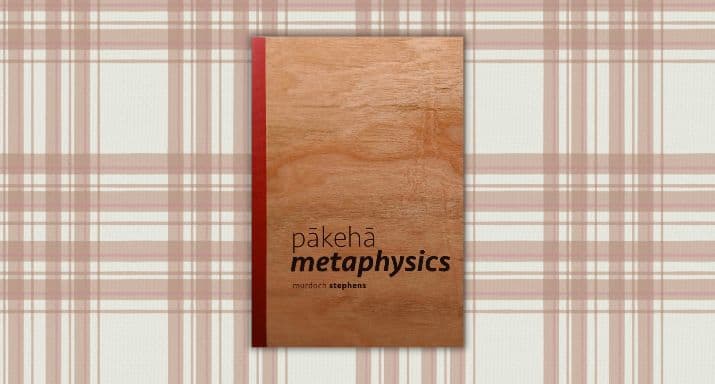
Perhaps best known for his work on refugee protection and writing fiction, Murdoch Stephens turns his mind inwards with a new book Pākehā Metaphysics. In this, he employs fresh introspective and speculative thought in a table turning attempt to better understand the unique identity of the Pākehā people.
In turn, the book aims to revitalise some aspects of metaphysics which have been ignored with the rise of scientific explanations. These aspects include the relation between appearances and essences, the three omnis - omnipotence, omnipresence and omniscience and whether metaphysics can be grounded in something other than universals or specific places.
Extracted with permission from Pākehā Metaphysics by Murdoch Stephens, $30.00 RRP, Lawrence & Gibson. Out now.
Foreword
Metaphysics was once the first philosophy, favoured by kings and high priests. Metaphysics beguiled because it speculated on the nature of all that transcends the world, space and time. Consider the word metaphysics. It was crafted by Aristotle to mean that which is after or beyond (meta-) the physical or empirical (physics). And then, after some time and whenever transcendental questions became outré, metaphysics invoked the immanent. The opportunity to gaze inside added a second string to the metaphysical bow: a path for thinking about how a soul or mind might dwell in a body, how to conceive of essences hidden in appearances. Alas, in the present century, neither immanent nor transcendental questions remain in the ambit of philosophy: physics has claimed charge of the transcendental, psychology smothers the immanent and the poets mop up what remains. Today, to announce one is a metaphysician is not to be venerated, or even scorned, but to be pitied.
The collective Pākehā, in turn, is weak. Conservatives respond to the feeling of weakness by striving for a strong identity, in bumbling opposition to Māori. Liberals respond by taking a perverse pleasure in escalating confessions of guilt but they also seem to think hand wringing and a beginner te reo class is a sufficient policy response. Even the Pākehā left are torn between the primacy of their anti-capitalist identities, and their becoming conscious of the privileges they’ve inherited.
If Pākehā and metaphysics are as categorically destitute as I have claimed, why does this book merge them, rather than let each rest in their respective malaise? Can these two wrong turns lead to anything but a hazardous U-turn? There is something immiscible, an anticipated curdling, when we consider a mixing of these two.
There are three reasons that this book seeks to amalgamate ‘Pākehā’ with ‘metaphysics’, mirroring the reasons with which Peter Sloterdijk justified his similarly juxtaposed Eurotaoism.
1. It’s one of those silly things the author sometimes says.
2. It’s an example of ‘combinatorial wit … a shotgun wedding of two vastly different terms’. 1
3. The phrase speaks to an opportunity thus far missed by other thinkers.
Pākehā Metaphysics is not just one of these things, but the full tryptic: a nose-thumbing at Pākehā self-seriousness, a joy in the combination of wearied words and an attempt to break away from the paralysis of Pākehā mumbling on about who we might have been if we weren’t who we are. Let’s address these reasons one by one.
1. Silly things the author sometimes says
Silliness needs little defence. Nor does it need the echoing laughter of anyone but the speaking fool themselves. There are many types of fools, but the main dividing line between them is between those who know they are being foolish and those who do not. There are also many types of authors, and the dividing line between them is between those who know they are making things up and those who don’t. But how dare any person write books that sully the factual with the foolish! Merging Pākehā and metaphysics in such a book might be doubly foolish: both are abandoned with rooves rusted through and I am invoking squatter’s rights.
Tonally, the book is an attempt to write about race and identity that dispenses with handwringing, self-seriousness. One self-serious book of Pākehā self-reckoning is fine; a library full of them is a sin. But without more wide-ranging forms of rhetorical expression, even in non-fiction, liberal Pākehā analysis will remain dull and ineffectual. Bland, self-serious rhetoric always loses out to the race-baiters who are more than happy to smirk and say, ‘Kiwi not iwi’, before chirping, ‘Can’t ya handle a joke?’ 2 Pākehā Metaphysics is an attempt for Pākehā to write of ourselves as products and producers of colonisation, without self-seriousness or imagined victimisation.
2. Combinatorial wit, aka a shotgun wedding of vastly different terms
Beyond silliness, it is truly hilarious to think Pākehā might investigate our paradoxes, counterfactuals and contradictions and emerge with something that speaks a little life back into Western metaphysics: ‘That emperor has no clothes!’ ‘We know that … but why didn’t you say he also has no empire?’ Pākehā, they don’t even have a distinct culture, and here you are pushing for a metaphysics! Does that mean this book is funny? Only as far as the concept of the book is ‘funny’ as in strange and off-kilter and wrong. Indeed, upon hearing of the project, one New Zealand Listener columnist replied, ‘I hate it already!’ Ha!
3. Opportunities thus far missed
The fresh opportunities of this book are three: (i) metaphysical revivalism + (ii) Pākehā self-understanding = (iii) a merging of the two into a theory of the migrant.
First, the book revives important metaphysical concerns that have been ignored as dregs of a bygone era, but which contain enough gusto to enliven a new generation of curious but overstimulated minds. The book is both what I think currently constitutes the metaphysics of Pākehā as well as what I think is the best direction for an emerging Pākehā metaphysics. The book rehabilitates concepts like three key omnis (such as omnipresence) and the way white appearance and essence works on indigenous lands. In seeking the new, we must also avoid the easy tendency to borrow from indigenous metaphysics or spirituality: think of the way Californian mystics peddle kaleidoscopic wonderment while hocking discount dreamcatchers and smudge sticks.
Second, the book offers some directions towards understanding Pākehā identity, though it takes the long way around. Most analysis of Pākehā identity is too quickly foreclosed because the lack of serious material reparations for colonisation necessitates Pākehā consciousness remains in the naughty corner of bad feelings. But what if we took the opposite approach? What if a generous and good faith, encouraging of Pākehā identity, did not lead to more privilege and nastiness, but less? This is a risk that if Pākehā identity is bolstered by a metaphysical element, that Pākehā won’t respond in good faith but with self-aggrandisement. But we already find ourselves in a space of racial resentment and envy, so perhaps it is worth trying a counterintuitive direction.
The final opportunity brings together the Pākehā and metaphysical into an opportunity for allthose people at home away from home. The book, in the Something New chapter, stakes a claim for an unsettled, migrant metaphysics that can emerge and exist alongside a place-based metaphysics. This is the part of the book where those readers looking for some ballast for a settler colonial identity may find some succor.
--
1 The English-language publishers lost their nerve when challenged by the ‘combinatorial wit’ of the German title ‘Eurotaoism’, turning it into the all-too-American ‘Infinite Mobilization’. Peter Sloterdijk (1989/2020) Infinite Mobilization. tr. Sandra Berjan. Polity. 11
2 Conflict over what can and can’t be said are central to the social media age and characterise much of the discussion around tolerant liberalism and a re-emergent fascist right. This is discussed more in the section on Dirtbag Fictions in Chapter Three.
Pākehā Metaphysics by Murdoch Stephens is in bookstores now.