Critics on the Ockhams longlist 2026: General Non-Fiction and Illustrated Non-Fiction
Explore our 'cheat sheet' for the 2026 Ockhams Illustrated Non-Fiction and General Non-Fiction longlists.
Two weeks ago, 44 titles hit the 2026 Ockham New Zealand Book Awards longlist, across four categories: Fiction, Poetry, Illustrated Non-Fiction and General Non-Fiction. For the authors, it’s an anxious wait until March 4 to see who lands on the shortlists.
So what do Kete reviewers, critics and the book industry have to say about each book? Read on for our cheat sheet list on the Non-Fiction and Illustrated Non-Fiction longlisted books. You can catch up with the Fiction and Poetry here.
.jpg&w=1920&q=75)
BookHub Award for Illustrated Non-Fiction
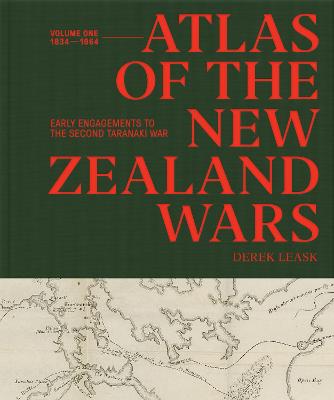
Atlas of the New Zealand Wars: Volume One 1834-1864, Early Engagements to the Second Taranaki War by Derek Leask (Auckland University Press)*
Leask’s atlas is a wealth of plans, maps, and diagrams of the conflicts in Aotearoa in the nineteenth century. It’s a large-format book to accommodate these images, which give the reader much deeper insight into the locations of battles, skirmishes, and notable points than was often available, and has taken Leask over thirty years of research to put together. Ron Crosby, writing for Newsroom, concludes that this is ‘a very valuable resource which provides highly readable illustrative accounts of many of the major events and players in the New Zealand Wars.’
Leask was interviewed on RNZ Nine to Noon with Kathryn Ryan about the book.
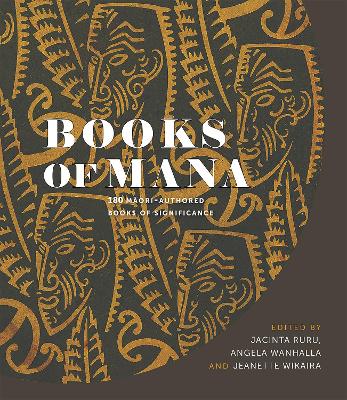
Books of Mana: 180 Māori-Authored Books of Significance edited by Jacinta Ruru (Raukawa, Ngāti Ranginui), Angela Walhalla (Kāi Tahu) and Jeanette Wikaira (Ngāti Pukenga, Ngāti Tamaterā, Ngāpuhi) (Otago University Press)
The project that inspired Books of Mana, Te Takarangi, is an online directory of a curated selection of Māori-authored books written since 1815. Books of Mana, a collection of essays, also edited by Ruru, Walhalla and Wikaira, explores the meaning and significance of Te Takarangi’s books and how they have enriched lives and fostered understanding of Māori experience. In an interview with Kete, the editors discuss the project’s importance, Māori writing as activism and taonga, and how ‘we are impoverished as a country if we don’t know about the 200 year history of Māori writing.’
To read an excerpt from the book, check out this essay at the Spinoff.
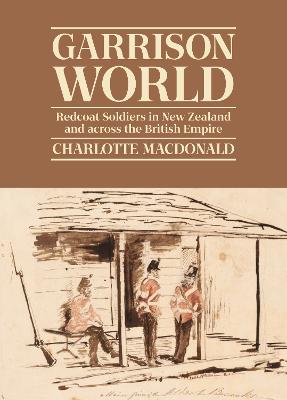
Garrison World: Redcoat Soldiers in New Zealand and Across the British Empire by Charlotte Macdonald (Bridget Williams Books)
This history of the redcoat soldiers in New Zealand explores the imposition of British imperial rule on Aotearoa between 1840 and 1870, using personal accounts and archival detail to build a picture of the soldiers that were at the centre of it all. The book acknowledges the impact on Māori communities and whenua, and does not flinch from showing the cruelties and violence that were imposed by imperial troops.
An extract from the introduction of Garrison World is available on Kete. You can also hear author Charlotte Macdonald talk about her book on RNZ Nine to Noon.
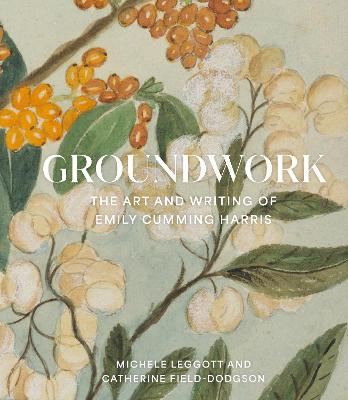
Groundwork: The Art and Writing of Emily Cumming Harris by Michele Leggott and Catherine Field-Dodgson (Rongowhakaata, Ngāi Tāmanuhiri, Te Aitanga a Mahaki) (Te Papa Press)
A forgotten artist comes to life in this sturdy, beautiful book. Leggot and Field-Dodgson have put the spotlight on an almost-forgotten botanical artist of the nineteenth and early twentieth centuries. The book brings together Cumming-Harris’ story, using diaries, letters and poems alongside her paintings and artwork.
David Hill, reviewing for Kete, writes admiringly of the dedication and commitment of its authors, and calls the book ‘engaging, lucid, scrupulously researched,’ while also acknowledging that the ‘”ferociously talented” botanical paintings are the heart and lungs of the book.’
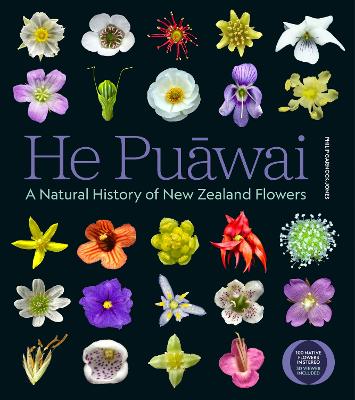
He Puāwai: A Natural History of New Zealand Flowers by Philip Garnock-Jones (Auckland University Press)*
‘He Puāwai is an astonishing publication, hailed as revolutionary in the botanical world,’ writes Alex Eagles-Tully for Kete. Aotearoa is a unique place for flowering plants, with the majority of over 2000 plants growing nowhere but here. He Puāwai focusses on the history of 100 of them, with over 500 images in the book, and a 3D viewer so readers can view the flowers in 3D.
An interview is available with Philip Garnock-Jones at NZ Booklovers.
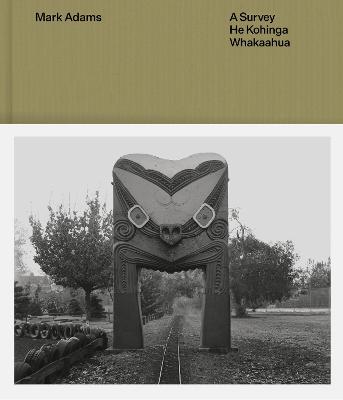
Mark Adams: A Survey – He Kohinga Whakaahua by Sarah Farrar (Massey University Press and Auckland Art Gallery Toi o Tāmaki)
Mark Adams’ photography engages deeply with post colonial history and traditional Samoan tatou. This is the first collection to cover his work in a comprehensive way, including photographs that span his 50-year career. The book is based on an exhibition at Auckland Art Gallery in 2025, and features text by Sarah Farrar as well as an introduction by Ngāhuia te Awekotuku.
Catherine Woulfe at NZ Geographic notes that Mark was ‘always trying to… turn the camera back on the viewer,’ and his respect meant that ‘a person who comes at photography this way, even if he does occasionally mess up, is trusted.’
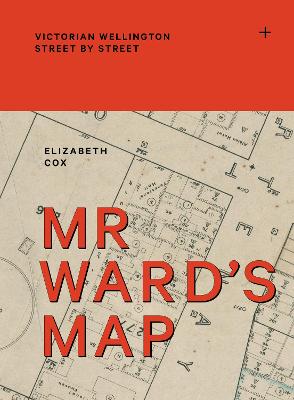
Mr Ward’s Map: Victorian Wellington Street by Street by Elizabeth Cox (Massey University Press)
Wellington historian Elizabeth Cox’s beautifully made book (with cloth case and fold-out jacket) tells stories of Wellington and its people. Using the invaluable map made and meticulously updated by surveyor Thomas Ward from 1891 to 1901, it covers neighbourhoods, streets, buildings in its focus on Aotearoa’s capital city.
Find out more in this RNZ interview with Elizabeth, and read an extract at The Spinoff Books.
Takoto ai te Marino: Selected Works 2018-2025 by Raukura Turei (Ngā Rauru Kītahi, Taranaki, Ngāti Pāoa, Ngāi Tai ki Tāmaki), Greta van der Star, Vanessa Green and Katie Kerr (Raukura Turei)*
Focussing on the work of Aotearoa artist Raukura Turei, this book is organised in five chapters, each dedicated to an atua wahine central to the artist’s practice. It contains photographs, essays, poems, and an interview to explore the first phase of Turei’s career, her whakapapa, processes and subjects.
Turei speaks to Mihi Forbes on Saturday Morning at RNZ here.
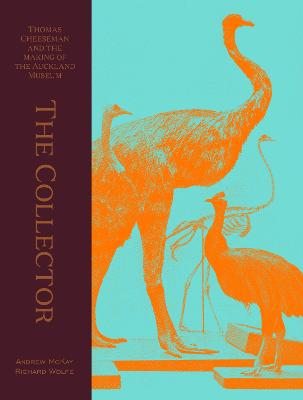
The Collector: Thomas Cheeseman and the Making of the Auckland Museum by Andrew McKay and Richard Wolfe (Massey University Press)
David Hill, reviewing The Collector for Kete, writes, ‘those Victorian collectors had their luminaries, and Thomas Cheeseman emphatically qualifies as one.’ He arrived in Aotearoa at the age of eight, and began to collect and classify specimens, making a name for himself. The Auckland Museum was barely established when he became curator, and there he would remain for half a century. A life’s work, and this book—with its beginnings in the author’s PhD—details and showcases that life.
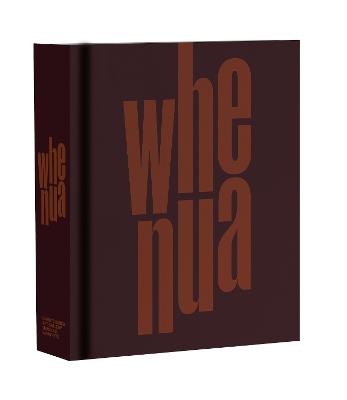
Whenua edited by Felicity Milburn, Chloe Cull (Ngāi Tahu, Ngāi te Ruahikihiki) and Melanie Oliver (Christchurch Art Gallery Te Puna o Waiwhetū)
An epic book of substantial proportions, associated with the exhibition He Kapuka Oneone – A Handful of Soil at Christchurch Art Gallery Te Puna O Waiwhetū that runs from 2024 into 2026. All works in the exhibition are represented in the book, which has over 170 illustrations from significant historical and contemporary artists, both new and established. Many artists are interviewed in the book, and wide-ranging texts from art writers are also included.
Reviewer Peter Simpson at Reading Room calls it ‘a compendious and valuable resource… …it is so bulky that you have to read it sitting at a table or desk.’
.jpg&w=1920&q=75)
General Non-Fiction Award
50 Years of the Waitangi Tribunal: Whakamana i te Tiriti edited by Carwyn Jones (Ngāti Kahungunu, Te Aitanga-a-Māhaki) and Maria Bargh (Te Arawa, Ngāti Awa) (Huia Publishers)
This history, edited by subject experts Carwyn Jones and Maria Bargh, looks closely at the fifty years of the Waitangi Tribunal, celebrating results and decisions on that timeline. Multiple experts weigh in on topics of land, water, settlements, kaupapa, and social issues such as mana and rangatiratanga. Over the fifty years, the Waitangi Tribunal has considered a wide range of issues and brought understanding to the legal complexities around Te Tiriti o Waitangi.
Hear reviewer Paul Diamond discuss the book on RNZ’s Nine to Noon here.
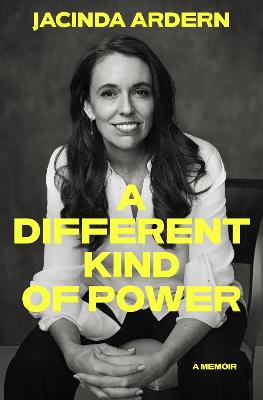
A Different Kind of Power by Jacinda Ardern (Penguin, Penguin Random House)*
Jacinda Ardern was the world’s youngest female head of government and just the second to give birth in office. This hotly awaited memoir has been on the bestseller lists since in was released in June of 2025. Engagingly written, it explores Ardern’s young life and the experiences that shaped her, ultimately bringing her to her aspirations to lead with compassion, conviction and courage. Reviewer Angela Walker, writing for Kete, posits that ‘Ardern has proven there are new and modern answers to the question: What does a leader look like?’
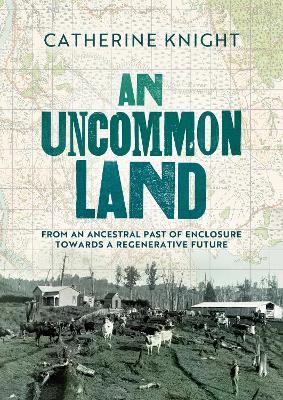
An Uncommon Land: From an Ancestral Past of Enclosure Towards a Regenerative Future by Catherine Knight (Totara Press)
Knight uses her deeply personal story to illuminate and illustrate the rise of private property in Aotearoa, and how the erosion of ‘common’ land happened via colonisation, enclosure and dispossession.
She also illustrates how there can be hope. Writing for E-Tangata, while acknowledging the depth of work that would need to be done, and the fundamental change that would need to happen, she says ‘if any country can reinvent itself to put wellbeing and sufficiency at the centre of the economic system, Aotearoa New Zealand can.’
Harry Broad reviews An Uncommon Land on Nine to Noon here.
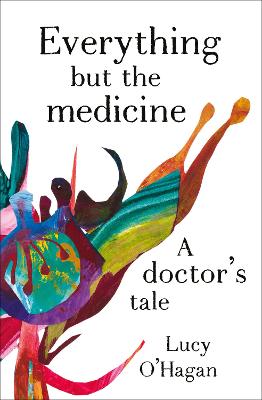
Everything But the Medicine: A Doctor’s Tale by Lucy O’Hagan (Massey University Press)*
The doctor-patient relationship is at the heart of O’Hagan’s compassionate, empathetic and insightful memoir. With skill and great care, O’Hagan examines what it means to be a great doctor and how it feels to sit in the patient’s chair, all the while through the framing of events of her own life. She lives through the deaths of her parents, as doctor, carer and daughter, through burnout and divorce. But the key question throughout is: what does it mean to be a good doctor in this place?
Throughout, she ‘dedicates time… …to analysing the doctor-patient relationship and its power imbalance,’ writes Bernadette Cassidy for Kete. You can read a chapter from Everything but the Medicine here.
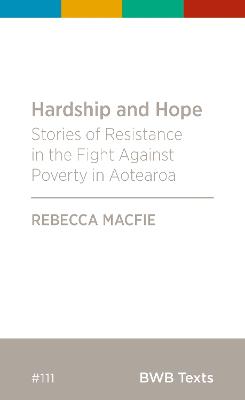
Hardship and Hope: Stories of Resistance in the Fight Against Poverty in Aotearoa by Rebecca Macfie (Bridget Williams Books)
The national poverty crisis isn’t brand-new news: it’s been on the nation’s mind and in politicians’ consciousness for years. But it’s not going away. Rebecca Macfie, journalist by trade, expands on her Listener series in this book, which delves deep into local responses to poverty. She exposes the systems that perpetuate poverty, and shows the struggles of the people and communities at the heart of it, looking also at local initiatives to confront the inequities and build a better future.
You can read Rebecca’s own words on her work, at E-Tangata, as she discusses how she approached the project, acknowledging her own privilege. Cynthia Morahan’s RNZ Nine to Noon review of Hardship and Hope is also available here.
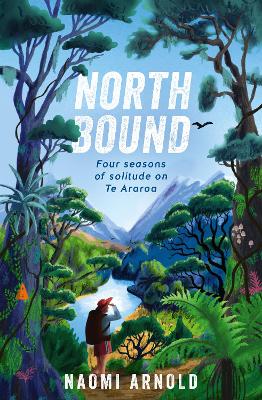
Northbound: Four Seasons of Solitude on Te Araroa by Naomi Arnold (HarperCollins Aotearoa New Zealand)
Arnold’s engaging tale of nine months spent walking the Te Araroa trail northbound, from Bluff to Cape Reinga, has been well-received everywhere. Tales of walking, of hard yakka and psychological tests through isolation and endurance, have a great deal of appeal. As Anna Scaife points out in her review for Kete, ‘the effect [for the reader] is like being along for the ride, but thankfully without the pain and exhaustion that accompanies a physical feat like this one.’
Elizabeth Easther reviews Northbound for RNZ here.
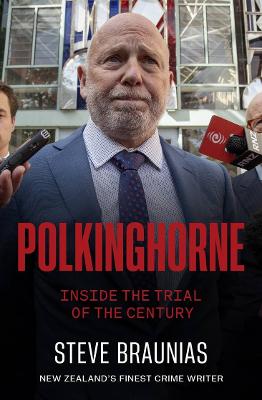
Polkinghorne: Inside the Trial of the Century by Steve Braunias (Allen & Unwin)
Veteran journalist and books editor Steve Braunias delves deep into the trial that gripped the nation: of eye surgeon Philip Polkinghorne, accused of killing his wife, Pauline Hanna, in her home in Remuera. The engrossing account details twists and turns, emotions and lusts, and brings the innards of a chilling crime to light.
Philip Matthews, reviewing for the Aotearoa Review of Books, says that Braunias as literary crime writer has ‘invented his own genre’. You can read more of Braunias’ thoughts on the trial and his book in this RNZ article.
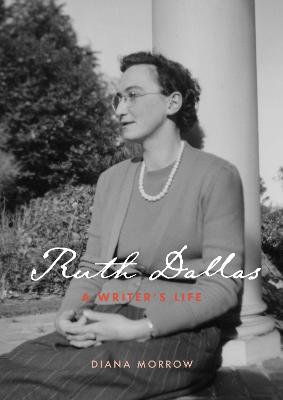
Ruth Dallas: A Writer’s Life by Diana Morrow (Otago University Press)
Diana Morrow’s new book puts the spotlight on a highly successful poet from Aotearoa who has, until now, remained largely unexamined in literature. Drawing on her earlier autobiography, Morrow paints a picture of a woman who knew what she wanted, independent-minded and highly involved in the literary scene of the time. She also shows the private, loving individual that her friends and family knew.
Reviewing the book for Kete, Graham Reid notes that ‘Ruth Dallas was a singular talent, her poetry rightly celebrated and she a more complex woman than the bare facts of her seemingly insular life would suggest.’
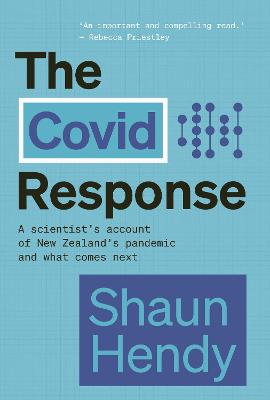
The Covid Response: A Scientist’s Account of New Zealand's Pandemic and What Comes Next by Shaun Hendy (Bridget Williams Books)
New Zealand’s Covid response, a contentious and difficult topic, from an insider. Shaun Hendy takes the reader behind the scenes and into of the decisions, the science, the modelling, the very workings of the science-driven response that was striking about Aotearoa’s situation that led to the least health burden of nations around the world.
You can read the first chapter of this book on the publisher’s website and an in-depth review on the National Business Review by Nevil Gibson.
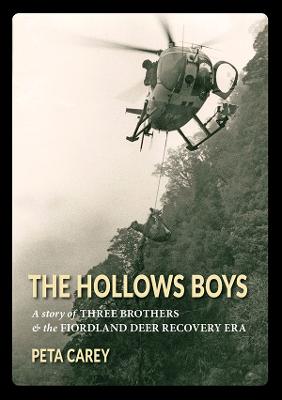
The Hollow Boys: A Story of Three Brothers & the Fiordland Deer Recovery Era by Peta Carey (Potton & Burton)
This book is currently sitting at number 4 on the non-fiction bestsellers list, six months after it was published. The story of the Fiordland deer recovery era, it’s also a personal story of three brothers: Gary, Mark and Kim Hollows. It’s a story of loss, the cost and reverberations of that loss through a family, and of the personal cost of the industry. Author Peta Carey speaks on Nine to Noon about her book, and of this extraordinary time in Aotearoa’s history.
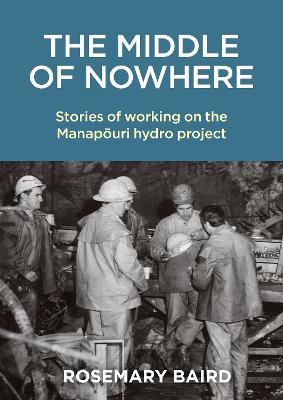
The Middle of Nowhere: Stories of Working on the Manapōuri Hydro Project by Rosemary Baird (Canterbury University Press)*
The Manapōuri Hydro Station is the largest underground hydroelectric power station in Aotearoa. Constructing it involved 8 million man hours, and claimed 16 lives across a period of nine years. It was the subject of a large protest and petition by the Save Manapouri campaign, against raising the level of the lake.
Rosemary Baird’s book tells the story of the danger, isolation and camaraderie through the eyes of the people who lived it. Illustrated by evocative photographs, the book presents a detailed, vivid portrait of the area, and of the society who lived in and through the project. Literary editor Steve Braunias named it his best illustrated book of 2025. You can read the author’s words on the project at Reading Room.
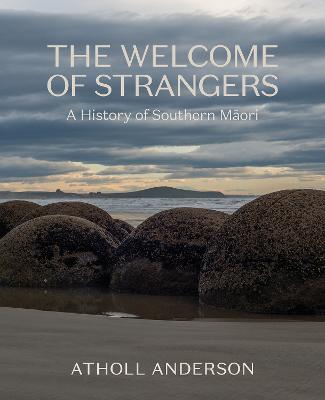
The Welcome of Strangers: A History of Southern Māori by Atholl Anderson (Bridget Williams Books and Te Rūnanga o Ngāi Tahu)
Co-published with Te Rūnanga o Ngāi Tahu, Atholl Anderson’s The Welcome of Strangers traces the origins of Waitaha and Kāti Māmoe, and details the migrations, settlements and conflicts that led to modern-day Ngāi Tahu. He uses written records, archaeological evidence and tribal knowledge to compile a history and picture of the land and its people that eventually encountered the first Europeans that came to the South.
Reviewer David Veart, writing for Kete, is impressed with the book’s scope: ‘The amount of detail and interconnected data is such that it will reward continued engagement for years to come.’
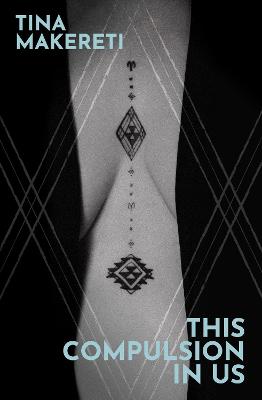
This Compulsion in Us by Tina Makereti (Te Ātiawa, Ngāti Tūwharetoa, Ngāti Rangatahi-Matakore, Pākehā) (Te Herenga Waka University Press)
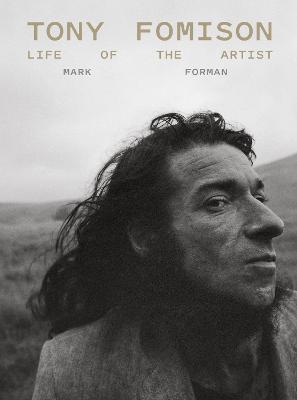
It shouldn’t be a surprise that this frank and moving essay collection is on this longlist. Prize-winning author Tina Makereti’s previous published works have been fiction, but she has also won competitions for her striking essays. In this book Makareti examines the many intersections and roles of her life as wahine Māori. Essays focus on the wāhine who have shown her many ways of being a Māori woman, the darkness of living with an alcoholic, breast cancer treatment, and the potential of art to return power to survivors of colonialism. Jade Kake, reviewing for Kete, calls it ‘critical, reflective, deeply personal, inviting us into wānanga, into dialogue, inviting us to delve deeper into ourselves and our collective histories and trauma.’ by (Auckland University Press)This biography of Tony Fomison, culturally important artist and painter of important works over several decades, took author Mark Forman ten years to research and complete. Drawing on over 150 interviews, Forman brings together a comprehensive, lively portrait of a complicated man—activist, archaeologist and scholar, trickster, addict and lover, but above all, an artist., says that the ‘depth of research creates an uncompromising, nuanced, and revelatory window into the artist’s life.’ You can .